
Haryana’s first private power distributor: what a parallel licence means for Gurugram and Nuh
Next story · 22 OctGRAP Stage I invoked in Delhi-NCR as AQI turns ‘Poor’: the 25 actions and what comes next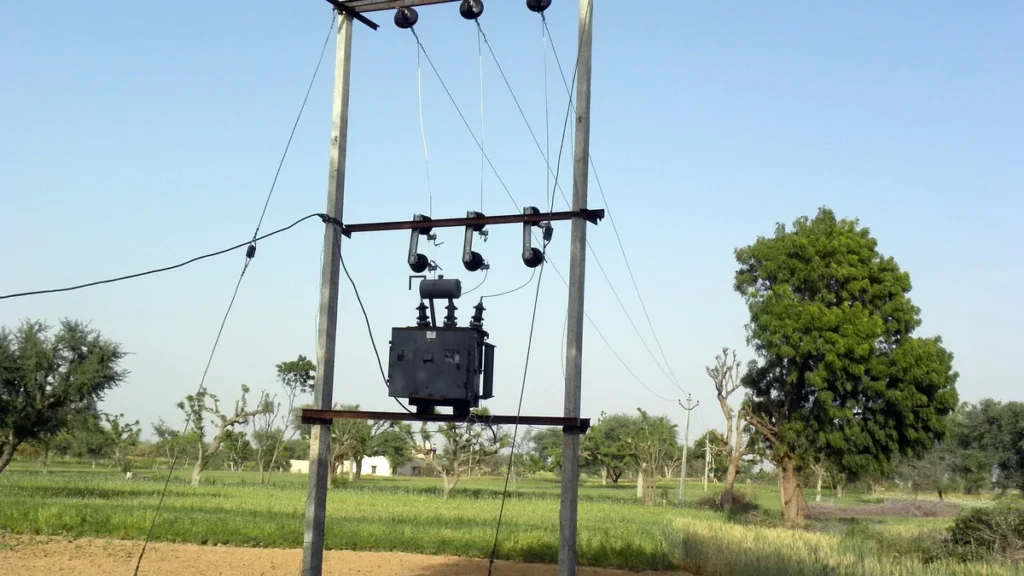
The Haryana Electricity Regulatory Commission (HERC) on 19 October 2026 gave Eleven Power Pvt Ltd a 25-year parallel distribution licence for Gurugram and Nuh. It will be Haryana’s first private distributor and India’s second case of parallel licensing after Mumbai. The State government and power-sector staff oppose it and plan to appeal to the Appellate Tribunal for Electricity.
- Regulator
- HERC
- Licence
- 25 years, Gurugram and Nuh
- Investment
- ₹4,717 crore (5 yrs)
- Law
- Section 14, Electricity Act
Haryana’s parallel licence: what happened?
For most of us, the power company is decided by our address. A parallel licence breaks that rule: two companies can sell electricity in the same area through their own wires.
- HERC granted the licence on Monday, 19 October (Indian Express).
- Until now, only the State-owned UHBVN and DHBVN supplied power in Haryana.
- Eleven Power plans ₹4,717 crore of investment from 2026–27 to 2030–31 and must build its own network.
- The State government will challenge the order before the Appellate Tribunal for Electricity (APTEL).
What is a parallel licence?
- The sixth proviso to Section 14 of the Electricity Act, 2003 allows two or more distribution licensees in the same area, each with its own network.
- An eligible applicant cannot be refused merely because another licensee already operates there.
- Mumbai is the only other example: Tata Power, BEST and Adani Electricity overlap.
- Different from ‘open access’, where big consumers buy from others using the existing wires.
Who gains and who worries?
| View | Argument |
|---|---|
| Consumers | Choice of supplier; pressure to improve service |
| DHBVN | Gurugram and Nuh are 35.23% of its sales and 42.98% of its revenue (2025–26) |
| DHBVN projection | Revenue loss of ₹424.12 crore in 2027–28 if 2.5% of sales shift |
| Eleven Power | Cross-subsidy is not an entitlement; most growth from new connections |
Which constitutional and legal provisions apply?
- Electricity is in the Concurrent List (Entry 38), so both Parliament and States can legislate.
- Electricity Act, 2003: Section 14 (licences), Section 86 (State commission functions), Section 111 (appeals to APTEL).
- State Electricity Regulatory Commissions fix tariffs and grant licences.
- Cross-subsidy surcharge protects the incumbent when consumers shift.
What are the challenges?
- Duplicate networks raise the total cost of delivering power (IIT Kanpur’s Anoop Singh).
- Fixed costs are 38–56% of a discom’s revenue requirement, but fixed charges recover only 9–20% (CEA).
- If high-paying consumers leave, farmers and households may face higher tariffs or subsidies.
- Staff and State government opposition means long litigation.
What should be done next?
- Rebalance tariffs so fixed costs are recovered through fixed charges.
- Set clear universal-supply obligations, including rural Nuh.
- Allow network sharing to avoid wasteful duplication.
- Use the case to design national rules on competition in distribution.
What can Prelims ask on power distribution?
- Electricity: Concurrent List, Entry 38.
- Parallel licence: sixth proviso, Section 14, Electricity Act 2003.
- APTEL: statutory appellate body under the Electricity Act.
- Mumbai: only other area with overlapping distribution licensees.
- Haryana discoms: UHBVN (north), DHBVN (south).
How to write about discom reform in Mains
Practice question (10 marks, 150 words): Can competition in electricity distribution solve the problems of Indian discoms? Examine with reference to parallel licensing. (GS-III)
- Intro: HERC licence to Eleven Power, 19 Oct 2026.
- Law: Section 14 sixth proviso; Mumbai model.
- Benefits: choice, efficiency, investment.
- Risks: duplication, cross-subsidy loss, tariffs.
- Conclusion: competition with tariff reform and universal supply.
Image: A three-phase distribution transformer on poles in a village. Chu86happychu, Wikimedia Commons, CC BY-SA 4.0
How to use this in Mains
If asked: Discuss the financial challenges of electricity distribution companies in India. (GS-III)
Quote: “Fixed expenses account for nearly 38% to 56% of a DISCOM’s total Annual Revenue Requirement.”
Use it: Use the figure, then add the 9–20% fixed-charge recovery gap.
If asked: Evaluate parallel licensing as a power-sector reform. (GS-III)
Quote: “Adoption of parallel licensing could increase the cost towards electricity delivery infrastructure for the power system as a whole due to duplication of infrastructure.”
Use it: Quote it as the main caution against parallel networks.
Exam angle
Prelims: Section 14, APTEL, Concurrent List Entry 38. · Mains GS-III: discom reform, cross-subsidy, competition.
Practice MCQs
Original practice questions (not PYQs).
Under the Constitution of India, ‘Electricity’ is listed in the
Answer (c) & explanation
Electricity is Entry 38 of the Concurrent List.
Consider the following statements:
1. The Electricity Act, 2003 permits more than one distribution licensee in the same area.
2. Appeals against orders of State Electricity Regulatory Commissions lie before the Appellate Tribunal for Electricity.
Which of the statements given above is/are correct?
Answer (c) & explanation
Both are correct under Section 14 and Section 111 of the Act.
Before Haryana, overlapping distribution licences were in operation in
Answer (c) & explanation
Mumbai has Tata Power, BEST and Adani Electricity as overlapping licensees.
Questions students ask about this
Who got the licence?
Eleven Power Pvt Ltd, for Gurugram and Nuh, for 25 years.
What is a parallel licence?
A licence to distribute power in an area that already has a distributor, using one’s own network.
Why do existing discoms object?
They fear losing high-paying consumers who cross-subsidise farmers and households.
Where can the order be challenged?
Before the Appellate Tribunal for Electricity.
Keep studying
Go deeper
facts from cited sources only; faculty review pending