
UPSC Mains 2013 GS Paper 2 Q17: model answer
'A national Lokpal, however strong it may be, cannot resolve the problems of immorality in public affairs.' Discuss.
What the question wants
Discuss why even a powerful Lokpal cannot by itself remove immorality from public life.
How to structure it
Discuss: what a Lokpal can do, what it cannot, what else is needed.
- Context
- What the Lokpal does
- Why law alone fails
- Complementary measures
- Conclusion
How to think it through
The quote came in the year the Lokpal Act passed, after the Anna Hazare movement. A watchdog catches the thief after the theft; it does not make people honest. Corruption is a crime; immorality is a culture. Separate the two and the answer writes itself.
Model answer
In 2011 lakhs of people joined Anna Hazare's fast for a Jan Lokpal, as if one institution could clean public life. The Lokpal and Lokayuktas Act, 2013 followed, but the first Lokpal was appointed only in 2019, and its early years saw few prosecutions. The lesson is older than the Act: law punishes corruption; it does not create integrity.
What a Lokpal can do
- Inquire into complaints against the Prime Minister (with safeguards), ministers, MPs and officials.
- Direct the CBI, attach property and recommend prosecution.
- Deter by making exposure likely.
Why it cannot resolve immorality
- Immorality is wider than crime: nepotism, conflict of interest, misuse of discretion and lying in public are often not offences.
- Supply side: bribe-givers, corporate donors and voters who reward patronage.
- Political funding: elections run on unaccounted money create obligations that no ombudsman can trace.
- Overload: one body cannot investigate lakhs of officials; the Central Vigilance Commission already struggles with backlog.
- Social tolerance: when 'speed money' is accepted as normal, complaints never arrive.
What must accompany it
- A code of ethics for ministers and legislators (2nd ARC, 4th Report).
- Transparent party funding and state funding of elections, as the Indrajit Gupta Committee (1998) suggested.
- RTI, whistleblower protection and e-governance to cut discretion.
- Ethics education and leadership by example.
A strong Lokpal is the lock on the door. Public morality is the household behind it, and that is built by leaders, institutions and citizens together.
Draw: An iceberg: crime (visible, Lokpal) above water; culture, funding, discretion below.
Keywords, cases and data to drop in
Lokpal and Lokayuktas Act 2013, first Lokpal 2019, 2nd ARC 4th Report 'Ethics in Governance', CVC, conflict of interest, Indrajit Gupta Committee 1998, Nolan principles.
Where most answers lose marks
- Rejecting the Lokpal. The quote says 'however strong'; accept its value, then show its limits.
Related Mains PYQs
- Analyse the advantages and limitations of the generalist structure of the Indian Civil Services in contemporary governance. UPSC 2026 · GS-II
- To what extent do pressure groups, social movements and corporate lobbies deepen pluralistic democracy in India by representing excluded interests? Analyse whether… UPSC 2026 · GS-II
- “Transparency and accountability in governance are not about controlling corruption but about creating the trust of stakeholders in the policy process by… UPSC 2026 · GS-II
- Can the constitutional mandate of rights-based welfare be effectively realised in the context of non-integrated governance and minimal public investment? Examine. UPSC 2026 · GS-II
Fresh examples from current affairs

Census 2027: can private teachers be made enumerators? The Census Rules amendment and Article 23
Census 2027 needs over 30 lakh enumerators, the people who go door to door counting everyone. This month the Centre amended the Census Rules, 1990 to name teachers of private schools and staff of banks and companies as possible enumerators. But two High Courts had already stopped governments from forcing private-school teachers into Census duty. For you, it raises a classic exam question: can a rule make private citizens do public work, and what do the Census Act and Article 23 allow?
UPSC angle: Prelims: Entry 69 Union List, Census Act 1948, Article 23, Committee on Subordinate Legislation. · Mains GS-II: delegated legislation; federal administration of the Census.
25 Oct 2026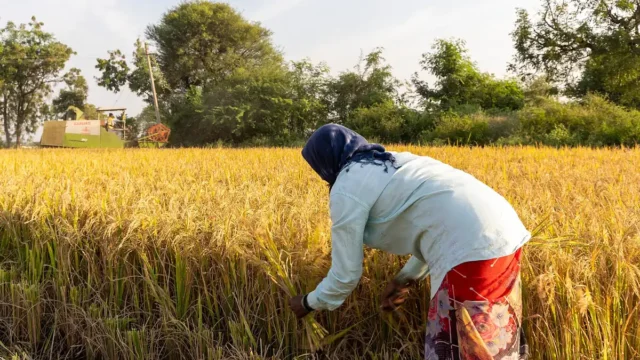
11 crore Farmer IDs created five months early under the Digital Agriculture Mission and Agri Stack
The Centre is building a digital register of farmers, so that each farmer has one verified identity for all schemes. Under the Digital Agriculture Mission, 11 crore Farmer IDs were created by the night of 23 October, five months before the March 2027 deadline. With this ID, farmers need not submit the same papers again and again for loans, crop insurance or relief. For you, this links Agri Stack, the Kisan Credit Card, PMFBY and land-record reform.
UPSC angle: Prelims: Digital Agriculture Mission, Agri Stack, KCC, PMFBY, DILRMP. · Mains GS-III: technology in agriculture; DBT.
25 Oct 2026
Vehicle data sold for ₹5: Centre orders CERT-In audit of VAHAN, SARATHI and e-Challan portals
The Ministry of Road Transport and Highways has asked CERT-In, India’s cyber-security agency, for a forensic audit of its VAHAN, SARATHI, e-Challan and pollution-certificate portals. A security firm found that owners’ names, addresses and phone numbers were being sold through apps and a Telegram channel for as little as ₹5. On the same day, The Hindu reported a separate leak of film certification records. For you, this connects cyber security, the right to privacy and the Digital Personal Data Protection Act, 2023.
UPSC angle: Prelims: CERT-In, Section 70B IT Act, VAHAN/SARATHI, Puttaswamy, DPDP Act 2023, GDPR. · Mains GS-III: cyber security and data protection.
25 Oct 2026
Panel to review pharma marketing code: UCPMP 2024 and why a voluntary code is not enough
The Department of Pharmaceuticals has set up a committee under Dr. M. Srinivas, Member, NITI Aayog, to review how drug companies market medicines and to suggest ways to curb unethical practices, PIB said on 23 October 2026. Former Union Health Secretary Preeti Sudan and Dr. Naresh Trehan of Medanta are members, and the report is due within two months of its first meeting. The core issue: the Uniform Code for Pharmaceutical Marketing Practices is still voluntary.
UPSC angle: Prelims: UCPMP, Department of Pharmaceuticals, NITI Aayog. · Mains GS-II: health governance, regulation and ethics.
24 Oct 2026Learn the concept
Question text as printed in the official UPSC Civil Services (Main) question paper. The model answer is original Battle IAS work; use it to learn structure, not to memorise.
Want every PYQ in one place? See the Battle IAS PYQ Book.