
UPSC Mains 2014 GS Paper 2 Q8: model answer
The setting up of a Rail Tariff Authority to regulate fares will subject the cash strapped Indian Railways to demand subsidy for obligation to operate non-profitable routes and services. Taking into account the experience in the power sector, discuss if the proposed reform is expected to benefit the consumers, the Indian Railways or the private container operators.
What the question wants
Using lessons from electricity regulation, judge whether an independent rail tariff regulator would benefit consumers, the Railways or private container operators.
How to structure it
Discuss if ... benefit: three stakeholders, one lens.
- Why a regulator
- Power-sector lessons
- Consumers
- Railways
- Container operators
- Verdict
How to think it through
Railways had not raised passenger fares for a decade while freight paid for the gap. A regulator makes cross-subsidy visible, and visibility is uncomfortable. The power sector shows the pattern: commissions fix tariffs, but governments still decide subsidies, and discoms bleed. Ask who pays when the bill becomes honest.
Model answer
For years Indian Railways kept passenger fares frozen while freight customers paid among the world's highest rates. In 2017 the government created the Rail Development Authority by executive order to advise on tariffs, a weaker version of the authority proposed in 2014.
Lessons from the power sector
- The Electricity Regulatory Commissions Act, 1998 and the Electricity Act, 2003 made tariff-setting independent, yet State governments still order free power.
- Discoms piled up losses because subsidies were promised but paid late, and repeated bailouts (UDAY, 2015) followed. A regulator without fiscal discipline only records the damage.
Consumers
- Fare changes become predictable and reasoned, and service standards can be attached to fares.
- But honest pricing may raise suburban and sleeper fares unless the government pays for them openly.
Indian Railways
- It gains if the regulator quantifies social service obligations and the Union pays them as a subsidy, rather than freight paying hidden cross-subsidy.
- It loses if fares are capped while costs rise, as happened to discoms.
Private container operators
- Licensed since 2006, they suffered sudden haulage charge hikes. A regulator ensures non-discriminatory access and stable haulage rates; they are probably the clearest gainers, because predictable rates let them sign long-term contracts with shippers.
On balance, operators and consumers gain from predictability; the Railways gain only if Parliament gives the authority statutory teeth and funds unprofitable routes transparently.
Draw: A triangle: consumers, Railways, operators, with the regulator in the centre and arrows for fares, subsidy and access.
Keywords, cases and data to drop in
Rail Development Authority 2017, Electricity Act 2003, ERCs, cross-subsidy, social service obligation, container train operators 2006, haulage charges, Bibek Debroy Committee 2015.
Where most answers lose marks
- Writing only about privatisation. The question asks about regulation and three specific beneficiaries.
Related Mains PYQs
- Analyse the advantages and limitations of the generalist structure of the Indian Civil Services in contemporary governance. UPSC 2026 · GS-II
- To what extent do pressure groups, social movements and corporate lobbies deepen pluralistic democracy in India by representing excluded interests? Analyse whether… UPSC 2026 · GS-II
- “Transparency and accountability in governance are not about controlling corruption but about creating the trust of stakeholders in the policy process by… UPSC 2026 · GS-II
- Can the constitutional mandate of rights-based welfare be effectively realised in the context of non-integrated governance and minimal public investment? Examine. UPSC 2026 · GS-II
Fresh examples from current affairs

Census 2027: can private teachers be made enumerators? The Census Rules amendment and Article 23
Census 2027 needs over 30 lakh enumerators, the people who go door to door counting everyone. This month the Centre amended the Census Rules, 1990 to name teachers of private schools and staff of banks and companies as possible enumerators. But two High Courts had already stopped governments from forcing private-school teachers into Census duty. For you, it raises a classic exam question: can a rule make private citizens do public work, and what do the Census Act and Article 23 allow?
UPSC angle: Prelims: Entry 69 Union List, Census Act 1948, Article 23, Committee on Subordinate Legislation. · Mains GS-II: delegated legislation; federal administration of the Census.
25 Oct 2026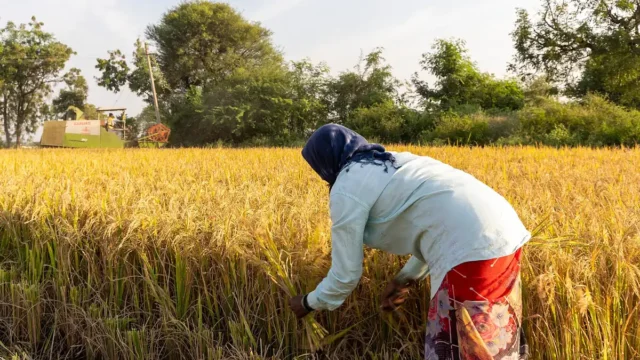
11 crore Farmer IDs created five months early under the Digital Agriculture Mission and Agri Stack
The Centre is building a digital register of farmers, so that each farmer has one verified identity for all schemes. Under the Digital Agriculture Mission, 11 crore Farmer IDs were created by the night of 23 October, five months before the March 2027 deadline. With this ID, farmers need not submit the same papers again and again for loans, crop insurance or relief. For you, this links Agri Stack, the Kisan Credit Card, PMFBY and land-record reform.
UPSC angle: Prelims: Digital Agriculture Mission, Agri Stack, KCC, PMFBY, DILRMP. · Mains GS-III: technology in agriculture; DBT.
25 Oct 2026
Vehicle data sold for ₹5: Centre orders CERT-In audit of VAHAN, SARATHI and e-Challan portals
The Ministry of Road Transport and Highways has asked CERT-In, India’s cyber-security agency, for a forensic audit of its VAHAN, SARATHI, e-Challan and pollution-certificate portals. A security firm found that owners’ names, addresses and phone numbers were being sold through apps and a Telegram channel for as little as ₹5. On the same day, The Hindu reported a separate leak of film certification records. For you, this connects cyber security, the right to privacy and the Digital Personal Data Protection Act, 2023.
UPSC angle: Prelims: CERT-In, Section 70B IT Act, VAHAN/SARATHI, Puttaswamy, DPDP Act 2023, GDPR. · Mains GS-III: cyber security and data protection.
25 Oct 2026
Panel to review pharma marketing code: UCPMP 2024 and why a voluntary code is not enough
The Department of Pharmaceuticals has set up a committee under Dr. M. Srinivas, Member, NITI Aayog, to review how drug companies market medicines and to suggest ways to curb unethical practices, PIB said on 23 October 2026. Former Union Health Secretary Preeti Sudan and Dr. Naresh Trehan of Medanta are members, and the report is due within two months of its first meeting. The core issue: the Uniform Code for Pharmaceutical Marketing Practices is still voluntary.
UPSC angle: Prelims: UCPMP, Department of Pharmaceuticals, NITI Aayog. · Mains GS-II: health governance, regulation and ethics.
24 Oct 2026Learn the concept
Question text as printed in the official UPSC Civil Services (Main) question paper. The model answer is original Battle IAS work; use it to learn structure, not to memorise.
Want every PYQ in one place? See the Battle IAS PYQ Book.