
UPSC Mains 2014 GS Paper 2 Q9: model answer
National Human Rights Commission (NHRC) in India can be most effective when its tasks are adequately supported by other mechanisms that ensure the accountability of a government. In light of the above observation, assess the role of NHRC as an effective complement to the judiciary and other institutions in promoting and protecting human rights standards.
What the question wants
Assess how far the NHRC supports the courts and other bodies in protecting human rights, given that it depends on wider accountability mechanisms.
How to structure it
Assess the role ... effective complement: role, then limits, then what it depends on.
- Mandate
- Where it complements courts
- Where it is weak
- Mechanisms it needs
- Way forward
How to think it through
The NHRC is not a court, and that is both its weakness and its use. It can visit a jail tomorrow; a court takes years. But its recommendations bite only if police, prisons and ministries answer to someone. Think of it as an alarm system: useless without a fire brigade.
Model answer
The Protection of Human Rights Act, 1993 created the NHRC after international criticism over Punjab and Kashmir. It now receives roughly a lakh complaints a year, most against police.
How it complements the judiciary
- Speed and access: complaints by letter or online, no court fee, no lawyer.
- Suo motu action on news reports, for example custodial deaths and manual scavenging deaths.
- Investigation: its own investigation wing and the power to summon under civil-court powers.
- Systemic work: guidelines on custodial deaths (report within 24 hours), encounter killings and bonded labour, and visits to jails.
- Support to courts: the Supreme Court has used it for fact-finding, as in the Punjab mass cremations case.
Where it falls short
- Recommendations are advisory; governments often ignore or delay compensation orders, and the Commission must then go to court itself.
- It cannot examine complaints older than one year and has limited power over the armed forces.
- Leadership is drawn mainly from retired judges and officials.
Mechanisms it relies on
Police complaints authorities (Prakash Singh, 2006), independent prosecution, RTI, a free press and active State commissions.
Way forward
Binding compensation orders, its own cadre of investigators instead of officers on deputation from the police, timely appointments and a duty on governments to explain non-compliance in Parliament.
The NHRC is most effective as a first responder that keeps courts informed; with the support of accountable police and prompt government compliance, it can be a real complement.
Draw: A ladder: complaint → NHRC inquiry → recommendation → government compliance → court, with a broken rung at 'compliance'.
Keywords, cases and data to drop in
PHRA 1993 and 2019 amendment, Section 12 functions, Section 18 recommendations, Section 36(2) one-year bar, Section 19 armed forces, custodial death guidelines, Prakash Singh 2006, Paris Principles.
Where most answers lose marks
- Calling the NHRC a constitutional body. It is statutory.
Related Mains PYQs
- Is the right to vote a fundamental right? Discuss the position of the Election Commission of India while undertaking the revision of… UPSC 2026 · GS-II
- Do constitutional bodies like the National Commission for Scheduled Castes (NCSC) and the National Commission for Scheduled Tribes (NCST) possess adequate enforcement… UPSC 2026 · GS-II
- “The Attorney General of India plays a crucial role in guiding the legal framework of the Union Government and ensuring sound governance… UPSC 2025 · GS-II
- “The duty of the Comptroller and Auditor General is not merely to ensure the legality of expenditure but also its propriety.” Comment. UPSC 2024 · GS-II
Fresh examples from current affairs
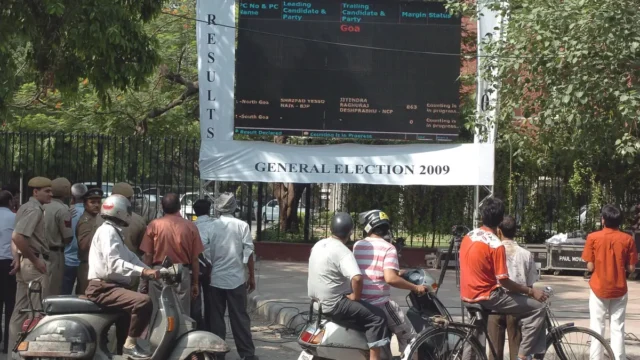
Election Commissioners’ letters to the Cabinet Secretary: what the RTI reply reveals about the ECI
An RTI reply reported on 22 October 2026 shows that Election Commissioners S.S. Sandhu and Vivek Joshi wrote to Cabinet Secretary T.V. Somanathan on 29 July, complaining that Senior Deputy Election Commissioner Maneesh Garg changed the work of officers without consulting the Commission. The Cabinet Secretariat chose only to acknowledge the letters, saying that acting on them could be seen as interference in a constitutional body. The episode shows why the Commission needs clear internal rules for a multi-member body.
UPSC angle: Prelims: Article 324, 2023 Act, Seshan (1995), Article 243K. · Mains GS-II: independence and functioning of constitutional bodies.
23 Oct 2026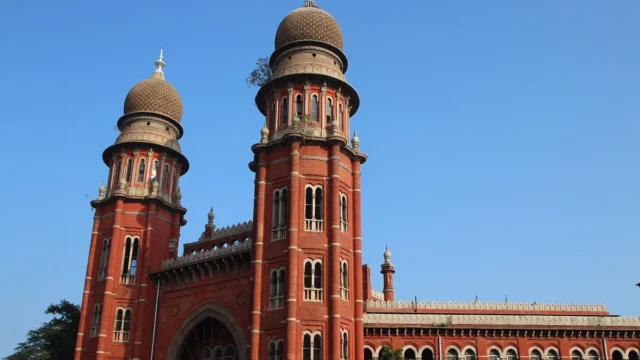
Conversion does not carry over a quota: Supreme Court on Tamil Nadu’s BC Muslim certificates
On 15 October 2026, in The Secretary to Government v. Sameer Ahamed N., the Supreme Court upheld the Madras High Court’s quashing of a 2024 Tamil Nadu order. That order let converts to Islam from Backward, Most Backward, Denotified and Scheduled Caste communities get Backward Class Muslim certificates and use the 3.5% BC Muslim quota. The Court said conversion to Islam does not by itself make a person a member of any of the seven notified BC Muslim communities.
UPSC angle: Prelims: Articles 15(4), 16(4), 341, 342A; SC Order 1950. · Mains GS-II: conversion and reservation debate.
21 Oct 2026
ECI eases SIR verification: BLOs to collect documents at home, hearings online only in exceptional cases
On 26 September 2026 the Election Commission eased verification in the ongoing Special Intensive Revision (SIR) of electoral rolls. For electors served notice as unmapped or for logical discrepancies, BLOs will now collect documents at home and upload them on ECINet. Hearings will be held only in exceptional cases, preferably online.
UPSC angle: Prelims: BLO, ERO, DEO roles; Registration of Electors Rules 1960. · Mains: Balancing roll purity with inclusion of the poor and migrants.
26 Sep 2026
ECI: all decisions, including SIR, are unanimous decisions of the full Commission
On 23 September 2026 the Election Commission of India said all its decisions over the past year, including the Special Intensive Revision (SIR) of rolls, were unanimous decisions of the full Commission. It said written notes and differing views by members are a normal part of deliberation before a final decision.
UPSC angle: Prelims: Art. 324; 2023 Act. · Mains: Independence of the ECI after the 2023 Act.
23 Sep 2026Learn the concept
Question text as printed in the official UPSC Civil Services (Main) question paper. The model answer is original Battle IAS work; use it to learn structure, not to memorise.
Want every PYQ in one place? See the Battle IAS PYQ Book.