
UPSC Mains 2014 GS Paper 2 Q10: model answer
The penetration of Self Help Groups (SHGs) in rural areas in promoting participation in development programmes is facing socio-cultural hurdles. Examine.
What the question wants
Examine the social and cultural barriers that limit how far SHGs draw rural people into development.
How to structure it
Examine: show the hurdles with examples and suggest remedies.
- Promise of SHGs
- Gender norms
- Caste and class
- Literacy and mobility
- Regional variation
- Remedies
How to think it through
SHGs succeed in Andhra and Kerala and stumble in the Hindi heartland. Why? Because a woman who cannot leave the house without permission cannot attend a weekly meeting. The hurdles are in the home and the village, not the bank.
Model answer
In Kerala, Kudumbashree brings over 45 lakh women into neighbourhood groups that run canteens and even manage local plans. In parts of Bihar or Uttar Pradesh, a woman may still need her husband's permission to attend a meeting. The same model meets two very different villages.
Socio-cultural hurdles
- Patriarchy: restrictions on mobility, purdah and household duties limit meeting attendance; husbands often control the loan.
- 'Pass-through' loans: credit taken in the woman's name but used by male relatives, so she bears the debt without the power.
- Caste divisions: Dalit and upper-caste women rarely sit in the same group; mixed groups face exclusion.
- Elite capture: literate, better-off members dominate leadership and loans.
- Illiteracy and low numeracy: members depend on 'animators' for book-keeping and can be cheated.
- Social backlash: domestic violence sometimes rises when women gain income, as studies in several states have reported.
Regional unevenness
Most SHG–bank linkage is concentrated in the southern states, while the north-east and central states lag, partly because of these social factors.
Remedies
- Gender sensitisation for men and village leaders, as in Jeevika in Bihar.
- Federations at village and block level to give women collective strength.
- Training in book-keeping and digital literacy.
- Separate groups and special support for SC/ST women.
- Link SHGs with livelihoods, not just credit.
SHGs change society slowly, but only when the programme treats social barriers as part of its design, not as an afterthought.
Draw: A woman at the centre with rings of hurdles around her: household, caste, village elite, bank.
Keywords, cases and data to drop in
Kudumbashree, Jeevika, pass-through loans, elite capture, caste homogeneity, regional concentration of SBLP, federations, gender sensitisation.
Where most answers lose marks
- Writing about financial hurdles (interest, collateral). The question asks about socio-cultural ones.
Related Mains PYQs
- Analyse the advantages and limitations of the generalist structure of the Indian Civil Services in contemporary governance. UPSC 2026 · GS-II
- To what extent do pressure groups, social movements and corporate lobbies deepen pluralistic democracy in India by representing excluded interests? Analyse whether… UPSC 2026 · GS-II
- “Transparency and accountability in governance are not about controlling corruption but about creating the trust of stakeholders in the policy process by… UPSC 2026 · GS-II
- Can the constitutional mandate of rights-based welfare be effectively realised in the context of non-integrated governance and minimal public investment? Examine. UPSC 2026 · GS-II
Fresh examples from current affairs

Census 2027: can private teachers be made enumerators? The Census Rules amendment and Article 23
Census 2027 needs over 30 lakh enumerators, the people who go door to door counting everyone. This month the Centre amended the Census Rules, 1990 to name teachers of private schools and staff of banks and companies as possible enumerators. But two High Courts had already stopped governments from forcing private-school teachers into Census duty. For you, it raises a classic exam question: can a rule make private citizens do public work, and what do the Census Act and Article 23 allow?
UPSC angle: Prelims: Entry 69 Union List, Census Act 1948, Article 23, Committee on Subordinate Legislation. · Mains GS-II: delegated legislation; federal administration of the Census.
25 Oct 2026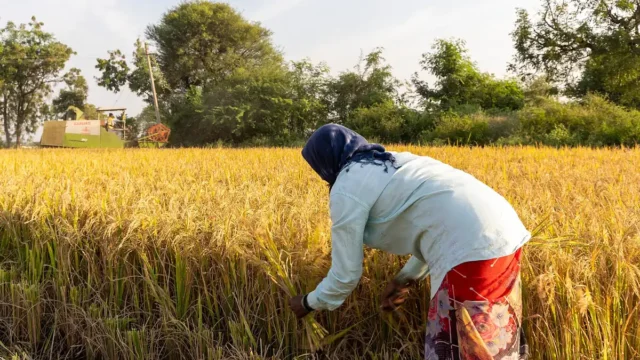
11 crore Farmer IDs created five months early under the Digital Agriculture Mission and Agri Stack
The Centre is building a digital register of farmers, so that each farmer has one verified identity for all schemes. Under the Digital Agriculture Mission, 11 crore Farmer IDs were created by the night of 23 October, five months before the March 2027 deadline. With this ID, farmers need not submit the same papers again and again for loans, crop insurance or relief. For you, this links Agri Stack, the Kisan Credit Card, PMFBY and land-record reform.
UPSC angle: Prelims: Digital Agriculture Mission, Agri Stack, KCC, PMFBY, DILRMP. · Mains GS-III: technology in agriculture; DBT.
25 Oct 2026
Vehicle data sold for ₹5: Centre orders CERT-In audit of VAHAN, SARATHI and e-Challan portals
The Ministry of Road Transport and Highways has asked CERT-In, India’s cyber-security agency, for a forensic audit of its VAHAN, SARATHI, e-Challan and pollution-certificate portals. A security firm found that owners’ names, addresses and phone numbers were being sold through apps and a Telegram channel for as little as ₹5. On the same day, The Hindu reported a separate leak of film certification records. For you, this connects cyber security, the right to privacy and the Digital Personal Data Protection Act, 2023.
UPSC angle: Prelims: CERT-In, Section 70B IT Act, VAHAN/SARATHI, Puttaswamy, DPDP Act 2023, GDPR. · Mains GS-III: cyber security and data protection.
25 Oct 2026
Panel to review pharma marketing code: UCPMP 2024 and why a voluntary code is not enough
The Department of Pharmaceuticals has set up a committee under Dr. M. Srinivas, Member, NITI Aayog, to review how drug companies market medicines and to suggest ways to curb unethical practices, PIB said on 23 October 2026. Former Union Health Secretary Preeti Sudan and Dr. Naresh Trehan of Medanta are members, and the report is due within two months of its first meeting. The core issue: the Uniform Code for Pharmaceutical Marketing Practices is still voluntary.
UPSC angle: Prelims: UCPMP, Department of Pharmaceuticals, NITI Aayog. · Mains GS-II: health governance, regulation and ethics.
24 Oct 2026Learn the concept
Question text as printed in the official UPSC Civil Services (Main) question paper. The model answer is original Battle IAS work; use it to learn structure, not to memorise.
Want every PYQ in one place? See the Battle IAS PYQ Book.