
UPSC Mains 2016 GS Paper 2 Q13: model answer
Has the Indian governmental system responded adequately to the demands of Liberalization, Privatization, and Globalization started in 1991? What can the government do to be responsive to this important change?
What the question wants
Assess whether India's government machinery adapted adequately to liberalisation, privatisation and globalisation after 1991, and suggest how it can respond better.
How to structure it
Two parts: adequacy, then measures.
- What LPG demanded
- Where the system adapted
- Where it lagged
- Measures
How to think it through
LPG changed the state's job from controller to regulator and facilitator. Regulators, digital taxes and IBC show adaptation; contract enforcement, land, labour courts and the bureaucracy's mindset show lag.
Model answer
In July 1991, with foreign reserves enough for about two weeks of imports, India dismantled the licence raj in one budget. The economy changed overnight; the government that ran it changed much more slowly.
What LPG demanded of government
A shift from controller to regulator, facilitator and service provider: fewer permissions, faster decisions, independent regulators and global standards.
Where the system responded
- Regulators: SEBI (1992), TRAI (1997), IRDA (1999), CCI (2003).
- Tax reform: GST (2017) and faceless assessment.
- Insolvency and Bankruptcy Code (2016) for exit.
- E-governance: MCA21, single-window clearances, Ease of Doing Business reforms.
- Disinvestment and new PSU policy.
Where it lagged
- Contract enforcement: courts take years; India ranked low on this in the Doing Business reports.
- Factor markets: land acquisition and labour laws remained rigid; the four labour codes took until 2025 to come into force.
- Bureaucratic culture: rule-bound, risk-averse, many layers.
- States: uneven capacity; inspector raj persists in places.
- Social sector: health and education spending stayed low, so growth did not reach everyone.
How it can respond better
- Civil service reform: domain expertise, performance appraisal, lateral talent.
- Judicial reform: commercial courts and alternate dispute resolution.
- Regulatory governance: independent, accountable regulators with clear mandates.
- Decentralisation and capacity of local bodies.
- Invest in human capital to make growth inclusive.
The government has responded in law more than in mindset. The next stage of reform is administrative, not economic.
Draw: A before-and-after table: 1991 controller state vs regulator and facilitator state, with ticks and crosses.
Keywords, cases and data to drop in
1991 crisis, regulatory state, SEBI 1992, CCI, GST 2017, IBC 2016, commercial courts 2015, labour codes, ease of doing business, 2nd ARC.
Where most answers lose marks
- Writing an economics answer. Focus on the government system.
Related Mains PYQs
- Analyse the advantages and limitations of the generalist structure of the Indian Civil Services in contemporary governance. UPSC 2026 · GS-II
- To what extent do pressure groups, social movements and corporate lobbies deepen pluralistic democracy in India by representing excluded interests? Analyse whether… UPSC 2026 · GS-II
- “Transparency and accountability in governance are not about controlling corruption but about creating the trust of stakeholders in the policy process by… UPSC 2026 · GS-II
- Can the constitutional mandate of rights-based welfare be effectively realised in the context of non-integrated governance and minimal public investment? Examine. UPSC 2026 · GS-II
Fresh examples from current affairs

Census 2027: can private teachers be made enumerators? The Census Rules amendment and Article 23
Census 2027 needs over 30 lakh enumerators, the people who go door to door counting everyone. This month the Centre amended the Census Rules, 1990 to name teachers of private schools and staff of banks and companies as possible enumerators. But two High Courts had already stopped governments from forcing private-school teachers into Census duty. For you, it raises a classic exam question: can a rule make private citizens do public work, and what do the Census Act and Article 23 allow?
UPSC angle: Prelims: Entry 69 Union List, Census Act 1948, Article 23, Committee on Subordinate Legislation. · Mains GS-II: delegated legislation; federal administration of the Census.
25 Oct 2026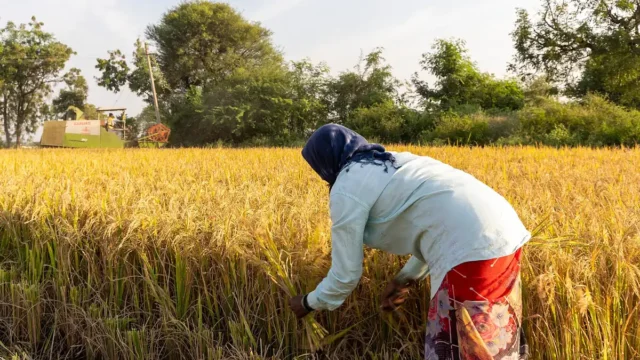
11 crore Farmer IDs created five months early under the Digital Agriculture Mission and Agri Stack
The Centre is building a digital register of farmers, so that each farmer has one verified identity for all schemes. Under the Digital Agriculture Mission, 11 crore Farmer IDs were created by the night of 23 October, five months before the March 2027 deadline. With this ID, farmers need not submit the same papers again and again for loans, crop insurance or relief. For you, this links Agri Stack, the Kisan Credit Card, PMFBY and land-record reform.
UPSC angle: Prelims: Digital Agriculture Mission, Agri Stack, KCC, PMFBY, DILRMP. · Mains GS-III: technology in agriculture; DBT.
25 Oct 2026
Vehicle data sold for ₹5: Centre orders CERT-In audit of VAHAN, SARATHI and e-Challan portals
The Ministry of Road Transport and Highways has asked CERT-In, India’s cyber-security agency, for a forensic audit of its VAHAN, SARATHI, e-Challan and pollution-certificate portals. A security firm found that owners’ names, addresses and phone numbers were being sold through apps and a Telegram channel for as little as ₹5. On the same day, The Hindu reported a separate leak of film certification records. For you, this connects cyber security, the right to privacy and the Digital Personal Data Protection Act, 2023.
UPSC angle: Prelims: CERT-In, Section 70B IT Act, VAHAN/SARATHI, Puttaswamy, DPDP Act 2023, GDPR. · Mains GS-III: cyber security and data protection.
25 Oct 2026
Panel to review pharma marketing code: UCPMP 2024 and why a voluntary code is not enough
The Department of Pharmaceuticals has set up a committee under Dr. M. Srinivas, Member, NITI Aayog, to review how drug companies market medicines and to suggest ways to curb unethical practices, PIB said on 23 October 2026. Former Union Health Secretary Preeti Sudan and Dr. Naresh Trehan of Medanta are members, and the report is due within two months of its first meeting. The core issue: the Uniform Code for Pharmaceutical Marketing Practices is still voluntary.
UPSC angle: Prelims: UCPMP, Department of Pharmaceuticals, NITI Aayog. · Mains GS-II: health governance, regulation and ethics.
24 Oct 2026Learn the concept
Question text as printed in the official UPSC Civil Services (Main) question paper. The model answer is original Battle IAS work; use it to learn structure, not to memorise.
Want every PYQ in one place? See the Battle IAS PYQ Book.