
UPSC Mains 2018 GS Paper 2 Q1: model answer
In the light of recent controversy regarding the use of Electronic Voting Machines (EVM), what are the challenges before the Election Commission of India to ensure the trustworthiness of elections in India?
What the question wants
Using the EVM controversy, identify the challenges the Election Commission faces in keeping elections trustworthy.
How to structure it
What are the challenges: technical, perception, institutional.
- The controversy
- Challenges
- What ECI has done
- Way ahead
How to think it through
EVMs have been tested in court many times and survived. The real problem is trust, not tampering. A referee must not only be fair but be seen to be fair, so the answer should treat perception as a genuine challenge.
Model answer
After the 2017 Assembly results, several parties alleged EVM tampering. The Election Commission held an open 'hackathon'; no party turned up to attempt it.
Challenges
- Perception: allegations from whichever side loses, amplified on social media.
- Verification: voters cannot see their vote counted unless the paper trail is checked.
- Technical: machine malfunction, storage and transport security.
- Institutional: doubts about appointment of Commissioners and their independence.
- Money and misinformation, including deepfakes in 2024, remain bigger threats than machines.
What ECI has done
- VVPAT in every booth since 2019; slips of five random booths per segment counted (N. Chandrababu Naidu, 2019).
- In ADR v ECI (April 2024) the Supreme Court rejected a return to paper ballots and full VVPAT counting, but let losing candidates seek a check of microcontrollers within seven days.
- Standalone machines, two-stage randomisation and strong rooms under candidates' watch.
Way ahead
More VVPAT counting on a statistical basis, open technical audits, and plain-language public explanation.
A trustworthy election needs a credible process as much as a reliable machine.
Draw: A trust chain: machine → VVPAT slip → random count → microcontroller check → result.
Keywords, cases and data to drop in
EVM, VVPAT, 2017 hackathon, Subramanian Swamy 2013, Chandrababu Naidu 2019, ADR v ECI 2024, burnt memory check, randomisation, strong room.
Where most answers lose marks
- Arguing for a return to paper ballots without mentioning booth capturing and invalid votes of the paper era.
Related Mains PYQs
- “Women as a class neither belong to a minority group nor are they regarded as forming a backward class.” In the light… UPSC 2026 · GS-II
- Is the right to vote a fundamental right? Discuss the position of the Election Commission of India while undertaking the revision of… UPSC 2026 · GS-II
- To what extent do pressure groups, social movements and corporate lobbies deepen pluralistic democracy in India by representing excluded interests? Analyse whether… UPSC 2026 · GS-II
- Discuss the ‘corrupt practices’ for the purpose of the Representation of the People Act, 1951. Analyze whether the increase in the assets… UPSC 2025 · GS-II
Fresh examples from current affairs

Any voter can prosecute a candidate for a false affidavit: Supreme Court on Section 125A of the RP Act
The Supreme Court has held that any private citizen, including an ordinary voter, can file a criminal complaint against a candidate who hides information or gives false details in the nomination affidavit. A Bench of Justices Dipankar Datta and Sheel Nagu ruled that the bar in Section 195 of the CrPC, which allows only a public servant to complain for certain offences, does not apply to Section 125A of the Representation of the People Act, 1951. The Hindu reported the ruling on 24 October 2026. For you, it links three exam favourites: the voter’s right to know, candidate affidavits and electoral reform.
UPSC angle: Prelims: Sections 33A and 125A of the RP Act; Section 195 CrPC; ADR (2002), PUCL (2003). · Mains GS-II: electoral reforms, criminalisation of politics.
24 Oct 2026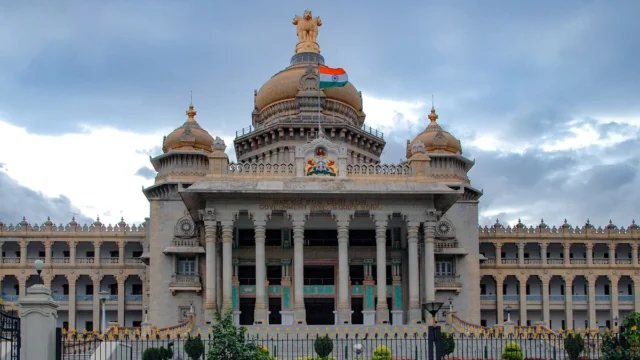
Legislative Council polls in four States: why only six States have a second chamber
Polling for 28 seats in the Legislative Councils of Uttar Pradesh, Bihar, Maharashtra and Karnataka took place on 23 October 2026, with results due on Tuesday. Only six States, these four plus Telangana and Andhra Pradesh, have a second House. The Indian Express explained on 24 October why these bodies exist and why they are debated. It is a high-yield Prelims area: Articles 169 and 171, who votes, and how the Council differs from the Rajya Sabha.
UPSC angle: Prelims: Articles 168, 169, 171; composition; six States. · Mains GS-II: bicameralism, State legislatures.
24 Oct 2026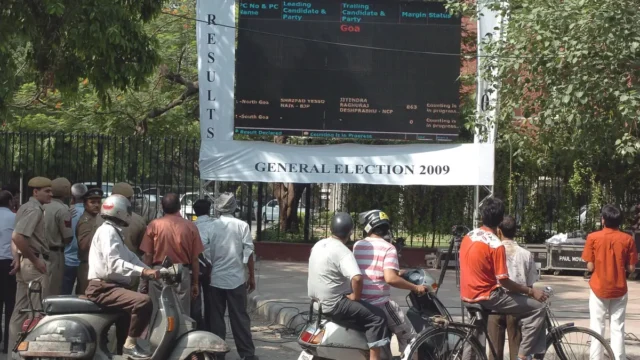
Election Commissioners’ letters to the Cabinet Secretary: what the RTI reply reveals about the ECI
An RTI reply reported on 22 October 2026 shows that Election Commissioners S.S. Sandhu and Vivek Joshi wrote to Cabinet Secretary T.V. Somanathan on 29 July, complaining that Senior Deputy Election Commissioner Maneesh Garg changed the work of officers without consulting the Commission. The Cabinet Secretariat chose only to acknowledge the letters, saying that acting on them could be seen as interference in a constitutional body. The episode shows why the Commission needs clear internal rules for a multi-member body.
UPSC angle: Prelims: Article 324, 2023 Act, Seshan (1995), Article 243K. · Mains GS-II: independence and functioning of constitutional bodies.
23 Oct 2026
ECI eases SIR verification: BLOs to collect documents at home, hearings online only in exceptional cases
On 26 September 2026 the Election Commission eased verification in the ongoing Special Intensive Revision (SIR) of electoral rolls. For electors served notice as unmapped or for logical discrepancies, BLOs will now collect documents at home and upload them on ECINet. Hearings will be held only in exceptional cases, preferably online.
UPSC angle: Prelims: BLO, ERO, DEO roles; Registration of Electors Rules 1960. · Mains: Balancing roll purity with inclusion of the poor and migrants.
26 Sep 2026Learn the concept
Question text as printed in the official UPSC Civil Services (Main) question paper. The model answer is original Battle IAS work; use it to learn structure, not to memorise.
Want every PYQ in one place? See the Battle IAS PYQ Book.