
UPSC Mains 2018 GS Paper 2 Q13: model answer
India and USA are two large democracies. Examine the basic tenets on which the two political systems are based.
What the question wants
Examine the basic principles on which the Indian and American political systems are built.
How to structure it
Examine the basic tenets: shared principles, then differences, with a short assessment.
- Common tenets
- Differences
- Assessment
How to think it through
Both say 'We the People' in the opening words. After that they go different ways: the US separates powers like walls; India fuses executive and legislature like a joint family, with the judiciary as the strict elder. Show the comparison through structure, not just a table of facts.
Model answer
Both constitutions open with 'We the People', but the US Constitution of 1787 has 7 articles and 27 amendments, while India's of 1950 began with 395 articles and has been amended over a hundred times.
Common tenets
- Popular sovereignty and a written, supreme constitution.
- Republic: elected head of state.
- Federalism with a division of powers.
- Fundamental Rights enforceable by courts (Bill of Rights; Part III).
- Independent judiciary and judicial review (Marbury v Madison, 1803; Articles 13, 32, 226).
- Rule of law and free elections.
Differences
- Form of government: the US is presidential with strict separation of
powers; India is parliamentary, with the executive responsible to the Lok Sabha.
- Head of state: the US President is real executive with a fixed term; India's President is a constitutional head acting on ministerial advice.
- Federalism: the US is a 'union of indestructible states' with dual citizenship and state constitutions; India is a 'Union of States', with single citizenship, an integrated judiciary, and a strong centre (Articles 3, 249, 356).
- Rigidity: US amendments need three-fourths of states; India's are more flexible, but limited by the basic structure.
- Upper House: the US Senate has equal state representation; the Rajya Sabha is population-based.
- Rights: India adds Directive Principles, Fundamental Duties and reservations; the US has stronger free speech and gun rights.
- Secularism: 'wall of separation' versus India's 'principled distance'.
- Elections: electoral college versus indirect election through MPs and MLAs; India has an independent Election Commission.
Assessment
The US system emphasises limiting government; India's emphasises using government to transform a diverse, unequal society. Both have stood the test of time, and each borrows from the other: India took judicial review and the Bill of Rights idea; the US has studied India's election machinery.
Draw: Two-column table with 6 rows comparing the systems.
Keywords, cases and data to drop in
We the People, presidential vs parliamentary, separation of powers, dual vs single citizenship, judicial review, Marbury v Madison, basic structure.
Where most answers lose marks
- Only listing differences; 'basic tenets' includes the shared foundations.
Related Mains PYQs
- “India's global diaspora acts as a living bridge, as a critical economic factor and knowledge network in transforming cultural heritage into geopolitical… UPSC 2026 · GS-II
- Indian diaspora has scaled new heights in the West. Describe its economic and political benefits for India. UPSC 2023 · GS-II
- "The USA is facing an existential threat in the form of a China, that is much more challenging than the erstwhile Soviet… UPSC 2021 · GS-II
- ‘Indian diaspora has a decisive role to play in the politics and economy of America and European Countries.’ Comment with examples. UPSC 2020 · GS-II
Fresh examples from current affairs

Houthi attacks on Saudi Arabia: Indian killed at Dammam airport, 14 Indians on yacht safe
A Houthi missile and drone attack on King Fahd International Airport in Dammam on 21 October 2026 killed two people, one of them Indian, and injured eight, two of them Indians. The Houthis also claimed that Saudi forces hit a yacht carrying 14 Indians in the Red Sea; on 23 October India said all 14 are safe near Hodeidah. With flights disrupted, Indian missions are helping thousands of stranded Umrah pilgrims return home.
UPSC angle: Prelims: Bab-el-Mandeb, Hodeidah, Dammam, Operation Raahat. · Mains GS-II: diaspora safety and India’s West Asia policy.
23 Oct 2026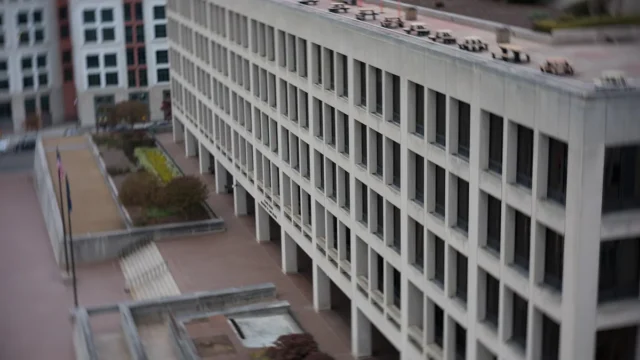
US PERM freeze on Indian IT firms: what the skilled-migrant crackdown means for India
On 8 October 2026 the US Labor Department suspended Microsoft, Adobe, Infosys, TCS, Wipro, HCL, Cognizant and Capgemini from the PERM programme, the labour-certification step for most employment-based green cards. A Hindu data analysis on 21 October shows these firms filed only about 2,000 PERM applications this year, under 2% of the total. The direct hit is small, but the message to Indian talent is large.
UPSC angle: Prelims: PERM, H-1B, I-140, GATS Mode 4. · Mains GS-II: skilled migration and India–US ties; diaspora.
21 Oct 2026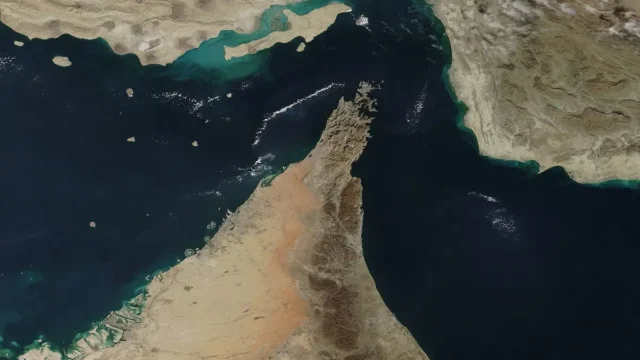
Attacks on ships with Indian crews: July to October 2026
Between July and October 2026 MEA issued a series of statements on attacks on merchant ships carrying Indian crew in the Strait of Hormuz, off Oman, in the Red Sea and in the Black Sea. Several Indian seafarers were killed or injured. On 7 October India again asked for an immediate end to attacks on commercial shipping and seafarers.
UPSC angle: Prelims: straits and ports in news. · Mains GS-II: diaspora; GS-III: maritime security.
7 Oct 2026
Swiss President’s State Visit: migration pact, young professionals
During the Swiss President's State Visit to India from 5 to 7 October 2026, the two countries signed a Migration and Mobility Partnership offering multiple-entry visas of up to five years and renewable one-year student permits. A Young Professionals agreement allows 300 exchanges a year each way, which may rise to 500. A transport technology MoU was also signed.
UPSC angle: Prelims: EFTA members. · Mains GS-II: India-Europe relations, diaspora.
5 Oct 2026Learn the concept
Question text as printed in the official UPSC Civil Services (Main) question paper. The model answer is original Battle IAS work; use it to learn structure, not to memorise.
Want every PYQ in one place? See the Battle IAS PYQ Book.