
UPSC Mains 2018 GS Paper 2 Q17: model answer
How far do you agree with the view that the focus on lack of availability of food as the main cause of hunger takes the attention away from ineffective human development policies in India?
What the question wants
Say how far you agree that blaming hunger mainly on food availability distracts from weak human development policies.
How to structure it
How far do you agree: show that food is available, then show what really causes hunger.
- The paradox
- Food availability
- Human development causes
- Where availability still matters
- Position
How to think it through
India has record grain stocks and high malnutrition at once. Sen's entitlement theory explains it: hunger is about access, not supply. Then add sanitation, women's status, care practices. Keep a line on availability of nutritious food (pulses, protein).
Model answer
India's grain stocks have often been well above buffer norms, and the country is among the largest rice exporters. Yet NFHS-5 found 35.5% of young children stunted and 57% of women anaemic. Hunger amid plenty is the puzzle in this question.
Food availability
- Foodgrain production crossed 330 million tonnes in 2023–24.
- The NFSA and PMGKAY give free grain to about 81 crore people.
- So shortage of grain is not the main cause of hunger today.
The real causes: human development
- Entitlements: Amartya Sen showed that the Bengal famine of 1943 happened without a fall in food supply; people lacked the means to buy food.
- Women's status: early marriage, low education and eating last at home; maternal undernutrition produces low-birth-weight babies.
- Sanitation and water: repeated infections stop the body using food; Dean Spears and others linked open defecation to stunting.
- Health care: weak immunisation and treatment of diarrhoea.
- Care practices: exclusive breastfeeding and complementary feeding.
- Diet diversity: the PDS gives cereals but not pulses, eggs or vegetables.
- Income and jobs: poor households cannot afford nutritious food.
Where availability still matters
- Availability of pulses, oils, milk and vegetables at affordable prices.
- Seasonal and regional shortages, as in tribal areas in the lean season.
- Climate shocks to production.
Position
I largely agree. Focusing only on grain production and distribution has made India food-secure in calories but not in nutrition. Hunger now is a problem of human development: women's empowerment, health, sanitation and diet. Policies like Poshan Abhiyaan, Swachh Bharat and the Jal Jeevan Mission must be treated as hunger policies.
Conclusion
The fight against hunger has moved from the granary to the home and the health centre.
Draw: A tree: 'food availability' as one root among many (women's status, sanitation, care, income), all feeding 'nutrition'.
Keywords, cases and data to drop in
Sen's entitlement approach, Bengal famine 1943, NFHS-5, buffer norms, NFSA, PMGKAY, diet diversity, WASH and stunting, Poshan Abhiyaan, hidden hunger.
Where most answers lose marks
- Disagreeing by quoting production figures; production is the very point the question questions.
Related Mains PYQs
- Malnutrition in India is not merely a public health concern; it is also a challenge of social equity, human development and effective… UPSC 2026 · GS-II
- Poverty and malnutrition create a vicious cycle, adversely affecting human capital formation. What steps can be taken to break the cycle? UPSC 2024 · GS-II
- Can the vicious cycle of gender inequality, poverty, and malnutrition be broken through microfinancing of women SHGs? Explain with examples. UPSC 2021 · GS-II
- “The incidence and intensity of poverty are more important in determining poverty based on income alone.” In this context, analyse the latest… UPSC 2020 · GS-II
Fresh examples from current affairs
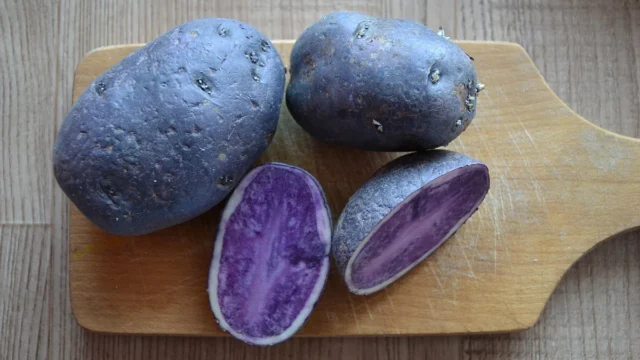
Kufri Jamunia: ICAR-CPRI’s purple potato to fight hidden hunger
A PIB backgrounder of 18 October 2026 puts the spotlight on Kufri Jamunia, a purple-fleshed potato bred by ICAR’s Central Potato Research Institute and released in 2024. It has nearly twice the Vitamin C of a common potato and several times more zinc and iron, along with antioxidants called anthocyanins. The idea is clever: instead of asking people to change what they eat, make the food they already eat more nutritious. That is biofortification.
UPSC angle: Prelims: Kufri Jamunia, CPRI, anthocyanins, biofortification vs fortification. · Mains GS-III: nutrition security; GS-II: hunger.
18 Oct 2026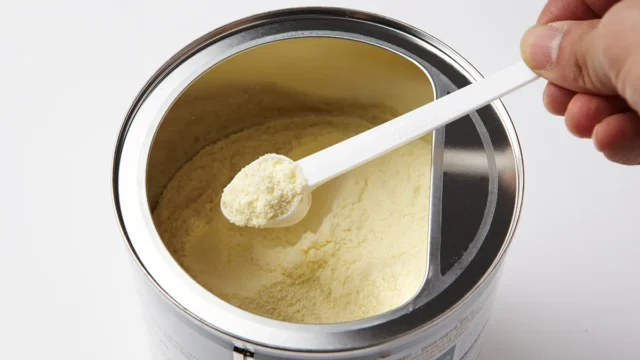
FSSAI draft: no added sucrose or fructose in foods for infants up to six months
On 17 October 2026 FSSAI explained a draft rule that would stop companies from adding sucrose (table sugar) or fructose (fruit sugar) to any product meant for babies up to six months old. The draft amends the Foods for Infant Nutrition Regulations, 2020, was published in the Gazette on 16 October, and is open for public comments for 60 days. The idea is simple: in the first six months a baby needs the right nutrients, not an early taste for sugar.
UPSC angle: Prelims: FSSAI, FSS Act 2006, infant nutrition regulations, IMS Act 1992. · Mains GS-II: child nutrition, preventive health and food regulation.
17 Oct 2026
NFHS-6 released: stunting falls to 29.3%, institutional deliveries 90.6%
The Ministry of Health and Family Welfare released NFHS-6 on 29 May 2026. Conducted in 2023-24 by MoHFW with IIPS Mumbai as nodal agency, it covered nearly 6.79 lakh households across 715 districts. Child stunting fell from 35.5% (NFHS-5) to 29.3%. Institutional deliveries rose from 88.6% to 90.6%, and antenatal care coverage reached 95.9%.
UPSC angle: Prelims: NFHS indicators.
29 May 2026
ICMR–ICAR launch SEHAT for agriculture–nutrition–health convergence
ICMR and ICAR jointly launched SEHAT, Science Excellence for Health through Agricultural Transformation, on 11 May 2026. It is a national mission-mode programme to turn farm research into health gains. Its five priorities are biofortified crops, integrated farming systems, occupational health of farm workers, diet-based NCD prevention, and One Health preparedness.
UPSC angle: Prelims: biofortification.
11 May 2026Learn the concept
Question text as printed in the official UPSC Civil Services (Main) question paper. The model answer is original Battle IAS work; use it to learn structure, not to memorise.
Want every PYQ in one place? See the Battle IAS PYQ Book.