
UPSC Mains 2019 GS Paper 2 Q7: model answer
There is a growing divergence in the relationship between poverty and hunger in India. The shrinking of social expenditure by the government is forcing the poor to spend more on non-food essential items, squeezing their food budget. Elucidate.
What the question wants
Elucidate how poverty and hunger have diverged in India and how lower social spending pushes the poor to cut food budgets.
How to structure it
Elucidate: explain the divergence, the mechanism, the evidence.
- The divergence
- How spending shifts
- Evidence
- Policy response
How to think it through
Poverty fell, but calorie intake also fell. Why? Partly less physical work, but also because health, education and transport costs rose, squeezing food. HCES 2022–23 shows food below half of rural spending.
Model answer
As incomes rose after the 1990s, poverty fell. Yet average calorie intake also fell. Economists called it the 'calorie puzzle': people were getting less poor and eating less.
The divergence
Poverty is measured by consumption; hunger by nutrition. The two can move apart when households spend their extra income on things other than food.
How lower social spending squeezes food
- When public schools and hospitals are weak, families pay for private tuition and treatment.
- Out-of-pocket health spending pushes millions into debt each year.
- Transport, mobile phones and fuel now take larger shares.
- So the food budget shrinks even as income grows.
Evidence
- HCES 2022–23: food fell below half of rural household spending (about 46%) and below 40% in cities.
- Low spending on protein and vegetables in the poorest groups.
- Studies find many poor households cutting meals when hit by medical bills.
Policy response
Free or cheap health and education protect food budgets; diverse PDS and nutrition programmes help directly.
Public services are a hidden food subsidy; cutting them hits the plate. The divergence is a warning that poverty lines alone do not show hunger.
Draw: A pie chart for a poor household: food shrinking as health, education and transport slices grow.
Keywords, cases and data to drop in
calorie puzzle (Deaton and Drèze 2009), HCES 2022–23, Engel's law, OOPE, diet diversity, public provisioning.
Where most answers lose marks
- Assuming falling food share always means prosperity. Explain the squeeze.
Related Mains PYQs
- Malnutrition in India is not merely a public health concern; it is also a challenge of social equity, human development and effective… UPSC 2026 · GS-II
- Poverty and malnutrition create a vicious cycle, adversely affecting human capital formation. What steps can be taken to break the cycle? UPSC 2024 · GS-II
- Can the vicious cycle of gender inequality, poverty, and malnutrition be broken through microfinancing of women SHGs? Explain with examples. UPSC 2021 · GS-II
- “The incidence and intensity of poverty are more important in determining poverty based on income alone.” In this context, analyse the latest… UPSC 2020 · GS-II
Fresh examples from current affairs
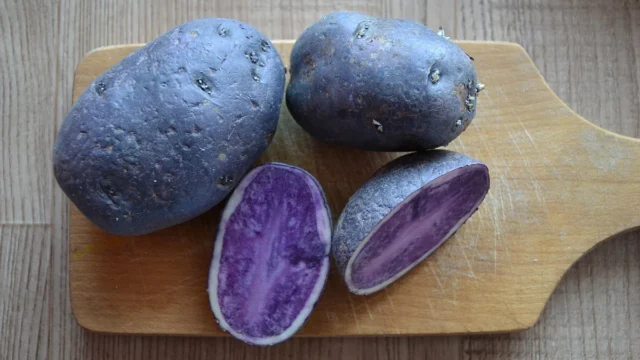
Kufri Jamunia: ICAR-CPRI’s purple potato to fight hidden hunger
A PIB backgrounder of 18 October 2026 puts the spotlight on Kufri Jamunia, a purple-fleshed potato bred by ICAR’s Central Potato Research Institute and released in 2024. It has nearly twice the Vitamin C of a common potato and several times more zinc and iron, along with antioxidants called anthocyanins. The idea is clever: instead of asking people to change what they eat, make the food they already eat more nutritious. That is biofortification.
UPSC angle: Prelims: Kufri Jamunia, CPRI, anthocyanins, biofortification vs fortification. · Mains GS-III: nutrition security; GS-II: hunger.
18 Oct 2026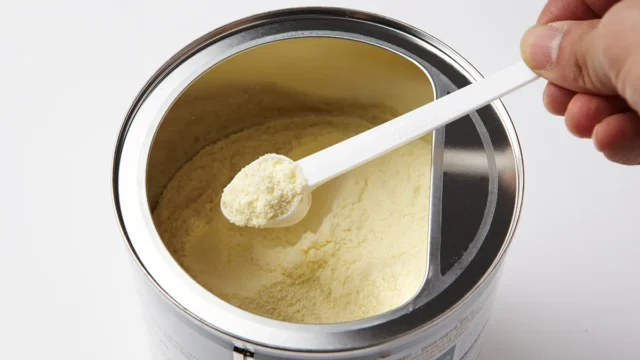
FSSAI draft: no added sucrose or fructose in foods for infants up to six months
On 17 October 2026 FSSAI explained a draft rule that would stop companies from adding sucrose (table sugar) or fructose (fruit sugar) to any product meant for babies up to six months old. The draft amends the Foods for Infant Nutrition Regulations, 2020, was published in the Gazette on 16 October, and is open for public comments for 60 days. The idea is simple: in the first six months a baby needs the right nutrients, not an early taste for sugar.
UPSC angle: Prelims: FSSAI, FSS Act 2006, infant nutrition regulations, IMS Act 1992. · Mains GS-II: child nutrition, preventive health and food regulation.
17 Oct 2026
NFHS-6 released: stunting falls to 29.3%, institutional deliveries 90.6%
The Ministry of Health and Family Welfare released NFHS-6 on 29 May 2026. Conducted in 2023-24 by MoHFW with IIPS Mumbai as nodal agency, it covered nearly 6.79 lakh households across 715 districts. Child stunting fell from 35.5% (NFHS-5) to 29.3%. Institutional deliveries rose from 88.6% to 90.6%, and antenatal care coverage reached 95.9%.
UPSC angle: Prelims: NFHS indicators.
29 May 2026
ICMR–ICAR launch SEHAT for agriculture–nutrition–health convergence
ICMR and ICAR jointly launched SEHAT, Science Excellence for Health through Agricultural Transformation, on 11 May 2026. It is a national mission-mode programme to turn farm research into health gains. Its five priorities are biofortified crops, integrated farming systems, occupational health of farm workers, diet-based NCD prevention, and One Health preparedness.
UPSC angle: Prelims: biofortification.
11 May 2026Learn the concept
Question text as printed in the official UPSC Civil Services (Main) question paper. The model answer is original Battle IAS work; use it to learn structure, not to memorise.
Want every PYQ in one place? See the Battle IAS PYQ Book.