
UPSC Mains 2019 GS Paper 2 Q20: model answer
“What introduces friction into the ties between India and the United States is that Washington is still unable to find for India a position in its global strategy, which would satisfy India’s national self-esteem and ambitions.” Explain with suitable examples.
What the question wants
Explain, with examples, how US failure to give India a place in its global strategy that satisfies India's self-esteem and ambitions causes friction.
How to structure it
Explain with examples: what India wants, what the US offers, where friction arises.
- The argument
- India's self-image
- Friction points
- Convergence
- Conclusion
How to think it through
The US sees India as a balancer against China; India sees itself as a pole in its own right. Friction: tariffs, Russia (CAATSA, oil), visas, Pakistan, criticism of democracy and minorities. The 2025 tariffs and the stalled trade deal are the latest proof.
Model answer
In August 2025 the US raised tariffs on Indian goods to 50%, half of it as a penalty for buying Russian oil. India, which had been called America's 'natural ally', found itself treated more harshly than China on tariffs. The episode illustrates the quote exactly.
India's self-image
- A civilisational state and an independent pole in a multipolar world.
- Strategic autonomy: partner with all, ally of none.
- Wants recognition as a great power: a UNSC seat, technology access and respect for its choices.
Where the US position creates friction
- Russia: the threat of CAATSA sanctions over the S-400; tariffs over Russian oil (2025).
- Trade: GSP withdrawn in 2019; tariffs in 2018 and 2025; a February 2026 framework still unsigned in October 2026.
- Pakistan: periodic US warmth towards Islamabad, including after the May 2025 conflict and claims of mediation that India rejected.
- Immigration: H-1B fee increases and deportations.
- Values: US commentary on Indian democracy, Kashmir and minorities.
- Iran: sanctions that ended Iranian oil imports and, in 2026, the Chabahar waiver.
- Technology denial memories: sanctions after 1974 and 1998 still shape Indian caution.
Convergence despite friction
- Defence: foundational agreements (2016–20), the 10-year defence framework renewed in 2025, planned co-production of GE jet engines for Indian fighters.
- Technology: iCET, now TRUST; semiconductors and critical minerals.
- The Quad, where foreign ministers met in New Delhi in May 2026.
- People: about 50 lakh Indian Americans.
Conclusion
The friction arises because Washington wants India as a partner in its China strategy, while India wants to be treated as a power with its own strategy. The relationship works best when the US accepts India's autonomy and India accepts that partnership requires some give.
Draw: Two overlapping circles: US strategy (balance China) and India's ambition (independent pole); friction points on the edges.
Keywords, cases and data to drop in
strategic autonomy, natural allies, CAATSA, S-400, GSP 2019, 2025 tariffs, February 2026 framework, H-1B, iCET/TRUST, 10-year defence framework, LEMOA/COMCASA/BECA, Quad.
Where most answers lose marks
- Listing irritants without the 'position in global strategy' argument.
Related Mains PYQs
- “IPMDA (Indo-Pacific Partnership for Maritime Domain Awareness) bridges the gap between India's SAGAR (Security and Growth for All in the Region) vision… UPSC 2026 · GS-II
- “BRICS acts as a powerful counterweight in global governance, actively amplifying the voice and influence of the Global South.” Explain the role… UPSC 2026 · GS-II
- India-Africa digital partnership is achieving mutual respect, co-development and long-term institutional partnerships. Elaborate. UPSC 2025 · GS-II
- “Energy security constitutes the dominant kingpin of India’s foreign policy, and is linked with India’s overarching influence in Middle Eastern countries.” How… UPSC 2025 · GS-II
Fresh examples from current affairs
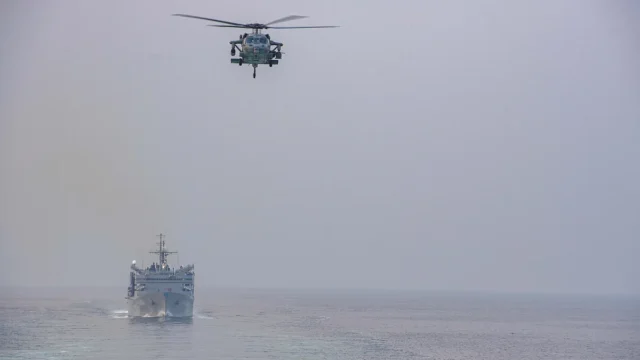
Iran warns of an ‘apocalyptic war’ if attacked again: what it means for India, the Strait of Hormuz and BRICS
Iran has warned that any fresh attack by the United States and Israel will turn into an “apocalyptic war” whose effects will reach the Gulf monarchies around it. Its Revolutionary Guards say American warships will not be allowed into the Persian Gulf, as Washington weighs new air strikes. The row has reached New Delhi too: Iran’s Parliament Speaker will skip the BRICS Parliamentary Forum here next week, amid a dispute over a medicine flight. For you, this links three exam favourites: the Strait of Hormuz, the Gulf Cooperation Council and India’s energy security.
UPSC angle: Prelims: Strait of Hormuz, GCC members, BRICS expansion, Chabahar, INSTC. · Mains GS-II: India’s West Asia policy and energy security.
25 Oct 2026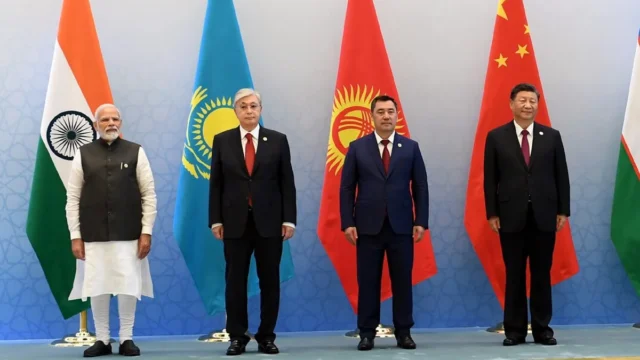
SCO Heads of Government meet in Dushanbe: Rajnath calls for dismantling the terror ecosystem
Defence Minister Rajnath Singh represented India at the 25th meeting of the SCO Council of Heads of Government in Dushanbe, Tajikistan, on 20 October 2026. With Pakistan’s Deputy Prime Minister in the room, he said there can be no justification and no double standards on terrorism. The meeting adopted the SCO budget for 2027 and a 2026–30 action plan for trade and economic cooperation.
UPSC angle: Prelims: SCO bodies and locations, new centres, INSTC. · Mains GS-II: SCO’s value for India; GS-III: terror financing.
21 Oct 2026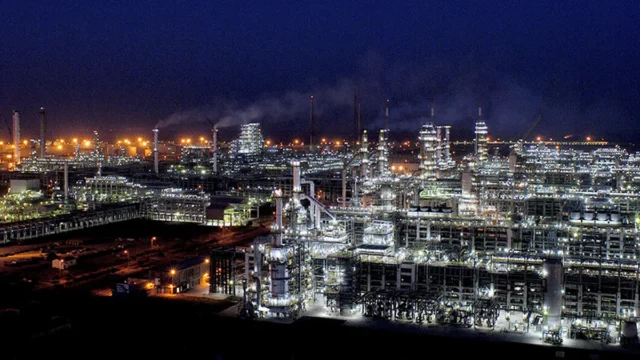
Rubio at Jamnagar: US pitches oil and Venezuelan crude to India’s ‘refining superpower’
US Secretary of State Marco Rubio visited Reliance’s Jamnagar refinery complex in Gujarat on 21 October 2026, a day after calling India a ‘refining superpower’. He wants India to buy more US oil and refine more Venezuelan crude. In Mumbai on 20 October, External Affairs Minister S. Jaishankar also held an unannounced India–US–UAE meeting on energy and connectivity, with the Strait of Hormuz blocked.
UPSC angle: Prelims: Jamnagar, Hormuz, I2U2, IMEC, SPR sites. · Mains GS-II/III: energy security vs strategic autonomy; India–US–UAE.
21 Oct 2026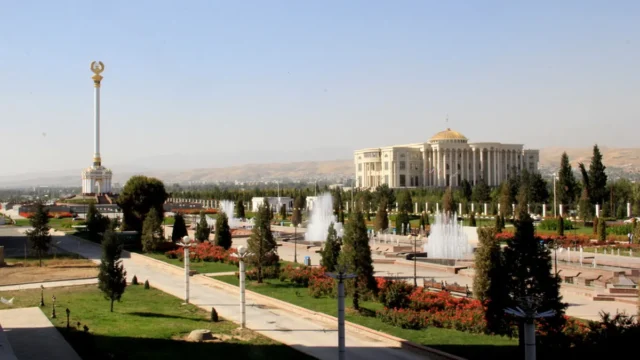
SCO Heads of Government meet in Dushanbe on 19–20 October: Rajnath Singh to represent India
Defence Minister Rajnath Singh will represent India at the 25th meeting of the SCO Council of Heads of Government (CHG) in Dushanbe, Tajikistan, on 19–20 October 2026. This is the SCO’s second-highest body, and it looks after trade, economy, connectivity and the Organisation’s budget. The last CHG met in Moscow on 18 November 2025, where External Affairs Minister S. Jaishankar spoke for India.
UPSC angle: Prelims: SCO members, bodies (CHS, CHG, RATS), founding year, CHG venue. · Mains GS-II: India and regional groupings, Central Asia.
18 Oct 2026Learn the concept
Question text as printed in the official UPSC Civil Services (Main) question paper. The model answer is original Battle IAS work; use it to learn structure, not to memorise.
Want every PYQ in one place? See the Battle IAS PYQ Book.