
UPSC Mains 2022 GS Paper 2 Q15: model answer
Discuss the role of the Election Commission of India in the light of the evolution of the Model Code of Conduct.
What the question wants
Discuss the Election Commission's role as seen through how the Model Code of Conduct has developed.
How to structure it
Discuss the role ... in the light of the evolution: history, then ECI's use of it, then the debate.
- Origin
- Evolution
- ECI's role
- Problems
- Way forward
How to think it through
The MCC is a remarkable thing: no law, yet obeyed. Its history is a story of ECI growing in confidence, from 1960 Kerala to Seshan to cVIGIL. End on the current worry: whether it is applied evenly.
Model answer
The Model Code began in Kerala in 1960 as a set of rules that parties drew up for themselves. It has no statute behind it, yet it now governs every minister and candidate from the day elections are announced.
Evolution
- 1968: the Election Commission issued it nationally after consulting parties.
- 1979: a section on the party in power added: no new schemes, no use of official machinery.
- 1991 onwards: T.N. Seshan enforced it strictly; postponed polls, stopped official tours.
- 2001: the Supreme Court in Harbans Singh Jalal held it applies from the date of announcement.
- 2013: guidelines on manifestos after S. Subramaniam Balaji.
- 2014–24: rules for social media, the cVIGIL app (2018) for citizen complaints, and limits on campaigning in the last 48 hours.
ECI's role
- Article 324 grants superintendence, direction and control; the MCC is how ECI turns that power into daily rules.
- Tools: notices, censure, bans on campaigning (used against leaders of several parties), transfer of officials, countermanding polls.
- Monitoring expenditure, flying squads and paid news.
Problems
- No legal backing: violations are punished only through IPC or RP Act provisions.
- Long schedules (seven phases in 2024) stretch the Code for weeks and freeze governance.
- Criticism of uneven action against senior leaders; delay in deciding complaints.
- Hate speech and deepfakes on social media move faster than notices.
Way forward
- A Parliamentary standing committee (2013) suggested making it statutory; ECI prefers it flexible.
- Time-bound decisions on complaints, published reasons and equal treatment.
- Shorter, compact poll schedules.
The MCC shows that the ECI's authority comes from credibility, not statute. That credibility is renewed each time it acts evenly.
Draw: A timeline of the MCC from 1960 to cVIGIL, with Seshan as the turning point.
Keywords, cases and data to drop in
Kerala 1960, 1968, 1979 party in power, Seshan 1991, Harbans Singh Jalal 2001, Subramaniam Balaji 2013, cVIGIL 2018, Article 324, campaign bans, statutory backing.
Where most answers lose marks
- Calling the MCC legally enforceable. It is a consensus document, enforced through ECI's Article 324 powers and other laws.
Related Mains PYQs
- “Women as a class neither belong to a minority group nor are they regarded as forming a backward class.” In the light… UPSC 2026 · GS-II
- Is the right to vote a fundamental right? Discuss the position of the Election Commission of India while undertaking the revision of… UPSC 2026 · GS-II
- To what extent do pressure groups, social movements and corporate lobbies deepen pluralistic democracy in India by representing excluded interests? Analyse whether… UPSC 2026 · GS-II
- Discuss the ‘corrupt practices’ for the purpose of the Representation of the People Act, 1951. Analyze whether the increase in the assets… UPSC 2025 · GS-II
Fresh examples from current affairs

Any voter can prosecute a candidate for a false affidavit: Supreme Court on Section 125A of the RP Act
The Supreme Court has held that any private citizen, including an ordinary voter, can file a criminal complaint against a candidate who hides information or gives false details in the nomination affidavit. A Bench of Justices Dipankar Datta and Sheel Nagu ruled that the bar in Section 195 of the CrPC, which allows only a public servant to complain for certain offences, does not apply to Section 125A of the Representation of the People Act, 1951. The Hindu reported the ruling on 24 October 2026. For you, it links three exam favourites: the voter’s right to know, candidate affidavits and electoral reform.
UPSC angle: Prelims: Sections 33A and 125A of the RP Act; Section 195 CrPC; ADR (2002), PUCL (2003). · Mains GS-II: electoral reforms, criminalisation of politics.
24 Oct 2026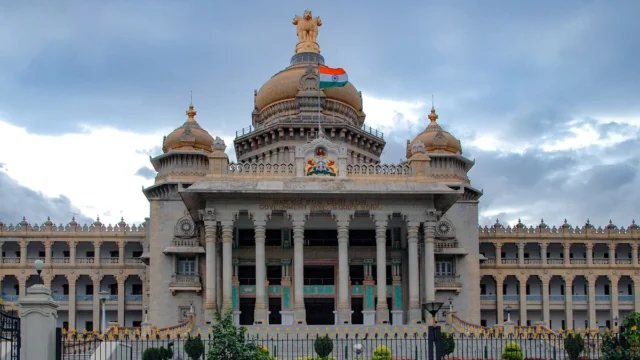
Legislative Council polls in four States: why only six States have a second chamber
Polling for 28 seats in the Legislative Councils of Uttar Pradesh, Bihar, Maharashtra and Karnataka took place on 23 October 2026, with results due on Tuesday. Only six States, these four plus Telangana and Andhra Pradesh, have a second House. The Indian Express explained on 24 October why these bodies exist and why they are debated. It is a high-yield Prelims area: Articles 169 and 171, who votes, and how the Council differs from the Rajya Sabha.
UPSC angle: Prelims: Articles 168, 169, 171; composition; six States. · Mains GS-II: bicameralism, State legislatures.
24 Oct 2026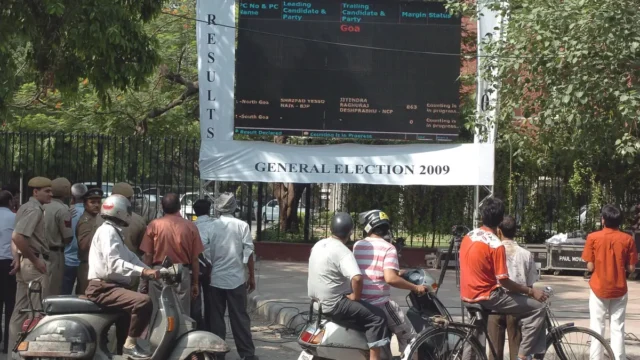
Election Commissioners’ letters to the Cabinet Secretary: what the RTI reply reveals about the ECI
An RTI reply reported on 22 October 2026 shows that Election Commissioners S.S. Sandhu and Vivek Joshi wrote to Cabinet Secretary T.V. Somanathan on 29 July, complaining that Senior Deputy Election Commissioner Maneesh Garg changed the work of officers without consulting the Commission. The Cabinet Secretariat chose only to acknowledge the letters, saying that acting on them could be seen as interference in a constitutional body. The episode shows why the Commission needs clear internal rules for a multi-member body.
UPSC angle: Prelims: Article 324, 2023 Act, Seshan (1995), Article 243K. · Mains GS-II: independence and functioning of constitutional bodies.
23 Oct 2026
ECI eases SIR verification: BLOs to collect documents at home, hearings online only in exceptional cases
On 26 September 2026 the Election Commission eased verification in the ongoing Special Intensive Revision (SIR) of electoral rolls. For electors served notice as unmapped or for logical discrepancies, BLOs will now collect documents at home and upload them on ECINet. Hearings will be held only in exceptional cases, preferably online.
UPSC angle: Prelims: BLO, ERO, DEO roles; Registration of Electors Rules 1960. · Mains: Balancing roll purity with inclusion of the poor and migrants.
26 Sep 2026Learn the concept
Question text as printed in the official UPSC Civil Services (Main) question paper. The model answer is original Battle IAS work; use it to learn structure, not to memorise.
Want every PYQ in one place? See the Battle IAS PYQ Book.