
UPSC Mains 2014 GS Paper 3 Q16: model answer
“The diverse nature of India as a multi-religious and multi-ethnic society is not immune to the impact of radicalism which is seen in her neighbourhood.” Discuss along with strategies to be adopted to counter this environment.
What the question wants
Discuss how radicalism in India's neighbourhood can affect its diverse society and suggest strategies to counter it.
How to structure it
Neighbourhood, impact, strategy.
- Radicalism around India
- Channels into India
- Vulnerabilities
- Strategies
How to think it through
Pakistan (LeT, JeM state-backed), Afghanistan (Taliban), Bangladesh (JMB, HuJI), Sri Lanka (LTTE earlier, Easter 2019), Myanmar (Rohingya crisis; Buddhist radicalism), Maldives (ISIS recruitment). Channels: online propaganda, cross-border terror, funding via charities, refugee flows, communal riots exploited. India strategy: inclusive governance, deradicalisation (Maharashtra 2016, Kerala), community leaders, counter-narratives, intelligence, social media monitoring, avoid communal politics, education.
Model answer
India sits in a neighbourhood where radical ideas have been exported as policy. Lashkar- e-Taiba and Jaish-e-Mohammed were nurtured across the western border; the Taliban returned to Kabul in 2021; Bangladesh saw the Holey Artisan attack in 2016; and Sri Lanka's Easter bombings of 2019 were planned by a small group radicalised online.
How it reaches India
- Cross-border terror in J&K and beyond.
- Online propaganda that targets lonely or angry young people.
- Funds routed through charities and hawala.
- Communal incidents that radical groups exploit to recruit.
- Refugee flows and porous borders that hide a few bad actors.
Why a diverse society is vulnerable
- Identity grievances, real or felt, can be turned into anger.
- Unemployment and poor schooling leave young people open to recruiters.
- Polarising speech at home makes outside propaganda easier.
- Weak community policing means early signs are missed.
Strategies to counter it
- Inclusive governance: equal policing, jobs and justice for every community.
- Deradicalisation programmes, like Maharashtra's 2016 plan and counselling-led returns of youth.
- Counter-narratives by religious scholars, teachers and families.
- Intelligence and cyber monitoring with legal safeguards.
- Firm action against hate speech of every colour.
- Regional cooperation on terror lists and extradition.
- Quality schooling and skilling in border and backward districts, so recruiters find fewer idle hands.
India's best shield is not a wall but a society where no community feels it has to look abroad for justice.
Draw: A map of India's neighbourhood with arrows showing radical influences and their entry routes.
Keywords, cases and data to drop in
LeT, JeM, Taliban 2021, Holey Artisan 2016, Easter bombings 2019, online radicalisation, hawala, deradicalisation (Maharashtra 2016), counter-narrative, inclusive governance.
Where most answers lose marks
- Blaming only the neighbours and ignoring domestic vulnerabilities and remedies.
Related Mains PYQs
- Discuss how national security can be balanced with concerns of human rights. UPSC 2026 · GS-IV
- Rajapuram is a border district. Jhara and Biru, its two major communities are in continual conflict with each other. The social fabric… UPSC 2026 · GS-IV
- Keeping the national security in mind, examine the ethical dilemmas related to controversies over environmental clearance of development projects in ecologically sensitive… UPSC 2025 · GS-IV
- Raman is a senior IPS officer and has recently been posted as D.G. of a state. Among the various issues and problems/challenges… UPSC 2024 · GS-IV
Fresh examples from current affairs
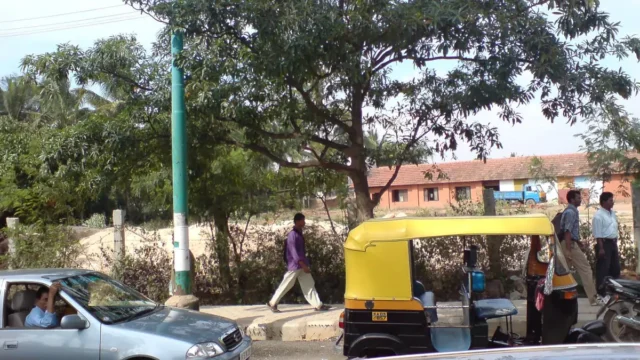
Vehicle data sold for ₹5: Centre orders CERT-In audit of VAHAN, SARATHI and e-Challan portals
The Ministry of Road Transport and Highways has asked CERT-In, India’s cyber-security agency, for a forensic audit of its VAHAN, SARATHI, e-Challan and pollution-certificate portals. A security firm found that owners’ names, addresses and phone numbers were being sold through apps and a Telegram channel for as little as ₹5. On the same day, The Hindu reported a separate leak of film certification records. For you, this connects cyber security, the right to privacy and the Digital Personal Data Protection Act, 2023.
UPSC angle: Prelims: CERT-In, Section 70B IT Act, VAHAN/SARATHI, Puttaswamy, DPDP Act 2023, GDPR. · Mains GS-III: cyber security and data protection.
25 Oct 2026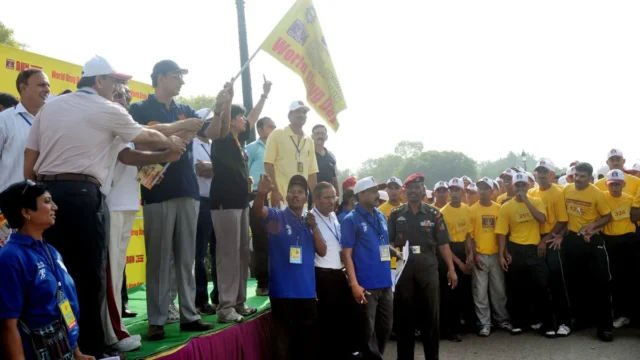
Nasha Mukt Bharat Abhiyaan reaches 35 crore people: demand reduction and the 2029 drug-free goal
The Ministry of Social Justice and Empowerment said on 22 October 2026 that the Nasha Mukt Bharat Abhiyaan has reached over 35 crore people, including 13.94 crore youth and 10.86 crore women, and more than 32 lakh educational institutions. Launched on 15 August 2020 in 272 vulnerable districts, it now runs across the country. It is the demand side of a twin strategy, while police and the NCB attack supply, with the Home Minister’s target of uprooting the drug trade by 31 December 2029.
UPSC angle: Prelims: NMBA, NAPDDR, Article 47, NDPS Act, helpline 14446. · Mains GS-II/III: drug abuse, demand and supply reduction.
23 Oct 2026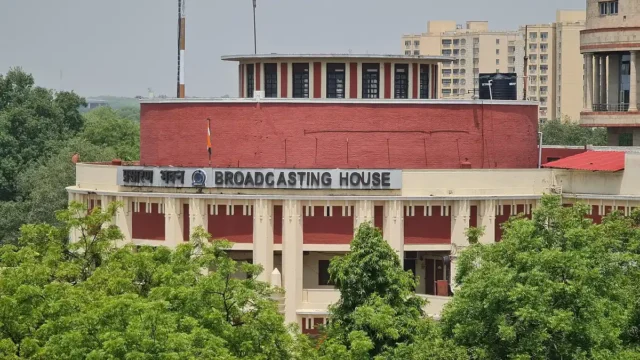
Prasar Bharati at 29: why India’s public broadcaster still lacks the autonomy its law promised
A lead article in The Hindu on 23 October 2026 argues that Prasar Bharati, set up to be a free public broadcaster, still works like a government department. The Prasar Bharati Act of 1990 came into force only in 1997, and its key safeguards, a parliamentary committee (Section 13) and a Broadcasting Council for complaints (Sections 14–15), were never set up, while Section 23 still lets the Centre give binding directions. For you, this is a neat case study of a law that promises autonomy but never builds the institutions that make it real.
UPSC angle: Prelims: Prasar Bharati Act 1990, Sections 13–15 and 23, Cricket Association of Bengal (1995). · Mains GS-II: autonomy of statutory bodies; media and democracy.
23 Oct 2026
Face-off with China continues in Arunachal: ITBP chief confirms stand-off at Asaphila
ITBP Director General Shatrujeet Kapur said on 22 October 2026 that face-offs with Chinese troops are continuing at several places along the Arunachal Pradesh border. It is the first official confirmation of the scale of tension since July, when Chinese troops pitched tents 6–7 km inside India’s perception of the Line of Actual Control near Asaphila in Upper Subansiri. Three rounds of high-level talks have not ended it, so the ITBP is betting on drones and underground shelters.
UPSC angle: Prelims: McMahon Line, WMCC, SR talks, ITBP, Upper Subansiri. · Mains GS-III: border management; GS-II: India–China.
23 Oct 2026Learn the concept
Question text as printed in the official UPSC Civil Services (Main) question paper. The model answer is original Battle IAS work; use it to learn structure, not to memorise.
Want every PYQ in one place? See the Battle IAS PYQ Book.