
UPSC Mains 2019 GS Paper 3 Q16: model answer
How can biotechnology help to improve the living standards of farmers?
What the question wants
Explain how biotechnology can raise farmers' living standards.
How to structure it
Productivity, costs, risk, income, cautions.
- Farm distress
- Higher yields
- Lower costs
- Lower risk
- New incomes
- Concerns and regulation
How to think it through
Bt cotton 2002 (yield up, pesticide down, later pink bollworm resistance); GM mustard DMH-11 (environmental release 2022, SC split verdict 2024); genome-edited rice varieties released May 2025 (DRR Dhan 100 Kamala, Pusa DST Rice 1); tissue culture banana, biofertilisers, biopesticides; marker-assisted breeding (submergence-tolerant Swarna-Sub1); livestock (embryo transfer, sex-sorted semen, vaccines); fish. Lower cost, climate resilience, nutrition (biofortified crops). Concerns.
Model answer
When Bt cotton arrived in 2002, India's cotton output roughly doubled within a decade and insecticide spraying against bollworm fell sharply. A decade later, the pink bollworm had become resistant. Both halves of that story matter when we ask how biotechnology can help farmers.
Higher yields and better crops
- GM crops: Bt cotton, and GM mustard DMH-11, approved for environmental release in 2022.
- Genome-edited rice: in May 2025 India released two varieties, DRR Dhan 100 (Kamala) and Pusa DST Rice 1, with higher yields and stress tolerance.
- Marker-assisted breeding: Swarna-Sub1 rice survives two weeks under floodwater.
- Tissue culture gives disease-free banana and sugarcane plants.
Lower costs
- Biofertilisers and biopesticides reduce chemical bills.
- Pest-resistant crops cut spraying and labour.
Lower risk
- Drought, flood and salt-tolerant varieties for climate shocks.
- Disease diagnostics and livestock vaccines prevent losses.
New and better incomes
- Livestock biotech: sex-sorted semen and embryo transfer for higher milk yields.
- Biofortified crops such as zinc wheat and iron pearl millet for nutrition and premium markets.
- Aquaculture: better fish seed and disease control.
- Agri-waste to value: biogas and bio-ethanol from crop residue.
Concerns
- Resistance in pests, as with pink bollworm.
- Seed costs and dependence on companies.
- Biosafety and public trust; regulation through the GEAC, and SDN-1 and SDN-2 gene editing exempt from GM rules since 2022.
- Small farmers may lack access to credit and extension.
- Court challenges: the Supreme Court gave a split verdict on GM mustard in 2024 and asked for a national GM policy.
Way forward
- Public-sector research for small farmers, transparent regulation, and integration with extension services and FPOs.
Biotechnology can lift farm incomes, provided the seed reaches the small farmer and the science stays ahead of the pest.
Draw: A farmer at the centre with arrows: yield, cost, risk, income.
Keywords, cases and data to drop in
Bt cotton 2002, pink bollworm resistance, GM mustard DMH-11, genome-edited rice 2025, SDN-1/SDN-2 exemption 2022, Swarna-Sub1, tissue culture, biofertilisers, sex-sorted semen, biofortification, GEAC.
Where most answers lose marks
- Writing only about GM crops. Biotech is wider: biofertilisers, tissue culture, livestock.
Related Mains PYQs
- What is the basic principle behind vaccine development? How do vaccines work? What approaches were adopted by the Indian vaccine manufacturers to… UPSC 2022 · GS-III
- The increase in life expectancy in the country has led to newer health challenges in the community. What are those challenges and… UPSC 2022 · GS-III
- Each year a large amount of plant material, cellulose, is deposited on the surface of Planet Earth. What are the natural processes… UPSC 2022 · GS-III
- Launched on 25th December, 2021, James Webb Space Telescope has been much in the news since then. What are its unique features… UPSC 2022 · GS-III
Fresh examples from current affairs
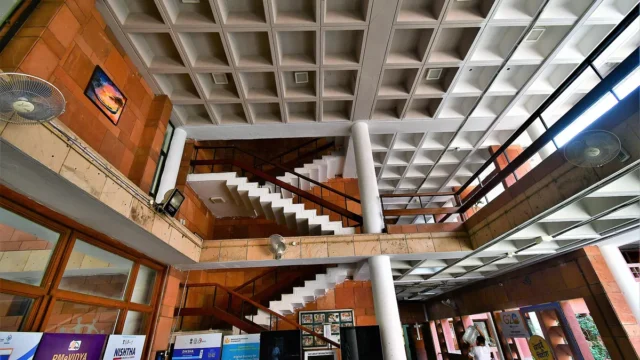
NCERT releases 20-hour AI and computational thinking module for Classes 9-12
NCERT has released a 20-hour, activity-based introductory module on computational thinking and artificial intelligence for Classes 9 to 12, developed with IIT-Madras and IIT-Jodhpur. It stresses safe and ethical use, including data privacy and spotting deepfakes. For you, this connects school education reform, digital literacy and AI governance.
UPSC angle: Prelims: NCERT, deepfakes, computational thinking. · Mains GS-II: education and human resources; GS-III: awareness in IT.
26 Oct 2026
DRDO’s indigenous AIP for Kalvari-class submarines reaches the Setting to Work Phase-2 stage
Diesel-electric submarines must come up often to run their engines and charge batteries, which can give away their position. Air Independent Propulsion (AIP) lets them stay underwater much longer. The DRDO’s Naval Materials Research Laboratory has built India’s own AIP, and its energy module began the Setting to Work Phase-2 activity at Larsen and Toubro’s Hazira yard on 24 October. For you, it links fuel cells, the Kalvari class and defence self-reliance.
UPSC angle: Prelims: AIP, fuel cells, Kalvari class, Project-75. · Mains GS-III: defence indigenisation; maritime security.
25 Oct 2026
Panel to review pharma marketing code: UCPMP 2024 and why a voluntary code is not enough
The Department of Pharmaceuticals has set up a committee under Dr. M. Srinivas, Member, NITI Aayog, to review how drug companies market medicines and to suggest ways to curb unethical practices, PIB said on 23 October 2026. Former Union Health Secretary Preeti Sudan and Dr. Naresh Trehan of Medanta are members, and the report is due within two months of its first meeting. The core issue: the Uniform Code for Pharmaceutical Marketing Practices is still voluntary.
UPSC angle: Prelims: UCPMP, Department of Pharmaceuticals, NITI Aayog. · Mains GS-II: health governance, regulation and ethics.
24 Oct 2026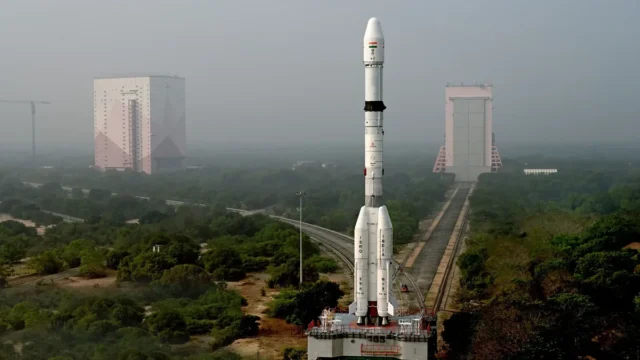
NVS-03 launch on 30 October: can ISRO’s new satellite bring NavIC back to life?
ISRO will launch NVS-03, its third new-generation navigation satellite, on 30 October 2026. NavIC, India’s own GPS-like system, has not been able to give location data because only three satellites work, while positioning needs at least four. If NVS-03 works, NavIC can offer positioning again. It is a lesson in why strategic technology needs both satellites and users.
UPSC angle: Prelims: NavIC/IRNSS, coverage, signals, global GNSS. · Mains GS-III: indigenisation of technology, space programme.
24 Oct 2026Learn the concept
Question text as printed in the official UPSC Civil Services (Main) question paper. The model answer is original Battle IAS work; use it to learn structure, not to memorise.
Want every PYQ in one place? See the Battle IAS PYQ Book.