
UPSC Mains 2022 GS Paper 3 Q2: model answer
Is inclusive growth possible under market economy? State the significance of financial inclusion in achieving economic growth in India.
What the question wants
Say whether inclusive growth is possible in a market economy, and explain the significance of financial inclusion for growth in India.
How to structure it
Two parts.
- Markets and inclusion
- Conditions
- Financial inclusion: meaning
- Its significance
- Gaps
How to think it through
Markets alone tend to reward those who already have assets and skills. Inclusion needs state action. Financial inclusion is one bridge: Jan Dhan, UPI, Mudra. Then the gaps: dormant accounts, thin credit, women.
Model answer
Markets reward those who already have capital, skills and connections. Left alone, they grow the pie but not everyone's slice. Inclusive growth in a market economy is possible, but only with a state that widens access.
Conditions for inclusion
- Public education, health and infrastructure.
- Competition law against monopolies.
- Land records, skills and market access for small producers.
- Safety nets: MGNREGA, NFSA, PM-JAY.
Financial inclusion and its significance
It means affordable access to banking, credit, insurance, pensions and payments for all.
- Savings mobilised from millions of households for investment.
- Credit for small firms: Mudra loans, Stand-Up India.
- Risk cover: PMJJBY, PMSBY, Atal Pension Yojana.
- DBT through the JAM trinity, cutting leakages.
- UPI lowers transaction costs and formalises small business by creating a record of sales.
- Women's accounts raise their bargaining power.
Gaps
Dormant and low-balance accounts, thin formal credit for small farmers and informal firms, low insurance cover, and rising digital fraud among first-time users.
Conclusion
A market economy can be inclusive when the state widens access, and financial inclusion turns market growth into household opportunity.
Draw: A bridge labelled 'financial inclusion' from 'households' to 'markets', with planks named Jan Dhan, UPI and Mudra.
Keywords, cases and data to drop in
market failure, JAM trinity, PMJDY 2014, Mudra 2015, UPI, DBT, RBI Financial Inclusion Index, PMJJBY, PMSBY.
Where most answers lose marks
- Writing only about financial inclusion. The first part asks about markets and inclusion.
Related Mains PYQs
- What do you mean by Digital Rupee? In this context, explain the working and progress of India's Central Bank Digital Currency (CBDC). UPSC 2026 · GS-III
- Examine the view that financial inclusion is an integral part of social and economic inclusion in a country like India. Also throw… UPSC 2026 · GS-III
- How are startups in India promoting entrepreneurship, innovation and employment? Discuss the global and domestic challenges in their working and suggest suitable… UPSC 2026 · GS-III
- Explain how the Fiscal Health Index (FHI) can be used as a tool for assessing the fiscal performance of states in India.… UPSC 2025 · GS-III
Fresh examples from current affairs
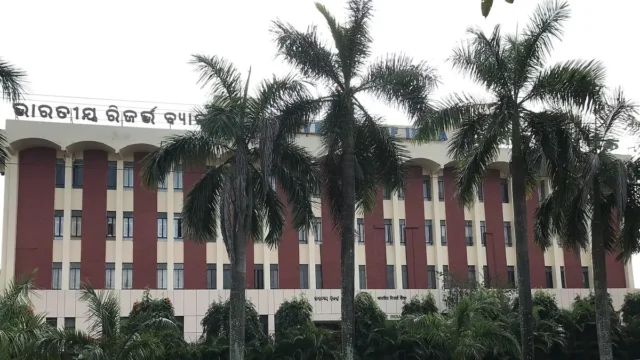
MPC minutes: RBI rate-setters divided on whether inflation is spreading, and what it means
Minutes of the Monetary Policy Committee’s 5–7 October 2026 meeting, released on 21 October, show that four of six members think inflation is becoming ‘generalised’, spreading across many items, while two do not. All six had voted to raise the repo rate by 25 basis points to 5.5%. Retail inflation jumped to 5.54% in September, the RBI rejected all bids in a Treasury bill sale, and markets now wonder how hard the next hike will be.
UPSC angle: Prelims: MPC composition, Section 45ZB, repo rate, T-bills, core vs headline inflation. · Mains GS-III: inflation targeting and policy communication.
23 Oct 2026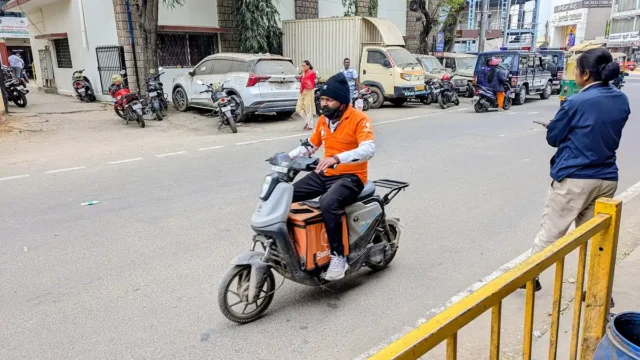
PLFS changes from January 2027: new stratum for platform workers and unpaid work questions
The National Statistics Office announced on 23 October 2026 changes to the Periodic Labour Force Survey from January 2027. A new sampling stratum will capture digital platform (gig) workers, who were under-counted, fresh samples will be drawn from an updated frame, and new questions will measure unpaid household, care and volunteer work. The public has 15 days to comment on the concept note.
UPSC angle: Prelims: PLFS, NSO, LFPR/WPR/UR, Code on Social Security 2020. · Mains GS-III: employment, gig economy, data quality.
23 Oct 2026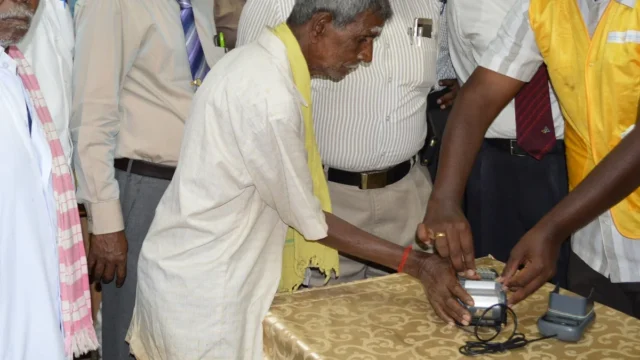
Financial inclusion saturation campaign in 2.70 lakh panchayats and ULBs from 21 October
The Department of Financial Services will run a nationwide campaign from 21 October to 31 December 2026 to saturate financial inclusion schemes in 2.70 lakh gram panchayats and urban local bodies. Bank camps will enrol people in PMJJBY, PMSBY and APY, open Jan Dhan accounts, finish re-KYC and nominations, and spread awareness on digital frauds and unclaimed deposits.
UPSC angle: Prelims: scheme parameters of PMJJBY, PMSBY, APY, PMJDY. · Mains GS-III: inclusive growth and financial inclusion.
20 Oct 2026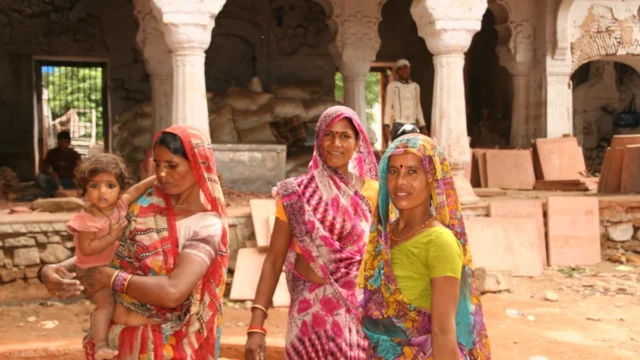
PLFS September 2026: unemployment steady at 5%; urban women’s participation highest since October 2025
The Periodic Labour Force Survey (PLFS) Monthly Bulletin for September 2026, released by MoSPI on 15 October 2026, put the unemployment rate (UR) for people aged 15 and above at 5.0%, the same as in August and 0.2 points lower than a year earlier. The labour force participation rate (LFPR) was 55.5%. Urban female LFPR rose to 25.9%, its highest since October 2025, while rural female UR fell to 3.9%, the lowest of 2026.
UPSC angle: Prelims: LFPR, WPR, UR, CWS vs UPS. · Mains GS-III: jobs, inclusive growth and women’s work.
15 Oct 2026Learn the concept
Question text as printed in the official UPSC Civil Services (Main) question paper. The model answer is original Battle IAS work; use it to learn structure, not to memorise.
Want every PYQ in one place? See the Battle IAS PYQ Book.