
Dormant provident fund money paid without claim
On its 74th foundation day, the Employees’ Provident Fund Organisation said small sums in dormant provident fund accounts will be paid out without a claim form. It also launched WhatsApp services. Read it to revise what EPFO is, its schemes and India’s social security law.
- Payout limit
- Up to ₹1,000
- Accounts
- About 1 lakh, worth ₹5 crore
- Members
- About 8 crore
- Corpus
- Nearly ₹32 lakh crore
EPFO’s new services: what changed?
Many workers change jobs and forget small sums in old provident fund accounts. Now that money can reach them without paperwork.
- The Employees’ Provident Fund Organisation turned 74 on 1 November.
- Labour Minister Mansukh Mandaviya launched new services for members.
- Aadhaar-verified inoperative accounts with up to ₹1,000 will be settled after identity and bank checks, with no claim form.
- About one lakh accounts, worth ₹5 crore, will gain.
- A WhatsApp service gives balance, last five transactions and passbook.
- Average claim settlement time fell to 2.57 days in October 2026.
What is the EPFO?
The EPFO is a statutory body under the Employees’ Provident Funds and Miscellaneous Provisions Act, 1952, working under the Ministry of Labour and Employment.
It runs three schemes: the Employees’ Provident Fund Scheme, 1952, the Employees’ Deposit Linked Insurance Scheme, 1976, and the Employees’ Pension Scheme, 1995.
It is governed by a Central Board of Trustees with members from government, employers and workers, chaired by the Labour Minister.
The Code on Social Security, 2020 brings the 1952 Act and other social security laws together in one code.
Which laws and Articles apply?
- Employees’ Provident Funds and Miscellaneous Provisions Act, 1952.
- Code on Social Security, 2020.
- Article 41: right to public assistance in old age and unemployment (Directive Principle).
- Article 43: living wage and decent life for workers.
Why does EPFO’s automatic payout matter?
| Angle | What to note |
|---|---|
| Social security | Workers’ savings must not be lost. |
| Ease of living | No claim form for small sums. |
| Digital governance | WhatsApp and Aadhaar make services easy. |
| Scale | About 8 crore members and ₹32 lakh crore corpus. |
What are the problems with EPFO’s automatic payout?
- Aadhaar mismatches may block payouts.
- Only small balances are covered.
- Most informal workers are outside the EPFO.
- Data privacy needs care in WhatsApp services.
What should be done next on EPFO’s automatic payout?
- Raise the auto-payout limit over time.
- Fix Aadhaar and bank seeding errors.
- Bring gig and informal workers under social security.
- Keep strong data protection.
What can Prelims ask on EPFO’s automatic payout?
Prelims probability: Expect a question on the Employees’ Provident Fund Organisation: a statutory body under the 1952 Act and the Ministry of Labour and Employment.
- EPFO: statutory body under the 1952 Act; Ministry of Labour and Employment.
- Schemes: EPF 1952, EDLI 1976, EPS 1995.
- Central Board of Trustees chaired by the Labour Minister.
- Code on Social Security, 2020 subsumes the 1952 Act.
- Auto-payout: inoperative accounts with up to ₹1,000.
How to write about EPFO’s automatic payout in Mains
Practice question (15 marks, 250 words): Technology can make social security truly universal. Discuss with reference to recent EPFO reforms.
- Intro: auto-payout and WhatsApp services.
- Gains: speed, access, less paperwork.
- Gaps: informal workers, Aadhaar errors, privacy.
- Way forward: Code on Social Security, wider cover.
- Conclusion: savings that reach every worker.
Ready lines for your answer
- A worker's savings should follow the worker.
- Simple services reach more people.
Quotable data pointAverage EPFO claim settlement time: 2.57 days in October 2026.
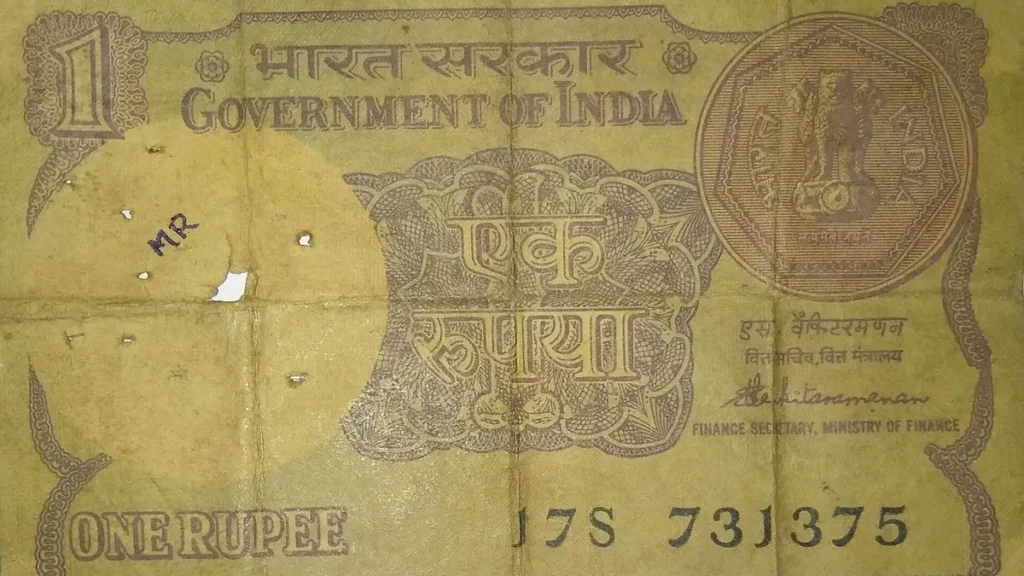
Photo: Reserve Bank of India, GODL-India, via Wikimedia Commons
Exam angle
Prelims: EPFO, 1952 Act, schemes. · Mains GS-II: social security and e-governance.
Practice MCQs
Original practice questions (not PYQs).
Consider the following statements:
1. The Employees' Provident Fund Organisation is a statutory body under the Employees' Provident Funds and Miscellaneous Provisions Act, 1952.
2. The Union Labour Minister chairs its Central Board of Trustees.
3. The Code on Social Security, 2020 merges the 1952 Act with other social security laws.
How many of the above statements are correct?
Answer (c) & explanation
All three are correct. The organisation works under the Ministry of Labour and Employment.
Under the new service of the Employees' Provident Fund Organisation, Aadhaar-verified inoperative accounts will be settled without a claim if the balance is up to:
Answer (d) & explanation
Balances of up to ₹1,000 in Aadhaar-verified inoperative accounts will be paid out after identity and bank checks. About one lakh accounts worth ₹5 crore will benefit.
Questions students ask about this
Which dormant PF accounts will be paid automatically?
Aadhaar-verified inoperative accounts with up to ₹1,000, after identity and bank checks.
Under which law was the EPFO set up?
The Employees' Provident Funds and Miscellaneous Provisions Act, 1952.
Which ministry runs the EPFO?
The Ministry of Labour and Employment.
What can members get on WhatsApp?
Balance, last five transactions and passbook.