
Villages without fast mobile internet fall 75%
Villages without fourth-generation mobile coverage fell from 45,180 in 2022 to 11,372 — about 75% fewer — show data obtained under the Right to Information Act. Bharat Sanchar Nigam Limited’s saturation project drove much of this; an order for 26,000 more sites is sanctioned. Odisha still has the most uncovered villages. Read it to revise Digital India and Digital Bharat Nidhi.
- Uncovered villages 2022
- 45,180
- Uncovered villages now
- 11,372 (~75% fewer)
- Most uncovered
- Odisha 1,789; Arunachal 1,518
- Still left out
- About 40 lakh people; 46% in ST-dominated villages
4G in villages: what happened?
Three in four villages that lacked fast mobile internet four years ago now have it — but Odisha and the North-East still wait.
- Villages without 4G coverage fell from 45,180 in 2022 to 11,372, about 75% fewer, according to RTI data.
- BSNL’s saturation project, which first aimed at 24,680 villages, drove much of this with help from private operators; an order for 26,000 more sites is sanctioned.
- Odisha has the most uncovered villages (1,789), then Arunachal Pradesh (1,518).
- About 40 lakh people may still be left out, 46% of them in villages dominated by Scheduled Tribes.
- Some entries clash with the Ministry’s March reply to Parliament, which reported no uncovered village in Kerala; the new list has eight.
What is Digital Bharat Nidhi?
Fourth-generation mobile coverage is the fast internet needed for video classes, UPI payments and telemedicine.
Digital Bharat Nidhi is the renamed Universal Service Obligation Fund that subsidises telecom in remote areas.
BharatNet aims to connect gram panchayats through optical fibre; mobile towers extend the last mile.
Digital India and DigiLocker work only where connectivity reaches.
Where 4G is still missing
| Marker | Figure |
|---|---|
| Uncovered villages | 11,372 |
| Odisha | 1,789 |
| Arunachal Pradesh | 1,518 |
| People possibly left out | About 40 lakh |
Which schemes and funds apply?
- Digital Bharat Nidhi (renamed USOF) for remote connectivity.
- BharatNet for gram-panchayat optical fibre.
- BSNL saturation project and private-operator rollout.
- Right to Information Act as the source of the new village list.
Why does 4G village coverage matter?
| Angle | What to note |
|---|---|
| Inclusion | Classes, payments and jobs need 4G. |
| Tribal gap | Nearly half the leftover people are in ST villages. |
| Federal data | RTI list differs from a March Parliament reply. |
| Prelims | Digital Bharat Nidhi, BharatNet, DigiLocker. |
What are the problems with 4G village coverage?
- Hard terrain and low revenue slow private rollout.
- Power outages make towers useless.
- Data quality can conflict across government replies.
- Affordable handsets and data packs still matter.
What should be done next on 4G village coverage?
- Finish the 26,000 extra sites on a public timetable.
- Prioritise ST-dominated and border villages.
- Pair towers with reliable power and fibre backhaul.
- Publish a live uncovered-village dashboard.
What can Prelims ask on 4G village coverage?
Prelims probability: High. Trend: Digital India (2018) and DigiLocker (2016). Freshness: new data on 11,372 uncovered villages. Static link: Digital Bharat Nidhi, BharatNet. Testable fact: Odisha has the most uncovered villages. Hook: 26,000 more sites.
- Uncovered villages: 45,180 to 11,372.
- Odisha has the most uncovered villages.
- Digital Bharat Nidhi = renamed USOF.
- BharatNet: gram-panchayat fibre.
- About 40 lakh people may still be left out.
How to write about 4G village coverage in Mains
Practice question (15 marks, 250 words): Digital inclusion is incomplete without the last mile. Discuss with reference to villages still without 4G coverage.
- Intro: 75% fall but 11,372 left.
- USOF/Digital Bharat Nidhi and BharatNet.
- Tribal and State-wise gaps.
- Data conflicts and accountability.
- Way forward: sites, power, dashboard.
Ready lines for your answer
- A tower without power is a mast without a voice.
- Digital India ends where the last uncovered village begins.
Quotable data point45,180 to 11,372; Odisha 1,789; about 40 lakh people; 26,000 more sites.
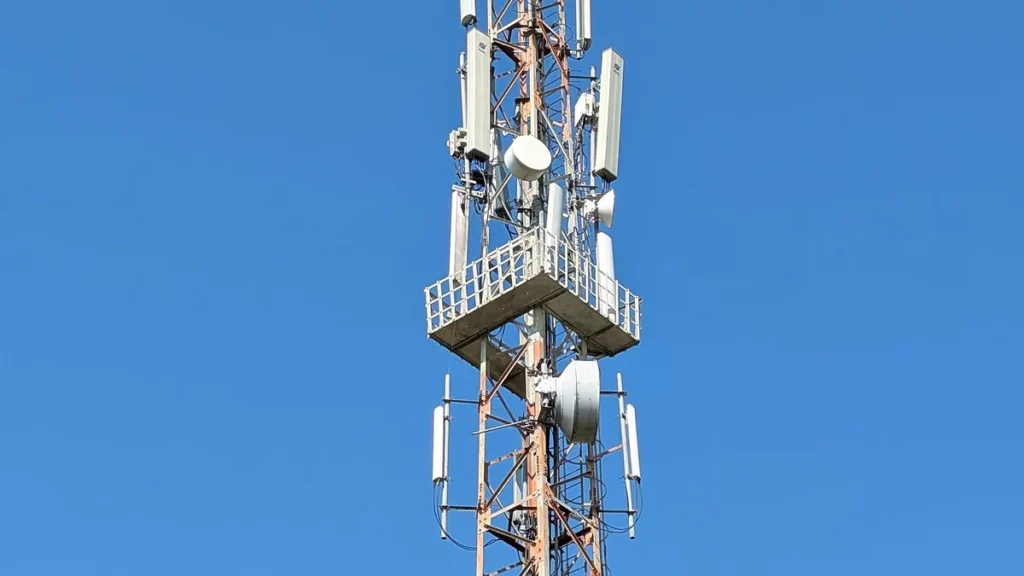
Photo: Rahulsince93, CC BY 4.0, via Wikimedia Commons
Exam angle
Prelims: Digital Bharat Nidhi, BharatNet. · Mains GS-III: infrastructure and inclusion.
Practice MCQs
Original practice questions (not PYQs).
According to data cited in the news, the number of villages without fourth-generation mobile coverage fell from 45,180 in 2022 to about:
Answer (d) & explanation
The figure fell to 11,372, about a fourth of the earlier figure; 24,680 was the saturation project's initial target.
Consider the following statements:
1. Digital Bharat Nidhi is the renamed Universal Service Obligation Fund.
2. BharatNet aims to connect gram panchayats through optical fibre.
3. DigiLocker allows citizens to access their e-documents irrespective of their physical location.
How many of the above statements are correct?
Answer (c) & explanation
All three are correct.
Questions students ask about this
How many villages still lack 4G?
About 11,372, down from 45,180 in 2022.
Which State has the most uncovered villages?
Odisha (1,789), then Arunachal Pradesh (1,518).
What is Digital Bharat Nidhi?
The renamed Universal Service Obligation Fund for remote telecom.
What drove much of the coverage gain?
BSNL's saturation project, with private operators.
How many more sites are sanctioned?
An order for 26,000 more sites.