
Fundamental Duties (Article 51A): List, History, Enforceability and UPSC PYQs
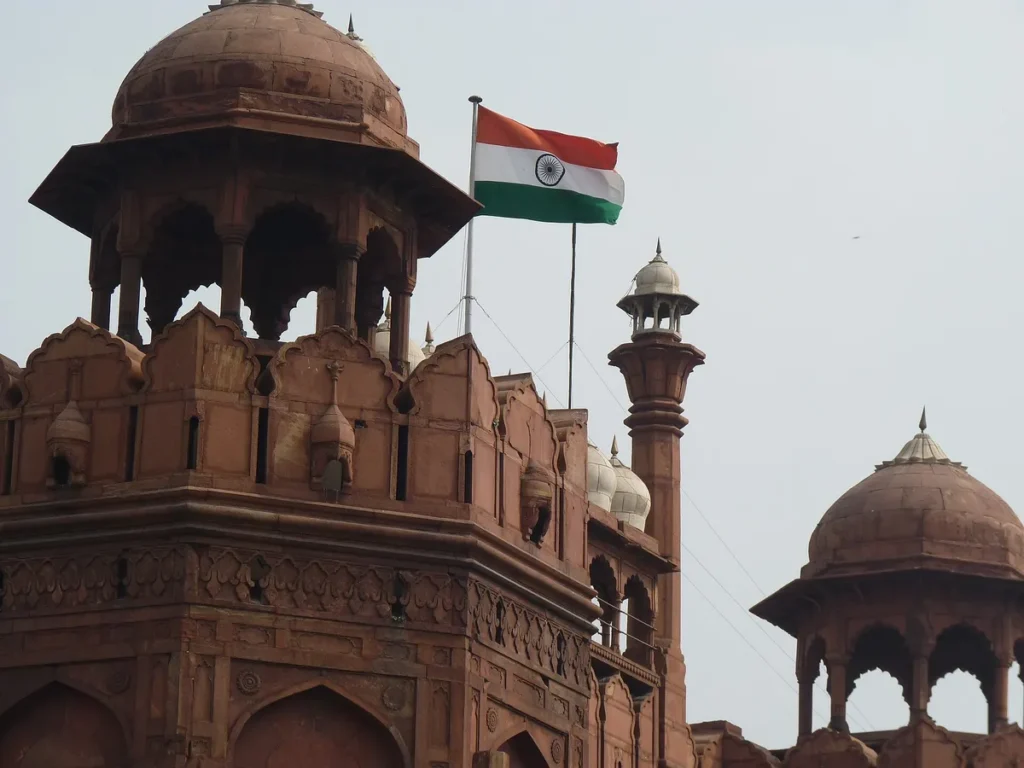
UPSC has already asked about this. Read the story with these questions in mind.
Background: the Swaran Singh Committee
The original Constitution had no list of duties. In 1976, during the Emergency, the Congress party set up the Swaran Singh Committee, which recommended a chapter on duties. It suggested eight; the government added ten through the 42nd Amendment Act, 1976, as Part IVA with a single Article, 51A. The idea is usually traced to the Constitution of the former USSR, which also paired rights with duties. The eleventh duty, on parents and guardians giving their children aged 6-14 opportunities for education, came with the 86th Amendment Act, 2002, alongside Article 21A.
What are Fundamental Duties?
The original Constitution had no list of duties. During the Emergency, the government set up the Swaran Singh Committee (1976), which recommended a chapter on duties, and the 42nd Amendment inserted Part IV-A. The idea is usually traced to the Constitution of the erstwhile USSR. They apply only to citizens, unlike most Fundamental Rights.
List of the 11 Fundamental Duties (Article 51A)
- Abide by the Constitution and respect its ideals and institutions, the National Flag and the National Anthem
- Cherish and follow the noble ideals of the freedom struggle
- Uphold and protect the sovereignty, unity and integrity of India
- Defend the country and render national service when called upon
- Promote harmony and the spirit of common brotherhood; renounce practices derogatory to the dignity of women
- Value and preserve the rich heritage of our composite culture
- Protect and improve the natural environment, including forests, lakes, rivers and wildlife, and have compassion for living creatures
- Develop the scientific temper, humanism and the spirit of inquiry and reform
- Safeguard public property and abjure violence
- Strive towards excellence in all spheres of individual and collective activity
- Parent or guardian to provide opportunities for education to a child between 6 and 14 years (added 2002)
Not in the list (frequent UPSC distractors): voting in elections, paying taxes, family planning, protecting weaker sections.
- NationConstitution, flag, anthem, unity, defence
- HeritageFreedom struggle ideals, composite culture
- SocietyHarmony, dignity of women
- EnvironmentForests, rivers, wildlife
- SelfScientific temper, excellence
- ChildrenEducation for ages 6-14
Why Fundamental Duties are not enforceable
Article 51A has no built-in enforcement mechanism, so courts cannot issue a writ to compel a citizen to perform a duty. However, Parliament can enforce particular duties through ordinary law (e.g. the Prevention of Insults to National Honour Act, 1971; environmental laws), and courts have used Article 51A to interpret laws and uphold “reasonable restrictions”. The Justice J.S. Verma Committee (1999) identified existing legal provisions that operationalise several duties.
Duties in everyday life
Most duties ask for ordinary conduct rather than heroic acts: standing for the national anthem, not defacing public property, keeping rivers clean, treating women with dignity and helping children stay in school. Examiners like to test the less obvious ones, such as developing a scientific temper, humanism and the spirit of inquiry and reform, and striving towards excellence in all spheres of individual and collective activity so that the nation keeps rising to higher levels of achievement.
Why Fundamental Duties were added and why they matter
The stated aim was to remind citizens that rights come with responsibilities. Critics noted the list was added during the Emergency and is vague in places. In Mains, duties work well in GS-II (rights–duties balance) and GS-IV (civic virtue, environmental ethics, scientific temper).
- Part III, Articles 12-35
- In the original Constitution
- Justiciable
- Mostly limits on the State
- Some available to foreigners
- Part IVA, Article 51A
- Added in 1976 and 2002
- Not directly enforceable
- Addressed to citizens
- Apply only to citizens
Duties and the laws that back them
| Duty (Article 51A) | Law that gives it teeth |
|---|---|
| Respect the Constitution, national flag and anthem | Prevention of Insults to National Honour Act, 1971 |
| Renounce practices derogatory to women; promote harmony | Protection of Civil Rights Act, 1955; provisions of the penal law on promoting enmity |
| Protect forests, lakes, rivers and wildlife | Wild Life (Protection) Act, 1972; Forest (Conservation) Act, 1980 |
| Uphold sovereignty, unity and integrity | Unlawful Activities (Prevention) Act, 1967 |
| Provide education to children aged 6-14 | Right of Children to Free and Compulsory Education Act, 2009 |
The Verma Committee and the courts
The Justice J.S. Verma Committee (1999) on operationalising Fundamental Duties found that many duties already had legal backing and recommended teaching them in schools and colleges. Courts have used Article 51A to interpret laws. In M.C. Mehta cases the Supreme Court relied on the duty to protect the environment, together with Article 48A, to direct the teaching of environmental studies. In AIIMS Students’ Union v AIIMS (2001) it said duties are as important as rights. The Court has also held that a law giving effect to a Fundamental Duty can be treated as a reasonable restriction on a Fundamental Right.
Fundamental Duties vs Fundamental Rights
Rights are mostly limits on the State and are enforceable through Articles 32 and 226. Duties are addressed to citizens, are not directly enforceable, and depend on Parliament to attach penalties. Some duties are moral (cherishing the ideals of the freedom struggle, striving towards excellence), others civic (respecting the flag, protecting public property). The two are not opposites: Gandhi argued that rights flow from duties well performed, and the duties chapter tries to remind citizens of that link.
Criticism and way forward
- The list is not exhaustive; duties such as voting and paying taxes are missing, though the Swaran Singh Committee had suggested a tax duty.
- Some duties use vague terms such as “composite culture” and “scientific temper”.
- Being non-justiciable, they are seen as a moral code rather than law.
- Way forward: include duties in school curricula, publicise the laws that enforce them, and use them as a guide to interpret statutes rather than as a tool to deny rights.
Fundamental Duties: UPSC angle
For UPSC CSE
Prelims: which items are or are not duties, which amendment added them, the 11th duty. Mains GS-II/IV: enforceability, rights vs duties, duties in environmental and civic ethics.
Fundamental Duties UPSC PYQs (Prelims)
Questions UPSC has actually asked, from the official papers. Pick an option to check yourself.
Under the Constitution of India, which one of the following is *not* a fundamental duty ?
Voting in public elections is not a Fundamental Duty; developing scientific temper, safeguarding public property and abiding by the Constitution are. Answer as per the official UPSC key · Battle IAS PYQ bankAnswer (a) & why
Which of the following is/are among the Fundamental Duties of citizens laid down in the Indian Constitution?
– 1. To preserve the rich heritage of our composite culture
– 2. To protect the weaker sections from social injustice
– 3. To develop the scientific temper and spirit of inquiry
– 4. To strive towards excellence in all spheres of individual and collective activity
Select the correct answer using the codes given below :
Composite culture, scientific temper and striving for excellence are duties; protecting weaker sections from social injustice is a Directive Principle (Art. 46), not a duty. Answer as per the official UPSC key · Battle IAS PYQ bankAnswer (c) & why
"To uphold and protect the Sovereignty, Unity and Integrity of India" is a provision made in the
“To uphold and protect the sovereignty, unity and integrity of India” is Article 51A(c). Answer as per the official UPSC key · Battle IAS PYQ bankAnswer (d) & why
Mains PYQs on this topic
No UPSC Mains question from 2023-2026 is directly on this topic. Older papers (2013-2022) will be added as the Mains bank grows.
Quick quiz
The Fundamental Duties were incorporated on the recommendation of the
1976, leading to the 42nd Amendment.Answer (b)
The 11th Fundamental Duty, added in 2002, relates to
86th Amendment, alongside Art. 21A.Answer (b)
Fundamental Duties are contained in
Article 51A.Answer (c)
FAQs
How many Fundamental Duties are there?
Eleven, listed in Article 51A.
Which amendment added Fundamental Duties?
The 42nd Amendment, 1976 added ten; the 86th Amendment, 2002 added the eleventh.
Are Fundamental Duties enforceable?
Not directly. They become enforceable only where Parliament makes a law; courts use them to interpret laws.
From which country are Fundamental Duties borrowed?
The idea is commonly traced to the Constitution of the former USSR.
Do Fundamental Duties apply to foreigners?
No. They apply only to citizens.
Which committee recommended Fundamental Duties?
The Swaran Singh Committee, set up in 1976.
Which duty was added by the 86th Amendment?
Article 51A(k): the duty of a parent or guardian to provide opportunities for education to a child between six and fourteen years.
Spotted an error? Tell us. We correct within 48 hours.
Image: Denimedger, Wikimedia Commons, CC BY-SA 3.0
How to use this in Mains
If asked: Should Fundamental Duties be made enforceable? Discuss. (GS-II)
Quote: “Being non-justiciable, they are seen as a moral code rather than law.”
Use it: Use as the key criticism.
In the news

Supreme Court: no prior approval under Section 17A needed to probe a bribe demand
In a judgment of 16 October 2026, a Supreme Court Bench of Justices S.V.N. Bhatti and N.V. Anjaria held that investigating a bribe demand by a public servant does not need prior approval under Section 17A of the Prevention of Corruption Act. Asking for a bribe, the court said, is not part of discharging official duties.
19 Oct 2026
CCPA acts against online sale of explosives: 3,940 sellers delisted from seven platforms
The Central Consumer Protection Authority (CCPA) said on 19 October 2026 that 3,940 sellers of regulated explosives such as ammonium nitrate, picric acid and PETN have been delisted from seven online platforms after its action. It has fined Dial4Trade and ExportersIndia ₹10 lakh per order, and other cases are under hearing or investigation.
19 Oct 2026
India to host 61st CIML meeting on legal metrology in New Delhi, 26–28 October
India will host the 61st meeting of the International Committee of Legal Metrology (CIML) for the first time, in New Delhi from 26 to 28 October 2026. The Department of Consumer Affairs is organising it with the International Organization of Legal Metrology (OIML), and more than 100 delegates are expected, PIB said on 19 October.
19 Oct 2026
NMC withdraws MSMER-2023: medical colleges lose the fixed penalty rulebook, annual disclosure stays
The National Medical Commission (NMC) has de-notified the Maintenance of Standards of Medical Education Regulations, 2023 (MSMER-2023) by a notification dated 14 October 2026, published in the Gazette on 16 October. Its fixed penalties, including seat cuts and fines of up to ₹5 lakh for false records, go with it. The Annual Disclosure Report stays.
19 Oct 2026