
Government says satellite communication licensing is fair; three NGSO-based GMPCS licensees at same stage
Next story · 8 Oct57th GST Council: arrest provisions to go, prosecution threshold raised to ₹5 crore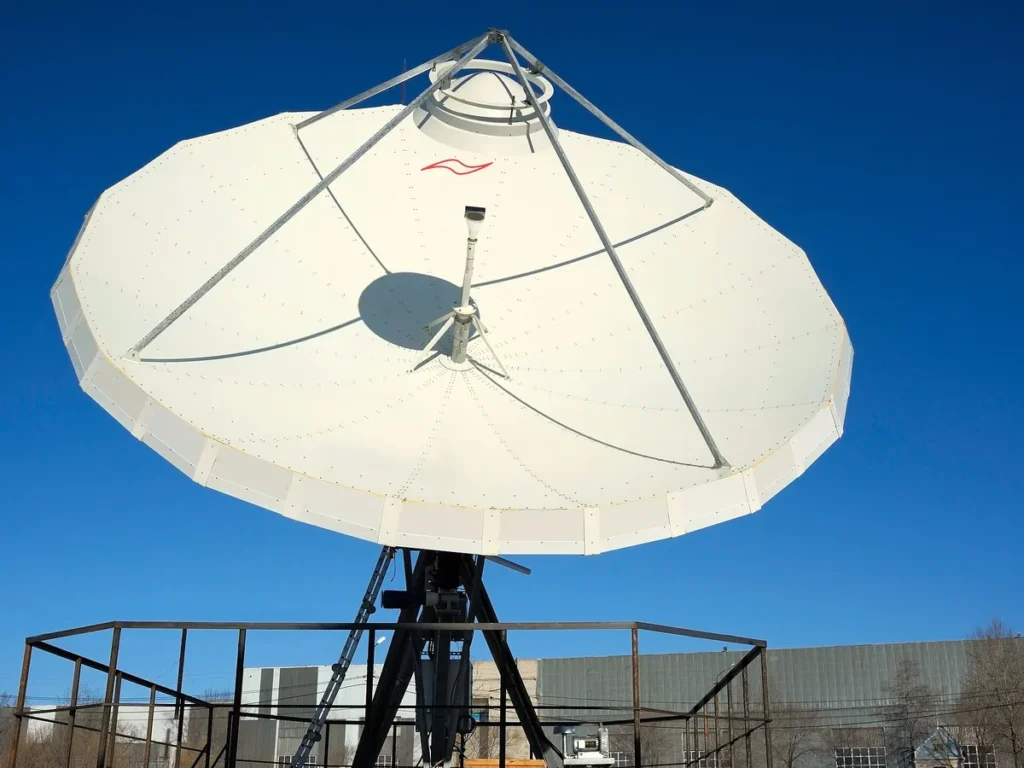
On 8 October 2026 the Department of Telecommunications rejected a social media claim that satellite internet licensing is discriminatory. Three licences for Global Mobile Personal Communication by Satellite services using non-geostationary satellites have been issued; all three are going through security assessment, after which each can seek spectrum.
- Date
- 8 Oct 2026
- Ministry
- DoT
- Licences
- 3 NGSO GMPCS
- Next step
- Spectrum assignment
Satellite communication licensing: what happened?
Satellite internet from low-earth-orbit constellations is coming to India. Who gets permission, and in what order, has become contested. This is the government’s answer.
- Responding to social media claims, DoT said India’s satcom authorisation framework is fair and non-discriminatory [PIB].
- Licences have been granted to three GMPCS (Global Mobile Personal Communication by Satellite) providers based on non-geosynchronous satellite orbit (NGSO) systems [PIB].
- Security assessment is under way for all three; after clearance a licensee may seek spectrum assignment [PIB].
What do GMPCS and NGSO mean?
- GMPCS: Global Mobile Personal Communication by Satellite, a licence category for satellite-based communication services.
- NGSO: non-geosynchronous orbit satellites, such as low-earth-orbit constellations, which orbit closer to Earth and give lower delay than geostationary satellites.
- Licensees must meet security conditions before seeking spectrum.
Why does Satellite communication licensing matter?
- Connectivity: Satellite broadband can reach remote areas.
- Security: Security clearance is a licence condition for all.
What can Prelims ask on Satellite communication licensing?
- GMPCS = Global Mobile Personal Communication by Satellite.
- NGSO satellites are not geostationary (e.g. LEO).
- Order: licence → security assessment → spectrum.
Image: Vsatinet, Wikimedia Commons, CC BY-SA 4.0
How to use this in Mains
If asked: Discuss the opportunities and regulatory challenges of satellite internet in India. (GS-III)
Quote: “NGSO: non-geosynchronous orbit satellites, such as low-earth-orbit constellations, which orbit closer to Earth and give lower delay than geostationary satellites.”
Use it: Use as a technical explainer line in the intro, then move to licensing and security.
Exam angle
Prelims: satcom terms. · Mains GS-III: communication infrastructure, security.
Practice MCQs
Original practice questions (not PYQs).
In India's satcom licensing, GMPCS stands for
Answer (a) & explanation
PIB, 8 Oct 2026.
Compared with geostationary satellites, low earth orbit satellites generally offer
Answer (b) & explanation
LEO satellites are much closer to Earth, so signal delay (latency) is lower.
Questions students ask about this
How many satcom licences based on NGSO satellites has India granted?
Three GMPCS licences, as per DoT on 8 October 2026.
Why has spectrum not been assigned yet?
Each licensee must first complete a security compliance assessment, which is under way for all three.
What is an NGSO satellite?
A satellite not in geostationary orbit, such as one in low earth orbit.
Keep studying
Go deeper
Official source: PIB, Ministry of Communications: Satcom regulatory framework is fair and non-discriminatory, 8 Oct 2026
facts from cited sources only; faculty review pending