
Mauryan Empire (c. 321–185 BCE): Rulers, Ashoka’s Dhamma, Administration, Art and UPSC PYQs
UPSC has already asked about this. Read the story with these questions in mind.
Background: from Magadha to empire
The Mauryas inherited the most powerful State of the Ganga valley. Magadha had grown under the Haryanka king Bimbisara and his son Ajatashatru, then under the Shishunagas and the Nandas, who built a large army and treasury. Alexander’s campaign in the north-west (327-325 BCE) left a power vacuum there. Around 321 BCE Chandragupta Maurya, guided by the Brahmin Chanakya (Kautilya), overthrew the Nandas and soon took over the north-west. After a conflict with Seleucus Nikator, a treaty gave him territories west of the Indus, and Seleucus sent Megasthenes as ambassador to Pataliputra.
Sources for Mauryan history
Literary: Kautilya’s Arthashastra (statecraft), Megasthenes’ Indica (surviving in quotations by later Greek writers), Buddhist and Jain texts, and the later play Mudrarakshasa. Epigraphic: Ashoka’s inscriptions, mostly in Prakrit in Brahmi script, with Kharosthi in the north-west and Greek and Aramaic at Kandahar. James Prinsep deciphered Brahmi in 1837. The Maski edict names the king as “Ashoka”; most others call him Devanampiya Piyadasi.
Rulers: Chandragupta, Bindusara, Ashoka
Chandragupta overthrew the Nandas and, after conflict with Seleucus Nicator, gained north-western territories; Megasthenes came to his court. Jain tradition says he ended his life at Shravanabelagola. Bindusara extended the empire southwards. Ashoka (c. 268–232 BCE) conquered Kalinga. Rock Edict XIII records the suffering of that war and his turn to dhamma-vijaya (conquest by righteousness).
Mauryan administration
- Highly centralised; king at the top, advised by a council (mantriparishad).
- Provinces under princes (kumaras) at Taxila, Ujjayini, Tosali and Suvarnagiri.
- District-level officers named in edicts: Rajuka, Pradeshika, Yukta; Ashoka created Dhamma-mahamattas.
- Megasthenes describes city administration of Pataliputra by committees, and a large standing army.
- SamahartaRevenue collection
- SannidhataTreasury and stores
- ProvincesUnder princes (kumaras)
- Pataliputra boardSix committees of five
- SpiesGudhapurushas
Ashoka’s Dhamma and edicts
Dhamma was not a religion but a moral code: tolerance, respect for elders, kindness to slaves and servants, non-violence towards animals, and restraint in speech. It was spread through 14 Major Rock Edicts, Minor Rock Edicts and Pillar Edicts. Major Rock Edict sites include Dhauli and Jaugada (Odisha), Erragudi (Andhra Pradesh), Girnar (Gujarat), Kalsi (Uttarakhand), and Shahbazgarhi and Mansehra (Pakistan). At Kanaganahalli (Karnataka) a relief labelled “Ranyo Ashoka” shows the king.
Mauryan art and architecture
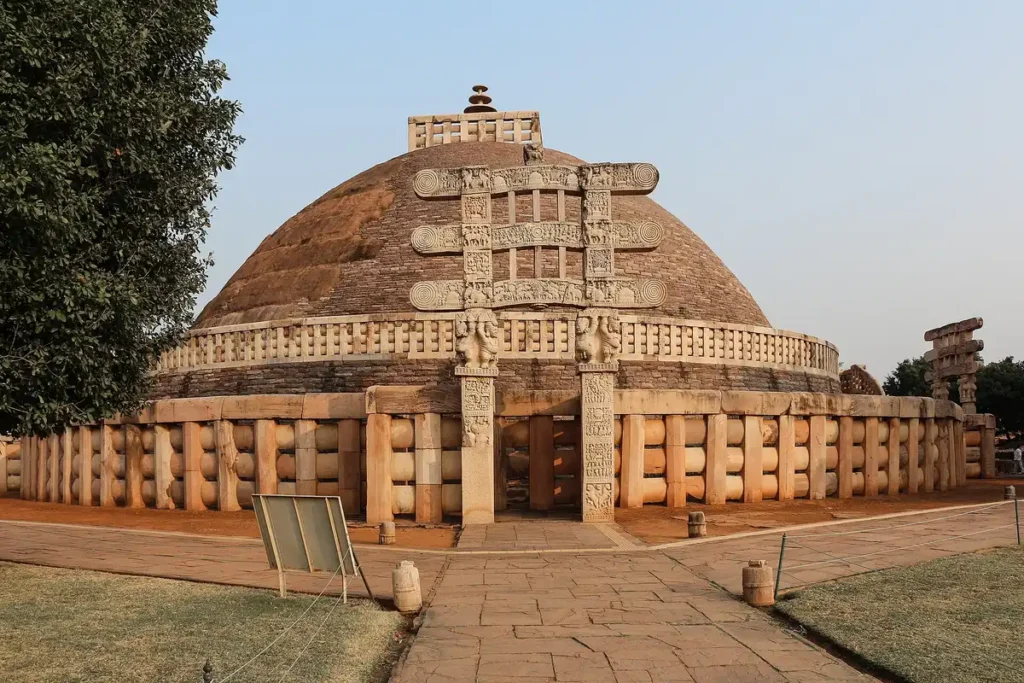
Polished sandstone pillars with animal capitals: the Sarnath lion capital (India’s national emblem), the Rampurva bull, and the Lauriya-Nandangarh lion. Stupas (the core of Sanchi), the Barabar rock-cut caves for the Ajivikas, and “folk” art such as the Didarganj yakshi. Court art used a high polish; popular art appears in yaksha and yakshi figures.
- c. 321 BCEChandragupta defeats the Nandas
- c. 305 BCETreaty with Seleucus Nikator
- c. 268 BCEAshoka's accession
- c. 261 BCEKalinga war
- c. 250 BCEThird Buddhist council at Pataliputra
- c. 185 BCEPushyamitra Shunga ends Mauryan rule
Economy and society under the Mauryas
Land revenue, usually a share of the produce, was the main source of income, alongside taxes on trade, forests and mines. The State ran farms (sita land), workshops and mines, and controlled weights and measures. Punch-marked silver coins circulated widely. Roads linked Pataliputra with Taxila in the north-west and with the Deccan, carrying trade as well as royal orders. Society was divided by varna and occupation, and slaves (dasas) worked in households and on State farms, though Megasthenes wrongly claimed there was no slavery in India. Ashoka’s edicts also show concern for the welfare of servants and prisoners.
Why the Mauryan Empire declined
Historians cite weak successors after Ashoka, the empire’s division, financial strain of a huge army and bureaucracy, revolt in distant provinces, and pressure on the north-west. Earlier views blaming Ashoka’s pacifism or a “Brahmanical reaction” are now treated with caution. The last ruler, Brihadratha, was killed by his general Pushyamitra Shunga (c. 185 BCE).
The Mauryan rulers
| Ruler | Highlights |
|---|---|
| Chandragupta (c. 321-297 BCE) | Defeated the Nandas; treaty with Seleucus; Jain tradition links him to Shravanabelagola |
| Bindusara (c. 297-273 BCE) | Called Amitraghata; ties with the Seleucid court; Ajivika leanings |
| Ashoka (c. 268-232 BCE) | Kalinga war; Dhamma; edicts across the subcontinent |
| Brihadratha | Last Mauryan; killed by his general Pushyamitra Shunga (c. 185 BCE) |
How the empire was run
The Arthashastra and Megasthenes’ Indica (known through later Greek writers) describe a large, centralised State. The king was aided by a council of ministers (mantriparishad). Officials included the samaharta (chief collector of revenue) and the sannidhata (treasurer). The empire was divided into provinces, often under princes, with capitals such as Taxila, Ujjain, Tosali and Suvarnagiri. Megasthenes described a six-committee board running Pataliputra, and a society of “seven castes”. A network of spies, a standing army and royal monopolies in mining and some trade made this one of the most organised States of the ancient world.
Ashoka’s inscriptions as a source
Ashoka’s edicts are India’s earliest deciphered written records. Most are in Prakrit in the Brahmi script; those in the north-west use Kharosthi, and some in Afghanistan use Greek and Aramaic. James Prinsep deciphered Brahmi in 1837. The Major Rock Edicts, Minor Rock Edicts and Pillar Edicts tell us about the Kalinga war (Rock Edict XIII), the Dhamma mahamattas, missions abroad and the extent of the empire. The Maski and Gujarra edicts name the king as “Ashoka”, confirming that “Devanampiya Piyadasi” was Ashoka. Their findspots map the empire’s reach better than any text.
Assessment for Mains
- First pan-Indian empire, with a common administration and policy.
- Dhamma offered a moral basis for rule and tolerance across sects.
- Art, from polished pillars to stupas, set models for later dynasties.
- Debate: did Ashoka’s pacifism weaken the army, or did over-centralisation and finances cause decline? Most historians see several causes together.
Mauryan Empire: UPSC angle
For UPSC CSE
Prelims: edict sites and their States, officials, sources, art (pillars, capitals, caves). Mains GS-I: Mauryan art (court vs popular), Ashoka’s Dhamma as statecraft, causes of decline.
Mauryan Empire UPSC PYQs (Prelims)
Questions UPSC has actually asked, from the official papers. Pick an option to check yourself.
Ashokan inscriptions suggest that the ‘Pradeshika’, ‘Rajuka’ and ‘Yukta’ were important officers at the
The edicts show Rajuka, Pradeshika and Yukta as officers at the district level. Answer as per the official UPSC key · Battle IAS PYQ bankAnswer (b) & why
Consider the following pairs :
| Site of Ashoka’s major rock edicts | Location in the State of
| 1. Dhauli | Odisha
| 2. Erragudi | Andhra Pradesh
| 3. Jaugada | Madhya Pradesh
| 4. Kalsi | Karnataka
How many pairs given above are correctly matched ?
Only two pairs are correct (Dhauli–Odisha, Erragudi–Andhra Pradesh). Jaugada is in Odisha and Kalsi in Uttarakhand. Answer as per the official UPSC key · Battle IAS PYQ bankAnswer (b) & why
In which of the following relief sculpture inscriptions is ‘Ranyo Ashoka’ (King Ashoka) mentioned along with the stone portrait of Ashoka?
The Kanaganahalli relief (Karnataka) labels Ashoka as “Ranyo Ashoka” with his portrait. Answer as per the official UPSC key · Battle IAS PYQ bankAnswer (a) & why
Mains PYQs on this topic
Questions from the official UPSC Mains papers (2023-2026 in the Battle IAS Mains bank), newest first. Each links to a model answer.
- UPSC Mains 2026 · GS Paper I · Q1 · 10 marks
Analyze the importance of Ashokan inscriptions for reconstructing Mauryan history.
Quick quiz
The Indica was written by
Greek ambassador at Chandragupta’s court.Answer (b)
Which Ashokan inscription describes the Kalinga war?
RE XIII.Answer (a)
Who deciphered the Brahmi script in 1837?
Prinsep.Answer (b)
FAQs
Who founded the Mauryan Empire?
Chandragupta Maurya, around 321 BCE, with the help of Kautilya (Chanakya).
What was the capital of the Mauryan Empire?
Pataliputra (near modern Patna).
What is Ashoka’s Dhamma?
A moral code of tolerance, non-violence and social responsibility that Ashoka propagated through his edicts; it was not a separate religion.
Why did the Mauryan Empire decline?
Weak successors, division of the empire, financial strain, provincial revolts and external pressure; Pushyamitra Shunga ended it c. 185 BCE.
What is the Mauryan Empire known for?
Its centralised administration, Ashoka’s edicts and Dhamma, and polished stone pillars like the Sarnath lion capital.
Which edict names Ashoka directly?
The Minor Rock Edict at Maski (Karnataka), along with a few others such as Gujarra, uses the name Ashoka.
Who deciphered the Brahmi script?
James Prinsep, in 1837.
Spotted an error? Tell us. We correct within 48 hours.
Image: Bernard Gagnon, Wikimedia Commons, CC BY-SA 3.0
How to use this in Mains
If asked: UPSC Mains 2026, GS-I: Analyze the importance of Ashokan inscriptions for reconstructing Mauryan history.
Quote: “Dhamma offered a moral basis for rule and tolerance across sects.”
Use it: Use as a point when analysing Ashokan inscriptions.
In the news
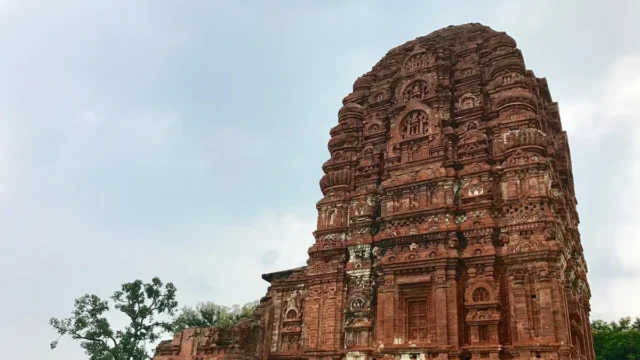
Sirpur in Chhattisgarh enters UNESCO’s Tentative List of World Heritage sites
Sirpur, an archaeological site in Chhattisgarh’s Mahasamund district with Hindu, Buddhist and Jain remains from the 5th to the 12th century CE, has been added to UNESCO’s Tentative List. The ASI now has about a year to prepare a nomination dossier proving its Outstanding Universal Value. Sirpur was once the capital of Dakshina Kosala.
20 Oct 2026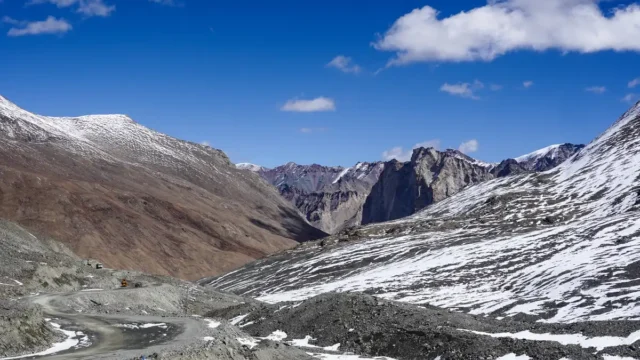
PM inaugurates five Ladakh projects: Nimmu–Padum–Darcha road, Leh terminal, Hanu hydro
On 15 October 2026 the Prime Minister inaugurated, by video conference, five projects worth about ₹3,350 crore in Ladakh: a new passenger terminal at Leh's Kushok Bakula Rimpochee Airport, the 298-km Nimmu–Padum–Darcha road built by BRO, the 9 MW Hanu small hydro project with a 66 kV line, India's first Petroglyph Conservation Park at Sindhu Ghat, and 40 water bodies under Project Him Sarovar.
15 Oct 2026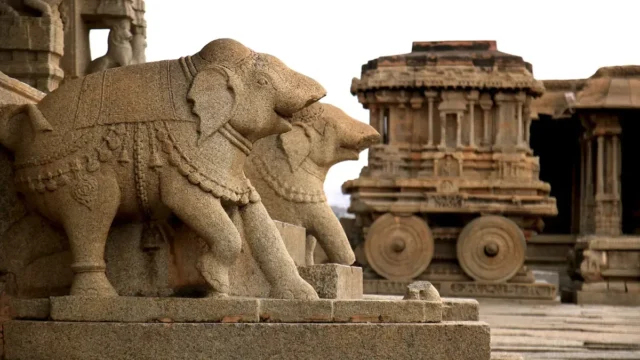
HAL, NCF and ASI sign MoA for Hampi, Taj Mahal and Bekal Fort
On 13 October 2026 HAL, the National Culture Fund and ASI signed an MoA for conservation and visitor works at Hampi, the Taj Mahal and Bekal Fort. HAL has approved about ₹23.60 crore in CSR support over three years; NCF facilitates the projects and ASI supervises them technically.
14 Oct 2026
Centres of Excellence approved for five newer classical languages
On 3 October 2026 the Ministry of Education approved five Centres of Excellence for Classical Assamese, Bengali, Marathi, Pali and Prakrit, hosted by Tezpur University, Visva-Bharati, Deccan College Pune, Central University of Odisha and Central University of Gujarat. These five got classical status in October 2024, taking India's total to 11 classical languages.
3 Oct 2026