
El Niño, La Niña and ENSO: Walker Circulation, Southern Oscillation, Indian Ocean Dipole and Impact on India (UPSC Notes + PYQs)
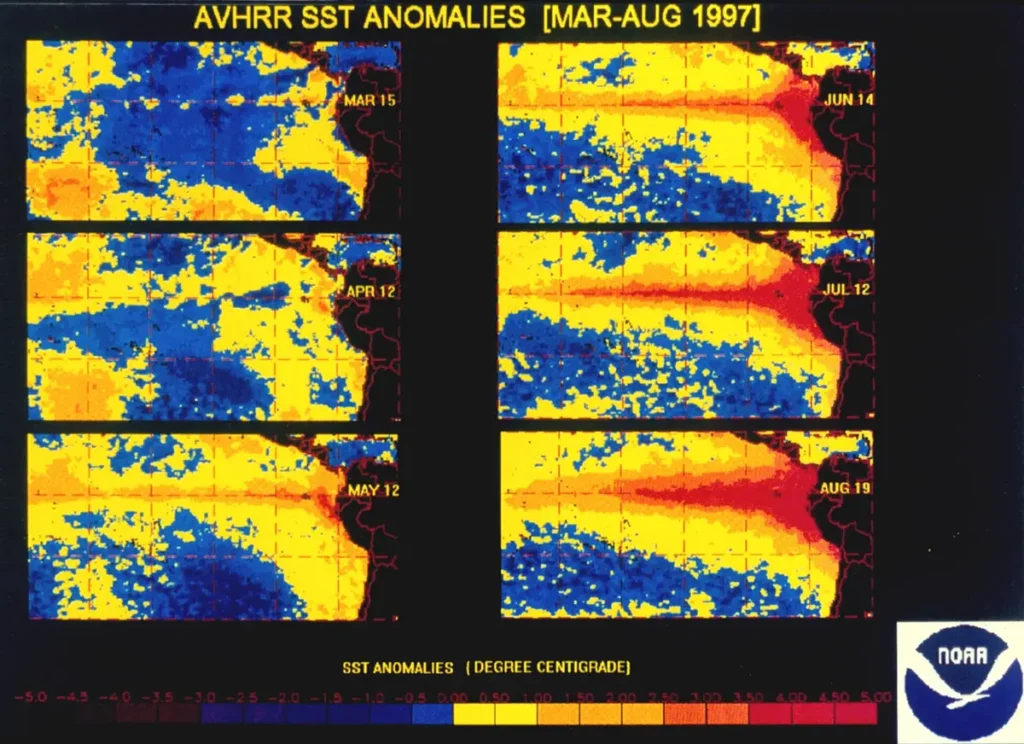
UPSC has already asked about this. Read the story with these questions in mind.
- Prelims 2011La Nina is suspected to have caused recent floods in Australia. How is La Nina different from El Nino ?Solve it below ↓
- Prelims 2017With reference to ‘Indian Ocean Dipole (IOD)’ sometimes mentioned in the news while forecasting Indian monsoon, which of the following statements is/are correct ?Solve it below ↓
Normal conditions
Trade winds blow east to west across the Pacific, piling warm water near Indonesia and pulling up cold, nutrient-rich water off Peru (upwelling). Air rises over the warm west Pacific and sinks over the cool east: the Walker circulation.
El Niño and La Niña
| El Niño | La Niña | |
|---|---|---|
| Trade winds | Weaken or reverse | Strengthen |
| East Pacific sea surface | Warmer than normal | Cooler than normal |
| Peru fisheries | Collapse (anchovy) | Rich |
| Indonesia, Australia | Drought, forest fires | Floods (Australia, 2010-11) |
| India | Weak monsoon risk | Normal to excess rain, colder winters |
NOAA declares an El Niño when the Oceanic Niño Index (three-month average anomaly in the Niño 3.4 region) is +0.5°C or more for several overlapping seasons.
Not all El Niños are equal
El Niño Modoki (central Pacific warming) affects India differently. And the link is not certain: 1997 was a strong El Niño but India had normal rain, helped by a positive Indian Ocean Dipole. In 2023, an El Niño year, India’s monsoon ended at about 94% of normal.
Indian Ocean Dipole
The IOD compares sea temperatures in the western and eastern Indian Ocean. A positive IOD (warm west) boosts the Indian monsoon and brings floods to East Africa; a negative IOD does the opposite. IMD now forecasts both ENSO and IOD with its monsoon outlook.
El Nino: UPSC angle
For UPSC CSE
Prelims: how La Niña differs from El Niño (2011), IOD (2017). Mains GS-I: ocean-atmosphere links; GS-III: drought, food inflation, agriculture planning.
El Nino UPSC PYQs (Prelims)
Questions UPSC has actually asked, from the official papers. Pick an option to check yourself.
La Nina is suspected to have caused recent floods in Australia. How is La Nina different from El Nino ?
– 1. La Nina is characterised by unusually cold ocean temperature in equatorial Indian Ocean whereas El Nino is characterised by unusually warm ocean temperature in the equatorial Pacific Ocean.
– 2. El Nino has adverse effect on south-west monsoon of India, but La Nina has no effect on monsoon climate.
Which of the statements given above is/are correct ?
Both El Nino (warm) and La Nina (cool) are about the equatorial Pacific, not the Indian Ocean, so 1 is wrong. La Nina usually strengthens India’s monsoon, so saying it has no effect is wrong too. Answer as per the official UPSC key · Battle IAS PYQ bankAnswer (d) & why
With reference to ‘Indian Ocean Dipole (IOD)’ sometimes mentioned in the news while forecasting Indian monsoon, which of the following statements is/are correct ?
– 1. IOD phenomenon is characterised by a difference in sea surface temperature between tropical Western Indian Ocean and tropical Eastern Pacific Ocean.
– 2. An IOD phenomenon can influence an El Nino’s impact on the monsoon.
Select the correct answer using the code given below :
The IOD is the difference in sea-surface temperature between the western Indian Ocean (near Africa) and the eastern Indian Ocean (near Sumatra), not the Pacific. A positive IOD can offset El Niño’s drying effect, as in 1997 when a strong El Niño still gave a normal monsoon. Answer as per the official UPSC key · Battle IAS PYQ bankAnswer (b) & why
Mains PYQs on this topic
No UPSC Mains question from 2023-2026 is directly on this topic. Older papers (2013-2022) will be added as the Mains bank grows.
Quick quiz
During El Niño, sea surface temperature in the eastern Pacific is
Warming.Answer (b)
A positive Indian Ocean Dipole means
It supports Indian rainfall.Answer (a)
ENSO stands for
Ocean plus atmosphere.Answer (a)
FAQs
What is the Southern Oscillation?
A see-saw in air pressure between Tahiti and Darwin that accompanies El Niño and La Niña.
Does El Niño always cause drought in India?
No, but it raises the risk; the IOD and other factors can offset it.
How often does El Niño occur?
Every two to seven years, lasting nine to twelve months typically.
What is El Niño Modoki?
A variant with warming in the central rather than eastern Pacific.
Spotted an error? Tell us. We correct within 48 hours.
Image: https://commons.wikimedia.org/wiki/File:Sea_surface_temperature_anomalies_from_March_to_August_1997_showing_evolution_of_major_El_Nino_(2268-446).jpg
How to use this in Mains
If asked: Explain how ENSO and the Indian Ocean Dipole influence the Indian monsoon. (GS-I)
Quote: “The IOD compares sea temperatures in the western and eastern Indian Ocean.”
Use it: Use as the bridge from ENSO to IOD in the body.
In the news
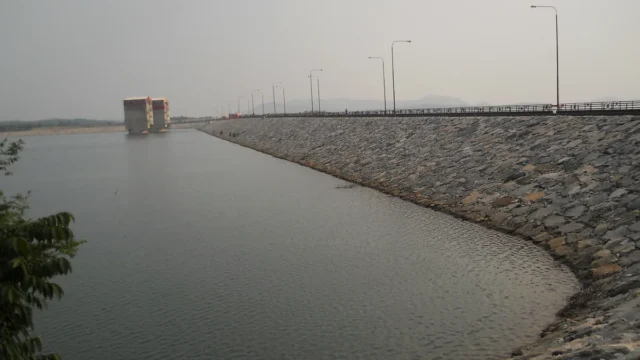
Pumped storage hydropower: India’s roadmap for 100 GW of ‘water batteries’ by 2035-36
A PIB backgrounder of 19 October 2026 explains how pumped storage projects (PSPs) will store solar and wind power for India’s grid. India runs 7.43 GW of pumped storage today, is building 15.87 GW more and has an assessed potential of 345.38 GW. A roadmap aims to add about 100 GW between 2025-26 and 2035-36.
19 Oct 2026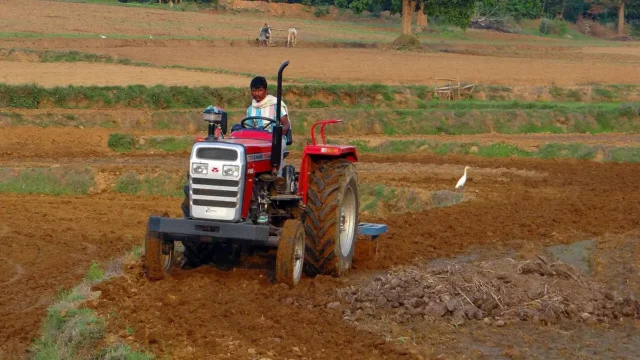
Khet Bachao Abhiyan: Centre reviews 22 October to 30 November farm campaign with States
On 17 October 2026 Union Agriculture Minister Shivraj Singh Chouhan reviewed preparations for the Khet Bachao Abhiyan with agriculture ministers of 11 States and UTs. The campaign runs from 22 October to 30 November 2026. About 4,150 teams of Krishi Vigyan Kendra and ATMA staff, with over 12,000 scientists and officials, plan around 1.5 lakh meetings with farmers on soil health, crop residue, balanced fertiliser use and key schemes.
17 Oct 2026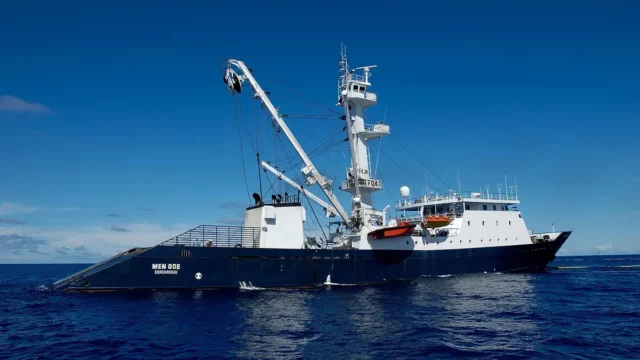
India to accede to the Southern Indian Ocean Fisheries Agreement (SIOFA)
On 14 October 2026 the Centre approved India's accession to the Southern Indian Ocean Fisheries Agreement. India, a Cooperating Non-Contracting Party since 2022, will become a full Contracting Party. Indian vessels can then fish squids, toothfish, alfonsino and other non-migratory stocks in the SIOFA area and join its scientific and compliance bodies.
14 Oct 2026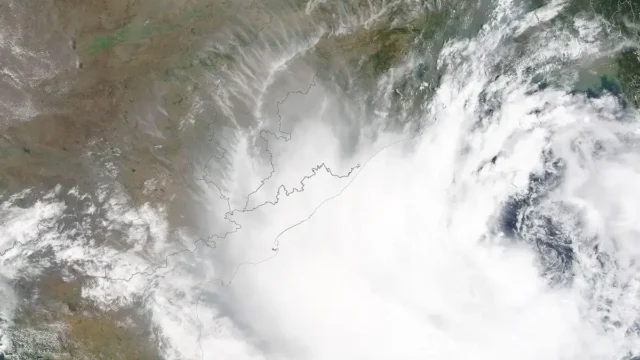
IMD launches a map-based Decision Support System for cyclone and marine warnings
On 12 October 2026 the India Meteorological Department dedicated a Cyclone Warning and Marine Weather Services Decision Support System to the nation. The WebGIS platform shows cyclone track, intensity, winds, rainfall, storm surge and district-wise warnings on one map for disaster managers and the public.
13 Oct 2026