
GM Crops in India: Technology, Bt Cotton, Bt Brinjal, GM Mustard, Regulation by GEAC and Genome-Edited Rice (UPSC Notes + PYQs)
UPSC has already asked about this. Read the story with these questions in mind.
How it works
A gene is inserted using Agrobacterium or a gene gun. Bt crops carry a gene from Bacillus thuringiensis that makes a protein toxic to certain insects such as the cotton bollworm. Genome editing (CRISPR-Cas9) is different: it changes the plant’s own DNA without adding foreign genes; India exempted SDN-1 and SDN-2 edits from GM rules in 2022.
India’s record
| Crop | Status | Note |
|---|---|---|
| Bt cotton | Approved 2002 | Covers over 90% of cotton area; yields rose, then pink bollworm resistance grew |
| Bt brinjal | Moratorium 2010 | Bangladesh grows it commercially |
| GM mustard DMH-11 | GEAC approval 2022 | Delhi University’s barnase-barstar hybrid; split Supreme Court verdict in 2024 asked for a national GM policy |
| Genome-edited rice | Released May 2025 | Two varieties (DRR Dhan 100 Kamala, Pusa DST Rice 1) for higher yield and stress tolerance |
Regulation
Rules of 1989 under the Environment (Protection) Act, 1986. The Genetic Engineering Appraisal Committee in the Environment Ministry approves environmental release; the Review Committee on Genetic Manipulation (RCGM) in the Department of Biotechnology oversees research; FSSAI regulates GM food. India imports GM soybean oil and canola oil.
The debate
- For: higher yields, less pesticide, edible oil self-reliance (India imports about 60% of edible oil), climate resilience.
- Against: biosafety and long-term health concerns, gene flow to wild relatives, seed company control and costs, secondary pests, loss of native varieties.
- A 2024 Supreme Court split verdict on GM mustard directed the Centre to frame a national policy on GM crops after consultation.
Gm Crops: UPSC angle
For UPSC CSE
Prelims: Bt crops, GEAC, GM mustard facts, CRISPR. Mains GS-III: biotechnology in agriculture, food security vs biosafety.
Gm Crops UPSC PYQs (Prelims)
Questions UPSC has actually asked, from the official papers. Pick an option to check yourself.
Directions for the following 2 (two) items : Consider the following graph in which the birthrate and death rate of a country are given, and answer the two items that follow.
=IMG q2018_63.png
Looking at the graph, it can be inferred that from 1990 to 2010
DMH-11 carries the barnase–barstar genes from a soil bacterium. Barnase makes the plant male-sterile and barstar restores fertility, which allows hybrid seed production. It gives no pest resistance (that is Bt). It was developed by Delhi University’s Centre for Genetic Manipulation of Crop Plants under Deepak Pental. Answer as per the official UPSC key · Battle IAS PYQ bankAnswer (d) & why
A genetically engineered form of brinjal, known as the Bt-brinjal, has been developed. The objective of this is
Bt brinjal carries the cry1Ac gene of the soil bacterium Bacillus thuringiensis. The gene makes a protein toxic to the fruit and shoot borer, so the plant resists this pest. Its commercial release was put under a moratorium in 2010. Answer as per the official UPSC key · Battle IAS PYQ bankAnswer (a) & why
What are the reasons for the people’s resistance to the introduction of Bt brinjal in India?
– 1. Bt brinjal has been created by inserting a gene from a soil fungus into its genome.
– 2. The seeds of Bt brinjal are terminator seeds and therefore, the farmers have to buy the seeds before every season from the seed companies.
– 3. There is an apprehension that the consumption of Bt brinjal may have adverse impact on health.
– 4. There is some concern that the introduction of Bt brinjal may have adverse effect on the biodiversity.
Select the correct answer using the codes given below :
The 2010 moratorium on Bt brinjal followed fears about health effects and the risk to India’s many native brinjal varieties (India is a centre of brinjal diversity). The Bt gene comes from a bacterium (Bacillus thuringiensis), not a fungus, and Bt brinjal seeds are not terminator seeds. Answer as per the official UPSC key · Battle IAS PYQ bankAnswer (c) & why
What is Cas9 protein that is often mentioned in news?
Cas9 is a bacterial enzyme that a guide RNA leads to a matching DNA sequence, where it cuts both strands. This is the CRISPR-Cas9 “molecular scissors” used to edit genes, which won Charpentier and Doudna the 2020 Chemistry Nobel. India’s FELUDA COVID test used a related Cas protein. Answer as per the official UPSC key · Battle IAS PYQ bankAnswer (a) & why
Mains PYQs on this topic
No UPSC Mains question from 2023-2026 is directly on this topic. Older papers (2013-2022) will be added as the Mains bank grows.
Quick quiz
Bt crops carry a gene from
Produces an insecticidal protein.Answer (b)
In India, GM crops are approved for environmental release by the
Under the Environment Ministry.Answer (b)
The only GM crop approved for commercial cultivation since 2002 is
GM mustard approval awaits the court.Answer (b)
FAQs
Is genome editing the same as GM?
No. Genome editing changes the plant’s own genes; GM adds foreign genes. India exempts certain edits from GM rules.
Why was Bt brinjal stopped?
In 2010 the Environment Minister imposed a moratorium citing safety concerns and lack of consensus.
Does India import GM food?
Yes, GM soybean and canola oils are imported.
What is DMH-11?
A GM mustard hybrid developed at Delhi University using the barnase-barstar system.
Spotted an error? Tell us. We correct within 48 hours.
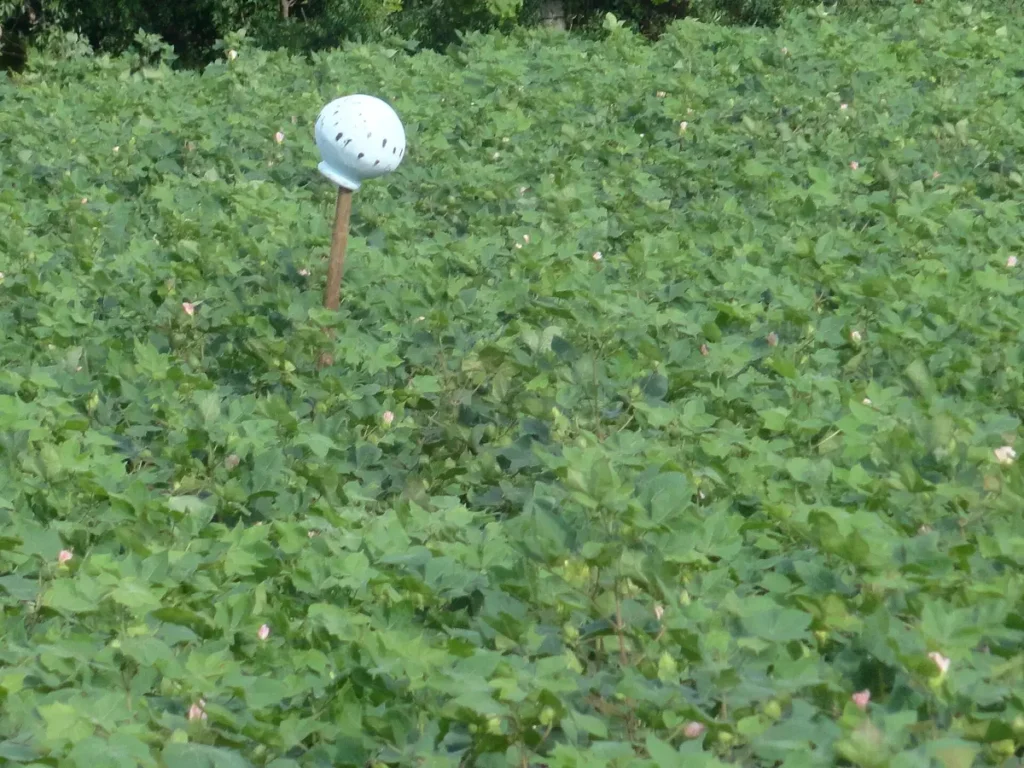
Image: Bhaskaranaidu, Wikimedia Commons, CC BY-SA 3.0
How to use this in Mains
If asked: Should India adopt GM crops? Discuss the arguments. (GS-III)
Quote: “A 2024 Supreme Court split verdict on GM mustard directed the Centre to frame a national policy on GM crops after consultation.”
Use it: Use in the conclusion: the need for a national GM policy.
In the news
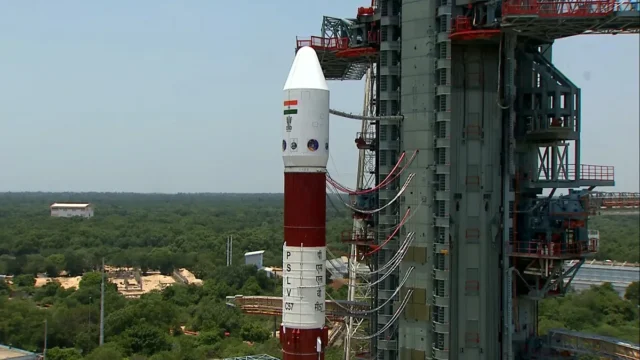
Aditya-L1’s VELC produces Doppler velocity images of the solar corona
Scientists at the Indian Institute of Astrophysics (IIA), Bengaluru, have produced Doppler velocity images of the solar corona using the Visible Emission Line Coronagraph (VELC) on Aditya-L1. The images show whether coronal plasma is moving towards or away from us, and can help track whether a coronal mass ejection (CME) is heading for Earth. The method has been published in the Astrophysical Journal.
20 Oct 2026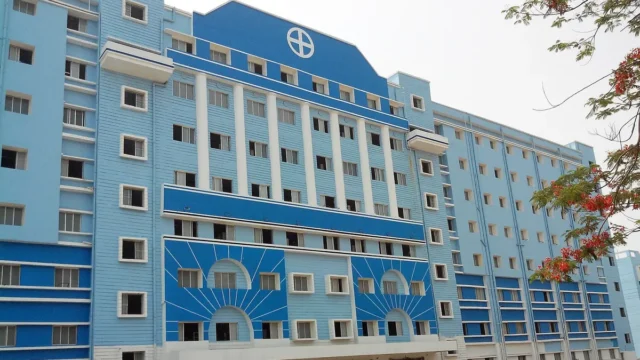
NMC withdraws MSMER-2023: medical colleges lose the fixed penalty rulebook, annual disclosure stays
The National Medical Commission (NMC) has de-notified the Maintenance of Standards of Medical Education Regulations, 2023 (MSMER-2023) by a notification dated 14 October 2026, published in the Gazette on 16 October. Its fixed penalties, including seat cuts and fines of up to ₹5 lakh for false records, go with it. The Annual Disclosure Report stays.
19 Oct 2026
Swavlamban 2026: Navy’s fifth innovation and indigenisation seminar on 26–27 October
At a curtain raiser on 19 October 2026, Vice Chief of the Naval Staff Vice Admiral Ajay Kochhar announced the fifth edition of Swavlamban, the Navy’s flagship innovation and indigenisation seminar. It will be held on 26–27 October at the Manekshaw Centre, New Delhi, where the Navy will release the NAUSETU interface standards and a technology compendium.
19 Oct 2026
India’s space economy to grow from about $9 billion to $40-45 billion in 7-8 years
On 17 October 2026, Union Minister Dr Jitendra Singh said India’s space economy, worth about USD 9 billion today, should reach USD 40-45 billion in the next seven to eight years. He said the task now is to move from showing what India can do in space to building space companies that can compete and earn worldwide. For that, private firms need steady demand, quick approvals and patient capital. This is the story of space turning from a science mission into an industry.
18 Oct 2026