
Artificial Intelligence: How It Works, Uses in Governance, Risks and Regulation, and the IndiaAI Mission (UPSC Notes + PYQs)
UPSC has already asked about this. Read the story with these questions in mind.
- Prelims 2020With the present state of development, Artificial Intelligence can effectively do which of the following ?Solve it below ↓
- Mains 2026 · GS3What is agentic Artificial Intelligence (AI)? Explain its working. Describe its applications with suitable examples. Discuss the advantages, risks and challenges associated with agentic…See model answer →
Key terms
- Machine learning: learns from data rather than fixed rules.
- Deep learning: neural networks with many layers; powers speech and image recognition.
- Large language models and generative AI: trained on vast text to produce language.
- Narrow vs general AI: all current systems are narrow, good at specific tasks.
Uses in India
Health: AI-assisted TB and diabetic retinopathy screening. Agriculture: pest alerts and crop advisories. Governance: Bhashini for translation across Indian languages, fraud detection in welfare payments, traffic management. Courts: SUVAS translates judgments. Disaster: flood forecasting with Google in partnership with CWC. A 2020 Prelims question asked what AI can effectively do today, testing exactly such uses.
Risks
- Bias from skewed training data; opaque decisions.
- Deepfakes and misinformation, a concern in elections.
- Privacy and surveillance; facial recognition without a law.
- Job displacement in routine services work.
- Concentration of compute and data in a few firms; energy and water use of data centres.
Rules around the world and in India
The EU’s AI Act (2024) uses risk categories. The US relies on executive guidance; China regulates algorithms and generative services. India has avoided a standalone law so far: it uses the IT Rules (amended to address deepfakes and labelling of synthetic content), the DPDP Act 2023 for personal data, and issued AI governance guidelines in 2025 favouring principles over heavy regulation. India co-chaired the Paris AI Action Summit (2025) and hosted the AI Impact Summit in New Delhi in February 2026.
IndiaAI Mission
Approved in March 2024 with an outlay of about ₹10,372 crore over five years: subsidised GPU compute (tens of thousands of GPUs now available), the AIKosh datasets platform, support for Indian foundation models (such as Sarvam), AI skilling, and safe and trusted AI projects.
Artificial Intelligence: UPSC angle
For UPSC CSE
Prelims: concepts, applications, missions. Mains GS-III: AI and jobs, governance uses; GS-IV: ethics of AI, accountability (asked in 2026).
Artificial Intelligence UPSC PYQs (Prelims)
Questions UPSC has actually asked, from the official papers. Pick an option to check yourself.
Let x, y be the volumes; m, n be the masses of two metallic cubes P and Q respectively. Each side of Q is two times that of P and mass of Q is two times that of P. Let u = m/x and v = n/y. Which one of the following is correct?
In 2020, AI was already proven at optimising energy use, diagnosing disease from scans, and text-to-speech. Wireless power transfer is a matter of physics, not AI. UPSC’s key also left out writing meaningful stories and songs. Generative AI has since changed that, so keep the year in mind. Answer as per the official UPSC key · Battle IAS PYQ bankAnswer (a) & why
Mains PYQs on this topic
Questions from the official UPSC Mains papers (2023-2026 in the Battle IAS Mains bank), newest first. Each links to a model answer.
- UPSC Mains 2026 · GS Paper III · Q16 · 15 marks
What is agentic Artificial Intelligence (AI)? Explain its working. Describe its applications with suitable examples. Discuss the advantages, risks and challenges associated with agentic AI systems.
- UPSC Mains 2024 · GS Paper IV · Q1a · 10 marks
The application of Artificial Intelligence as a dependable source of input for administrative rational decision-making is a debatable issue. Critically examine the statement from the ethical point of view.
- UPSC Mains 2023 · GS Paper III · Q5 · 10 marks
Introduce the concept of Artificial Intelligence (AI). How does AI help clinical diagnosis? Do you perceive any threat to privacy of the individual in the use of AI in healthcare?
Quick quiz
Which of these best describes machine learning?
The core of modern AI.Answer (b)
The EU’s AI Act regulates AI on the basis of
2024.Answer (b)
Bhashini is an Indian AI platform for
Under Digital India.Answer (b)
FAQs
Does India have an AI law?
Not a standalone one; AI is governed through the IT Act and Rules, the DPDP Act and guidelines.
What is a deepfake?
Synthetic audio, image or video made with AI to imitate a real person.
What is the IndiaAI Mission?
A 2024 programme to build compute capacity, datasets, Indian models and skills.
Will AI cause mass unemployment?
It will automate some tasks and create others; the net effect depends on skilling and policy.
Spotted an error? Tell us. We correct within 48 hours.
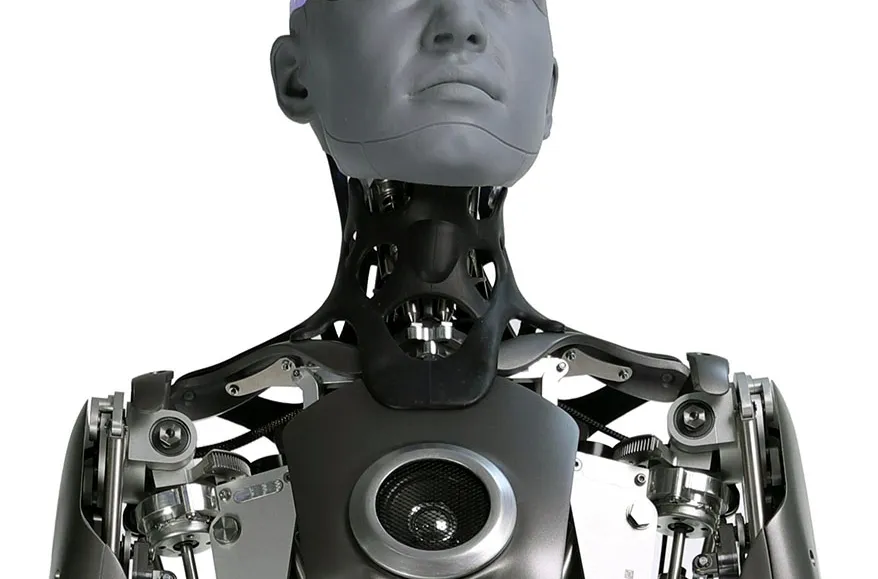
Image: Willy Jackson, Wikimedia Commons, CC BY-SA 4.0
How to use this in Mains
If asked: UPSC Mains 2026, GS-III: What is agentic Artificial Intelligence (AI)? Explain its working. Describe its applications with suitable examples. Discuss the advantages, risks and challenges associated with agentic AI systems.
Quote: “Bias from skewed training data; opaque decisions.”
Use it: Use under 'risks' of AI systems.
In the news
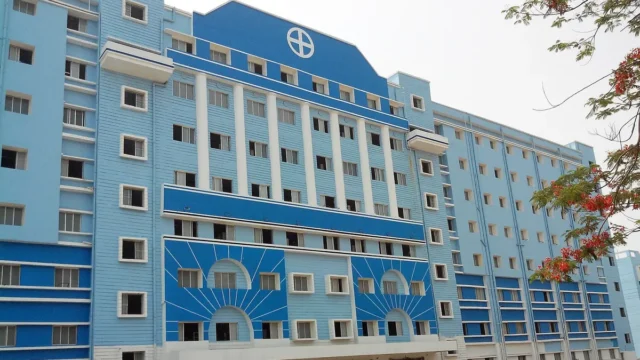
NMC withdraws MSMER-2023: medical colleges lose the fixed penalty rulebook, annual disclosure stays
The National Medical Commission (NMC) has de-notified the Maintenance of Standards of Medical Education Regulations, 2023 (MSMER-2023) by a notification dated 14 October 2026, published in the Gazette on 16 October. Its fixed penalties, including seat cuts and fines of up to ₹5 lakh for false records, go with it. The Annual Disclosure Report stays.
19 Oct 2026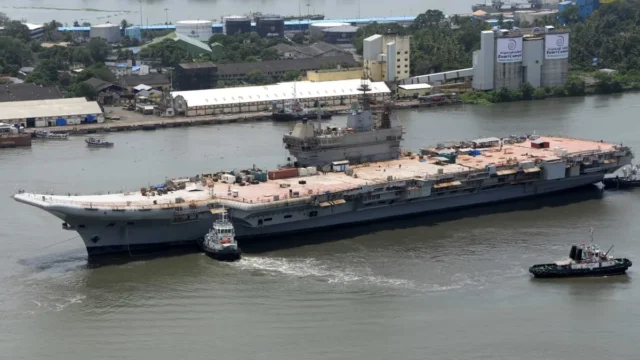
Swavlamban 2026: Navy’s fifth innovation and indigenisation seminar on 26–27 October
At a curtain raiser on 19 October 2026, Vice Chief of the Naval Staff Vice Admiral Ajay Kochhar announced the fifth edition of Swavlamban, the Navy’s flagship innovation and indigenisation seminar. It will be held on 26–27 October at the Manekshaw Centre, New Delhi, where the Navy will release the NAUSETU interface standards and a technology compendium.
19 Oct 2026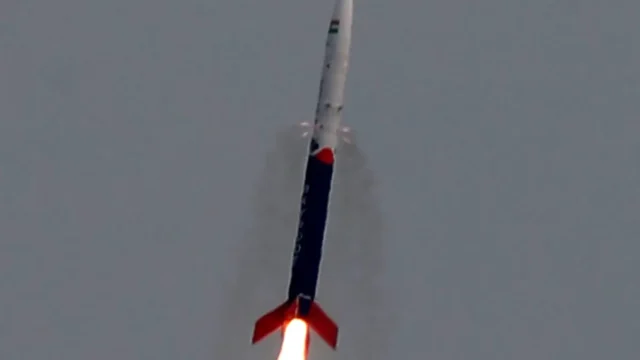
India’s space economy to grow from about $9 billion to $40-45 billion in 7-8 years
On 17 October 2026, Union Minister Dr Jitendra Singh said India’s space economy, worth about USD 9 billion today, should reach USD 40-45 billion in the next seven to eight years. He said the task now is to move from showing what India can do in space to building space companies that can compete and earn worldwide. For that, private firms need steady demand, quick approvals and patient capital. This is the story of space turning from a science mission into an industry.
18 Oct 2026
NPPA caps trade margins on 137 anti-cancer drugs: prices to fall up to 70% from 9 November
On 17 October 2026 the National Pharmaceutical Pricing Authority (NPPA) capped trade margins on 137 non-scheduled anti-cancer drugs at 30%, using its special public-interest power under Paragraph 19 of the Drugs (Prices Control) Order, 2013. The Government expects the retail price of these medicines to fall by up to 70%, and the new prices apply from 9 November 2026. The list includes costly immunotherapy drugs such as pembrolizumab and durvalumab.
18 Oct 2026