
International Monetary Fund: Origin, Functions, Quotas and Voting, SDR, Lending Facilities and India’s Stake in Reform (UPSC Notes + PYQs)
UPSC has already asked about this. Read the story with these questions in mind.
- Prelims 2011Regarding the International Monetary Fund, which one of the following statements is correct ?Solve it below ↓
- Prelims 2014Which of the following organizations brings out the publication known as 'World Economic Outlook'?Solve it below ↓
See all 5 PYQs
- Prelims 2016Recently, which one of the following currencies has been proposed to be added to the basket of IMF's SDR?Solve it below ↓
- Prelims 2016With reference to the International Monetary and Financial Committee (IMFC), consider the following statementsSolve it below ↓
- Prelims 2013Which one of the following groups of items is included in India’s foreign-exchange reserves?Solve it below ↓
Functions
- Surveillance: Article IV consultations; flagship reports such as the World Economic Outlook, Global Financial Stability Report and Fiscal Monitor.
- Lending: Stand-By Arrangement, Extended Fund Facility, Rapid Financing Instrument, Poverty Reduction and Growth Trust; the Resilience and Sustainability Trust for climate and pandemics.
- Capacity development and statistics.
Quotas and voting
Quotas set contributions, votes and access to loans. The US holds about 16.5% of votes; 85% majorities are needed for major decisions, giving it a veto. India’s share is about 2.6%. The 16th General Review of Quotas (2023) agreed to a 50% increase without changing shares; India and other emerging economies want realignment to reflect their weight. By convention the Managing Director is European, and the World Bank head American.
Special Drawing Rights
Created in 1969; not a currency but a claim on members’ freely usable currencies. Basket: US dollar, euro, Chinese renminbi (added in 2016, a 2016 Prelims question), Japanese yen and pound sterling. A general SDR allocation of about $650 billion in 2021 helped countries through COVID-19. SDR holdings form part of India’s foreign exchange reserves (2013 Prelims).
India and the IMF
India borrowed in 1981 and in the 1991 crisis, repaid early, and has not borrowed since. It is now a creditor through bilateral borrowing agreements, and pushes for quota reform and a stronger voice for the Global South. The IMF’s role in Sri Lanka’s and Pakistan’s recent programmes shows its weight in India’s neighbourhood.
IMF: UPSC angle
For UPSC CSE
Prelims: publications, SDR basket, quotas, IMFC. Mains GS-II/III: reform of Bretton Woods institutions, India’s stake, debt crises in neighbours.
IMF UPSC PYQs (Prelims)
Questions UPSC has actually asked, from the official papers. Pick an option to check yourself.
Regarding the International Monetary Fund, which one of the following statements is correct ?
The IMF lends only to its member countries, mainly to fix balance-of-payments problems. Members pay a quota that decides their voting power and how much they can borrow. Non-members cannot borrow. Answer as per the official UPSC key · Battle IAS PYQ bankAnswer (c) & why
Which of the following organizations brings out the publication known as 'World Economic Outlook'?
The IMF publishes the World Economic Outlook twice a year (April and October), with updates in between. The World Bank’s matching report is Global Economic Prospects (2015 Q21). The WEF publishes the Global Competitiveness and Global Gender Gap reports. Answer as per the official UPSC key · Battle IAS PYQ bankAnswer (a) & why
There are some nectar-filled flowers on a tree and some bees are hovering on it. If one bee lands on each flower, one bee will be left out. If two bees land on each flower, one flower will be left out. The number of flowers and bees respectively are :
In November 2015 the IMF decided to add the Chinese renminbi (yuan) to the SDR basket from 1 October 2016. The basket is now the US dollar, euro, renminbi, yen and pound sterling. Answer as per the official UPSC key · Battle IAS PYQ bankAnswer (c) & why
With reference to the International Monetary and Financial Committee (IMFC), consider the following statements :
– 1. IMFC discusses matters of concern affecting the global economy, and advises the International Monetary Fund (IMF) on the direction of its work.
– 2. The World Bank participates as observer in IMFC's meetings.
Which of the statements given above is/are correct?
The IMFC is a 24-member committee of the IMF Board of Governors, mostly finance ministers and central bank governors. It meets twice a year to discuss the world economy and advise the IMF. Several bodies, including the World Bank, attend as observers. Answer as per the official UPSC key · Battle IAS PYQ bankAnswer (c) & why
Which one of the following groups of items is included in India’s foreign-exchange reserves?
India’s forex reserves have four parts: foreign currency assets, gold, SDRs and the reserve tranche position in the IMF. Loans are liabilities, not reserves. Answer as per the official UPSC key · Battle IAS PYQ bankAnswer (b) & why
Mains PYQs on this topic
No UPSC Mains question from 2023-2026 is directly on this topic. Older papers (2013-2022) will be added as the Mains bank grows.
Quick quiz
The World Economic Outlook is published by the
UPSC 2014.Answer (b)
Which currency was added to the SDR basket in 2016?
UPSC 2016.Answer (b)
Voting power in the IMF depends on
Plus basic votes.Answer (c)
FAQs
How is the IMF different from the World Bank?
The IMF handles macroeconomic and balance of payments stability; the World Bank funds long-term development projects.
When did India last borrow from the IMF?
In 1991-93; it repaid early.
What is the IMFC?
The International Monetary and Financial Committee, advising the Board of Governors.
Does the US have a veto in the IMF?
Effectively yes, on decisions needing an 85% majority.
Spotted an error? Tell us. We correct within 48 hours.
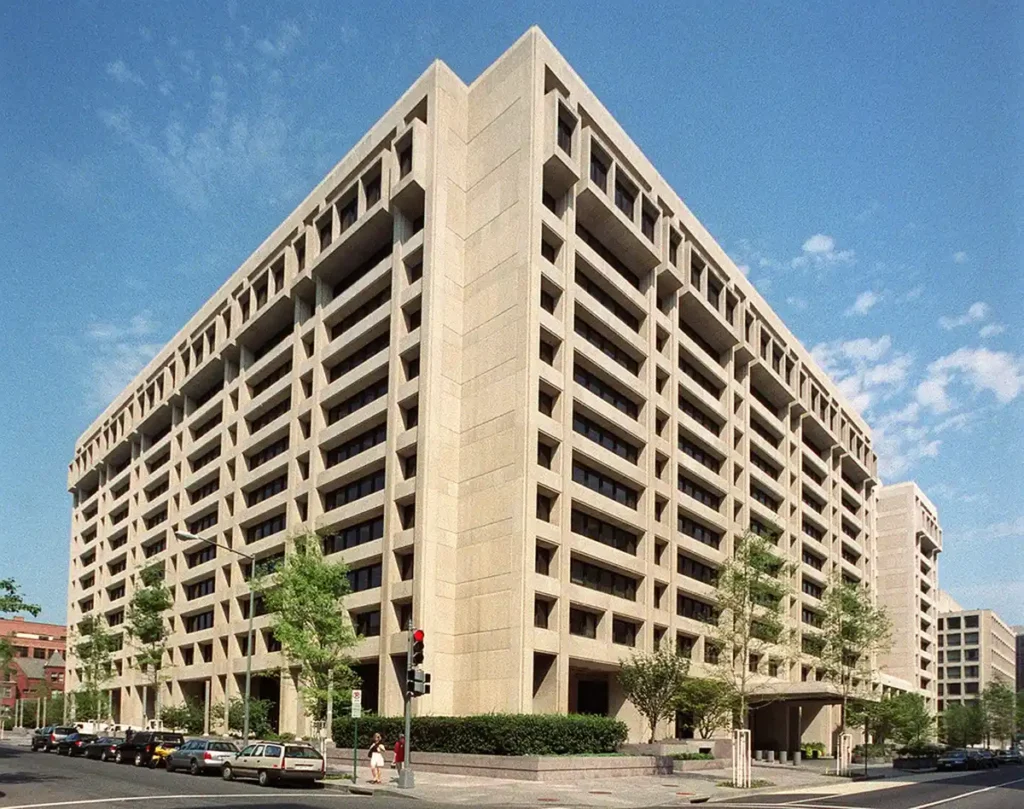
Image: https://commons.wikimedia.org/wiki/File:IMF_building_HR.jpg
How to use this in Mains
If asked: Has the IMF's quota system kept up with the rise of emerging economies? (GS-II)
Quote: “Quotas set contributions, votes and access to loans.”
Use it: Use it to explain why quota reform matters.
In the news
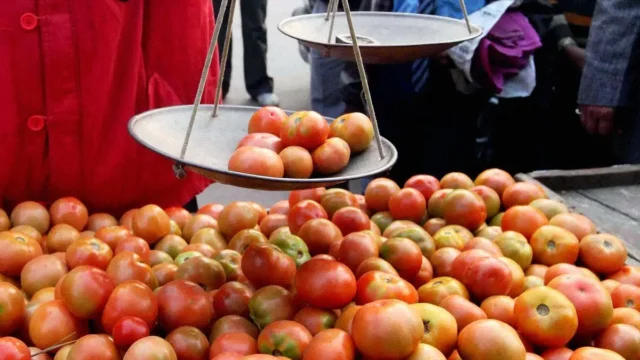
India to host 61st CIML meeting on legal metrology in New Delhi, 26–28 October
India will host the 61st meeting of the International Committee of Legal Metrology (CIML) for the first time, in New Delhi from 26 to 28 October 2026. The Department of Consumer Affairs is organising it with the International Organization of Legal Metrology (OIML), and more than 100 delegates are expected, PIB said on 19 October.
19 Oct 2026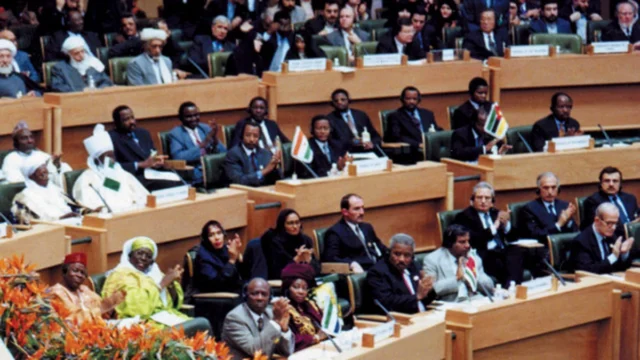
India rejects OIC’s Baghdad resolutions on Jammu and Kashmir as ‘malicious, biased and false’
On 19 October 2026 the Ministry of External Affairs rejected references to India in resolutions adopted at the Organisation of Islamic Cooperation (OIC) Council of Foreign Ministers in Baghdad on 17–18 October. It called them ‘malicious, biased and false’, said Pakistan orchestrated them, and said the OIC has no locus standi on India’s internal matters.
19 Oct 2026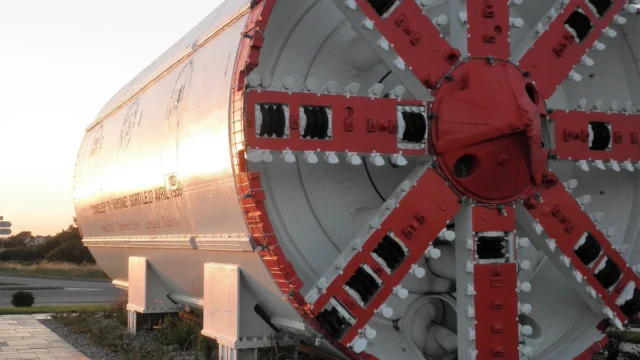
China to impose export controls on tunnel boring machines from 18 November: what it means for India
On 19 October 2026 China’s Commerce Ministry announced export controls on tunnel boring machines (TBMs) and related items from 18 November, calling them clearly dual-use. India imports TBMs for metro, rail and border tunnels and has faced customs delays on Chinese machines since 2024. China also announced controls on some drones.
19 Oct 2026
SCO Heads of Government meet in Dushanbe on 19–20 October: Rajnath Singh to represent India
Defence Minister Rajnath Singh will represent India at the 25th meeting of the SCO Council of Heads of Government (CHG) in Dushanbe, Tajikistan, on 19–20 October 2026. This is the SCO’s second-highest body, and it looks after trade, economy, connectivity and the Organisation’s budget. The last CHG met in Moscow on 18 November 2025, where External Affairs Minister S. Jaishankar spoke for India.
18 Oct 2026