
Indian Monsoon: Mechanism, Onset and Advance, Breaks, Retreat, and Factors like ENSO, IOD and Jet Streams (UPSC Notes + PYQs)
UPSC has already asked about this. Read the story with these questions in mind.
- Prelims 2014The seasonal reversal of winds is the typical characteristic ofSolve it below ↓
- Mains 2023 · GS1Explain the role of geographical factors towards the development of Ancient India.See model answer →
See all 6 PYQs
- Prelims 2012Consider the following statements: The duration of the monsoon decreases from southern India to northern India. …Solve it below ↓
- Prelims 2017With reference to ‘Indian Ocean Dipole (IOD)’ sometimes mentioned in the news while forecasting Indian monsoon, which of the following statements is/are correct ?Solve it below ↓
- Prelims 2015“Each day is more or less the same, the morning is clear and bright with a sea breeze; as the Sun climbs high in…Solve it below ↓
- Prelims 2011There is a concern over the increase in harmful algal blooms in the seawaters of India. What could be the causative factors for this…Solve with answer →
Explaining the monsoon
- Classical (Halley): land heats faster than sea, creating a land-sea pressure gradient.
- ITCZ shift: the monsoon trough is the ITCZ pulled north over the Gangetic plain in July.
- Jet streams: the subtropical westerly jet shifts north of the Himalayas in June, and the tropical easterly jet forms over the peninsula; this marks onset.
- Tibetan plateau: heats the upper air and helps set up the easterly jet.
- Somali jet: low-level cross-equatorial flow off East Africa feeds moisture.
Onset, advance and breaks
The south-west monsoon reaches Kerala around 1 June and covers the whole country by about 8 July, in two branches: Arabian Sea (heavy on the Western Ghats, rain shadow on the Deccan) and Bay of Bengal (deflected west by the Himalayas). Breaks happen when the monsoon trough shifts to the Himalayan foothills: the plains go dry while the hills flood.
Retreat and the north-east monsoon
Withdrawal begins from west Rajasthan in mid-September and is complete by mid-October. October heat (“October heat”) is humid and oppressive. Coromandel coast Tamil Nadu gets most of its rain from the north-east monsoon (October-December), helped by Bay of Bengal cyclones.
ENSO, IOD and MJO
| Factor | Effect on Indian monsoon |
|---|---|
| El Niño (warm east Pacific) | Often weak monsoon (2002, 2009, 2015) |
| La Niña | Often normal to excess |
| Positive IOD (warm west Indian Ocean) | Supports rain; offset El Niño in 1997 and 2019 to some extent |
| Madden-Julian Oscillation | Intraseasonal; active and break spells |
Why it matters
Around half of India’s net sown area depends on rain. A weak monsoon raises food inflation, rural distress and power demand. IMD calls rainfall “normal” when it is 96-104% of the long period average (87 cm for 1971-2020). Rising extremes, with more very heavy rain days and longer dry spells, are a climate change concern.
Monsoon: UPSC angle
For UPSC CSE
Prelims: seasonal reversal, onset dates, jet streams, IOD, which coast gets winter rain. Mains GS-I: mechanism and variability; GS-III: agriculture and climate change.
Monsoon UPSC PYQs (Prelims)
Questions UPSC has actually asked, from the official papers. Pick an option to check yourself.
The seasonal reversal of winds is the typical characteristic of
The word monsoon comes from the Arabic mausim, meaning “season”. Winds blow from sea to land in summer (south-west monsoon) and from land to sea in winter (north-east monsoon), because land and sea heat up at different rates. The Mediterranean climate has a seasonal shift of rain belts, not a full reversal of winds. Answer as per the official UPSC key · Battle IAS PYQ bankAnswer (c) & why
Consider the following statements :
– 1. The duration of the monsoon decreases from southern India to northern India.
– 2. The amount of annual rainfall in the northern plains of India decreases from east to west.
Which of the statements given above is/are correct?
The monsoon arrives first in Kerala (about 1 June) and leaves the south last, so the rainy season is longest in the south and shortest in the north-west. In the Ganga plains the Bay of Bengal branch weakens moving west, so rainfall falls from Bengal towards Punjab and Rajasthan. Answer as per the official UPSC key · Battle IAS PYQ bankAnswer (c) & why
With reference to ‘Indian Ocean Dipole (IOD)’ sometimes mentioned in the news while forecasting Indian monsoon, which of the following statements is/are correct ?
– 1. IOD phenomenon is characterised by a difference in sea surface temperature between tropical Western Indian Ocean and tropical Eastern Pacific Ocean.
– 2. An IOD phenomenon can influence an El Nino’s impact on the monsoon.
Select the correct answer using the code given below :
The IOD is the difference in sea-surface temperature between the western Indian Ocean (near Africa) and the eastern Indian Ocean (near Sumatra), not the Pacific. A positive IOD can offset El Niño’s drying effect, as in 1997 when a strong El Niño still gave a normal monsoon. Answer as per the official UPSC key · Battle IAS PYQ bankAnswer (b) & why
Candidates in a competitive examination consisted of 60% men and 40% women. 70% men and 75% women cleared the qualifying test and entered the final test where 80% men and 70% women were successful. Which of the following statements is correct?
In the equatorial belt, strong heating every day drives convection. Cumulonimbus clouds build by afternoon and bring a short thunderstorm at about the same time each day. There is hardly any seasonal change, so “each day is more or less the same”. Answer as per the official UPSC key · Battle IAS PYQ bankAnswer (c) & why
Mains PYQs on this topic
Questions from the official UPSC Mains papers (2023-2026 in the Battle IAS Mains bank), newest first. Each links to a model answer.
- UPSC Mains 2023 · GS Paper I · Q7 · 10 marks
Why is the South-West Monsoon called ‘Purvaiya’ (easterly) in Bhojpur Region? How has this directional seasonal wind system influenced the cultural ethos of the region?
Quick quiz
Seasonal reversal of winds is typical of
UPSC 2014.Answer (c)
Which part of India receives most rain from the north-east monsoon?
October to December.Answer (b)
A positive Indian Ocean Dipole generally
It can offset El Niño.Answer (b)
FAQs
When does the monsoon reach Kerala?
Around 1 June, with a variation of about a week.
What is a break in the monsoon?
A dry spell when the monsoon trough moves to the Himalayan foothills.
Why does Tamil Nadu get winter rain?
North-east winds pick up moisture over the Bay of Bengal and strike the Coromandel coast.
What is “normal” monsoon rainfall?
96-104% of the long period average, as defined by IMD.
Spotted an error? Tell us. We correct within 48 hours.
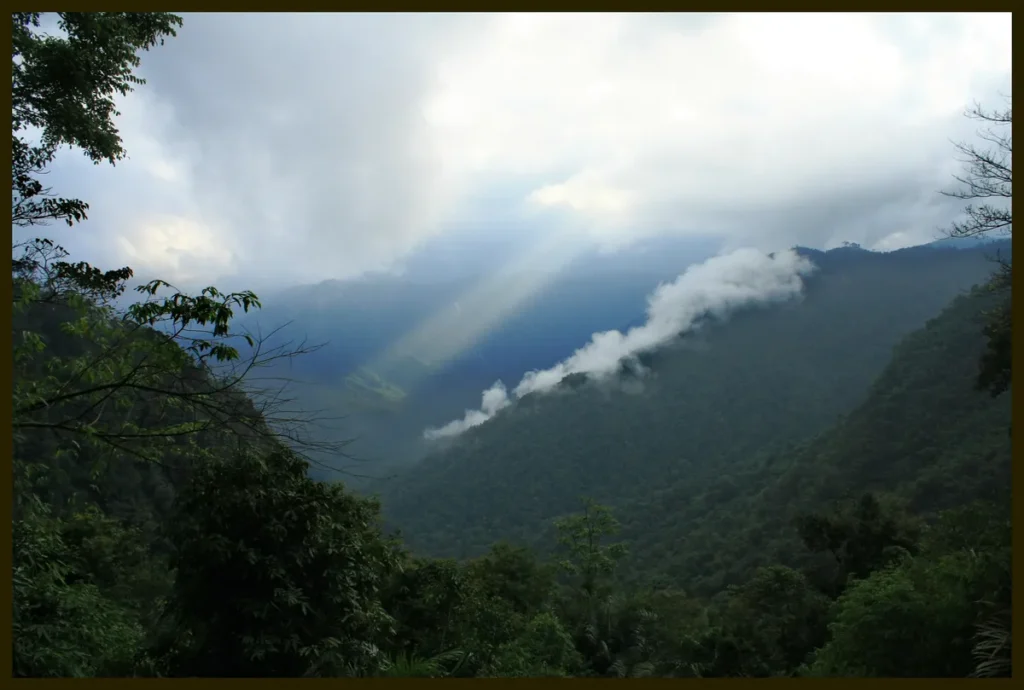
Image: Nagesh Jayaraman from Chennai, India, Wikimedia Commons, CC BY 2.0
How to use this in Mains
If asked: Explain the significance of the monsoon for India's economy. (GS-I)
Quote: “Around half of India’s net sown area depends on rain.”
Use it: A powerful opening line.
In the news
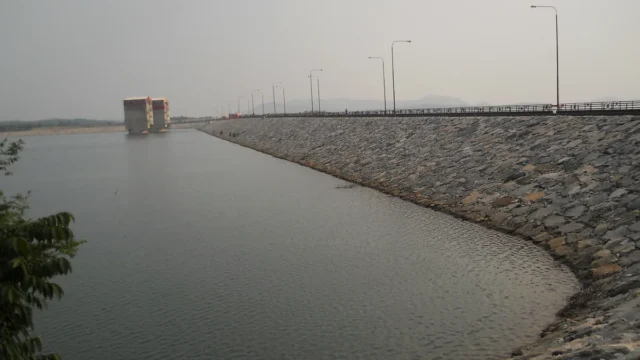
Pumped storage hydropower: India’s roadmap for 100 GW of ‘water batteries’ by 2035-36
A PIB backgrounder of 19 October 2026 explains how pumped storage projects (PSPs) will store solar and wind power for India’s grid. India runs 7.43 GW of pumped storage today, is building 15.87 GW more and has an assessed potential of 345.38 GW. A roadmap aims to add about 100 GW between 2025-26 and 2035-36.
19 Oct 2026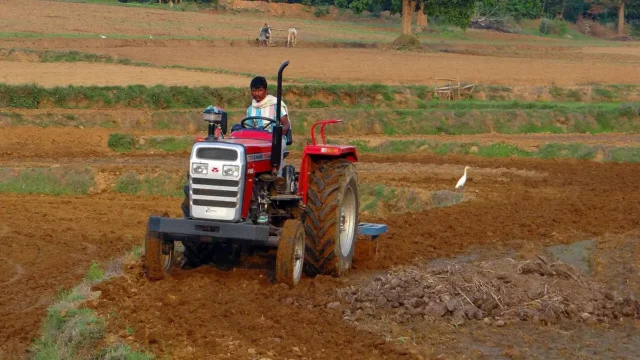
Khet Bachao Abhiyan: Centre reviews 22 October to 30 November farm campaign with States
On 17 October 2026 Union Agriculture Minister Shivraj Singh Chouhan reviewed preparations for the Khet Bachao Abhiyan with agriculture ministers of 11 States and UTs. The campaign runs from 22 October to 30 November 2026. About 4,150 teams of Krishi Vigyan Kendra and ATMA staff, with over 12,000 scientists and officials, plan around 1.5 lakh meetings with farmers on soil health, crop residue, balanced fertiliser use and key schemes.
17 Oct 2026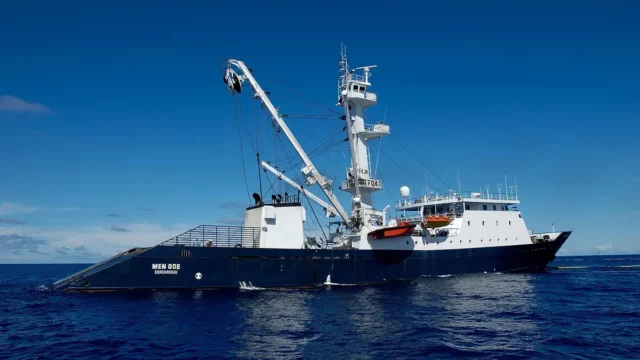
India to accede to the Southern Indian Ocean Fisheries Agreement (SIOFA)
On 14 October 2026 the Centre approved India's accession to the Southern Indian Ocean Fisheries Agreement. India, a Cooperating Non-Contracting Party since 2022, will become a full Contracting Party. Indian vessels can then fish squids, toothfish, alfonsino and other non-migratory stocks in the SIOFA area and join its scientific and compliance bodies.
14 Oct 2026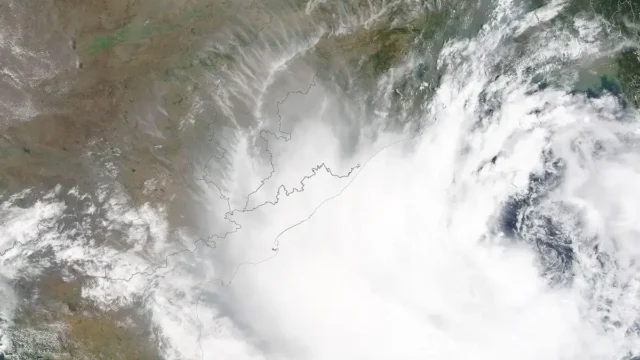
IMD launches a map-based Decision Support System for cyclone and marine warnings
On 12 October 2026 the India Meteorological Department dedicated a Cyclone Warning and Marine Weather Services Decision Support System to the nation. The WebGIS platform shows cyclone track, intensity, winds, rainfall, storm surge and district-wise warnings on one map for disaster managers and the public.
13 Oct 2026