
Quantum Computing: Qubits, Superposition and Entanglement, Applications, Quantum Communication and India’s National Quantum Mission (UPSC Notes + PYQs)

UPSC has already asked about this. Read the story with these questions in mind.
The physics in plain words
- Qubit: the basic unit; can be built from superconducting circuits, trapped ions, photons or spins.
- Superposition: a qubit holds a mix of 0 and 1 until measured.
- Entanglement: the state of one qubit is tied to another, however far apart.
- Decoherence: noise destroys quantum states quickly, so machines are cooled close to absolute zero and need error correction.
Milestones
Google claimed “quantum supremacy” in 2019 with its Sycamore processor; IBM, Google and others have since built machines with hundreds to over a thousand physical qubits. Google’s Willow chip (2024) showed error rates falling as qubits were added. Microsoft’s Majorana 1 (2025) proposes “topological” qubits, which a 2025 Prelims question tested.
Applications and risks
Simulating molecules for drugs and batteries, logistics optimisation, finance, and weather. The risk: a large quantum computer running Shor’s algorithm could break RSA encryption used in banking. Hence post-quantum cryptography standards (NIST, 2024) and quantum key distribution (QKD), where any eavesdropping disturbs the quantum state and is detected.
National Quantum Mission
Approved in April 2023 for 2023-24 to 2030-31. Four thematic hubs (T-Hubs): quantum computing (IISc Bengaluru), communication (IIT Madras with C-DOT), sensing and metrology (IIT Bombay), materials and devices (IIT Delhi). Targets: intermediate-scale quantum computers with 50-1,000 qubits, satellite-based QKD over 2,000 km between ground stations, and atomic clocks and magnetometers. ISRO has shown free-space QKD over 300 m; DRDO and C-DOT have tested fibre QKD.
Quantum Computing: UPSC angle
For UPSC CSE
Prelims: qubit, superposition, entanglement, mission details, QKD. Mains GS-III: emerging technologies, cyber security implications, India’s research ecosystem.
Quantum Computing UPSC PYQs (Prelims)
Questions UPSC has actually asked, from the official papers. Pick an option to check yourself.
How many seconds in total are there in x weeks, x days, x hours, x minutes and x seconds?
A qubit (quantum bit) is the basic unit of quantum computing. Through superposition it can be 0 and 1 at once, and qubits can be entangled. India’s National Quantum Mission (2023) aims to build 50–1000-qubit machines. Answer as per the official UPSC key · Battle IAS PYQ bankAnswer (d) & why
Let P = QQQ be a 3-digit number. What is the HCF of P and 481?
Majorana 1 (February 2025) is Microsoft’s quantum chip built on “topological” qubits. Amazon’s quantum chip is called Ocelot. Deep learning, which uses many-layered neural networks, is a subset of machine learning. So I and III are correct. Answer as per the official UPSC key · Battle IAS PYQ bankAnswer (c) & why
How many times does 5 appear in all two-digit positive integers?
The NQM (2023, under the DST) aims at quantum computers of 50–1000 physical qubits within eight years. It has four T-Hubs: computing (IISc Bengaluru), communication (IIT Madras), sensing and metrology (IIT Bombay), and materials and devices (IIT Delhi). Answer as per the official UPSC key · Battle IAS PYQ bankAnswer (b) & why
Mains PYQs on this topic
No UPSC Mains question from 2023-2026 is directly on this topic. Older papers (2013-2022) will be added as the Mains bank grows.
Quick quiz
The term “qubit” is associated with
UPSC 2022.Answer (b)
Quantum key distribution is secure because
No-cloning principle.Answer (b)
India’s National Quantum Mission runs till
2023-24 to 2030-31.Answer (c)
FAQs
Will quantum computers replace laptops?
No. They will tackle specific hard problems; everyday computing stays classical.
What is quantum supremacy?
A demonstration where a quantum computer solves a task practically impossible for classical computers.
What is post-quantum cryptography?
Encryption methods designed to resist attacks by quantum computers.
How much is the National Quantum Mission’s outlay?
About ₹6,003 crore.
Spotted an error? Tell us. We correct within 48 hours.
Image: Dev Jadiya, Wikimedia Commons, CC BY-SA 4.0
How to use this in Mains
If asked: What is quantum computing, and why does India need a National Quantum Mission? (GS-III)
Quote: “Simulating molecules for drugs and batteries, logistics optimisation, finance, and weather.”
Use it: Use as the applications line in your body.
In the news
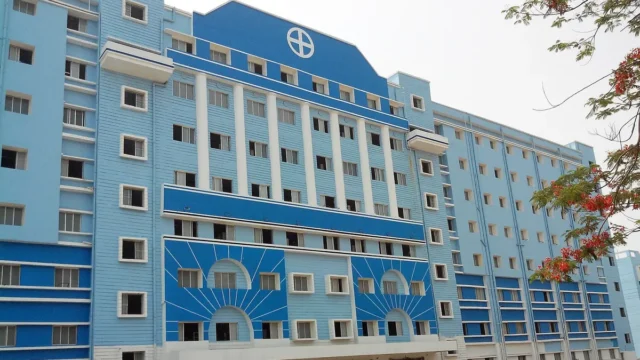
NMC withdraws MSMER-2023: medical colleges lose the fixed penalty rulebook, annual disclosure stays
The National Medical Commission (NMC) has de-notified the Maintenance of Standards of Medical Education Regulations, 2023 (MSMER-2023) by a notification dated 14 October 2026, published in the Gazette on 16 October. Its fixed penalties, including seat cuts and fines of up to ₹5 lakh for false records, go with it. The Annual Disclosure Report stays.
19 Oct 2026
Swavlamban 2026: Navy’s fifth innovation and indigenisation seminar on 26–27 October
At a curtain raiser on 19 October 2026, Vice Chief of the Naval Staff Vice Admiral Ajay Kochhar announced the fifth edition of Swavlamban, the Navy’s flagship innovation and indigenisation seminar. It will be held on 26–27 October at the Manekshaw Centre, New Delhi, where the Navy will release the NAUSETU interface standards and a technology compendium.
19 Oct 2026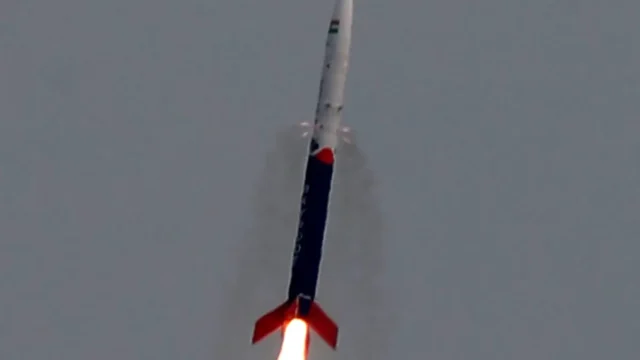
India’s space economy to grow from about $9 billion to $40-45 billion in 7-8 years
On 17 October 2026, Union Minister Dr Jitendra Singh said India’s space economy, worth about USD 9 billion today, should reach USD 40-45 billion in the next seven to eight years. He said the task now is to move from showing what India can do in space to building space companies that can compete and earn worldwide. For that, private firms need steady demand, quick approvals and patient capital. This is the story of space turning from a science mission into an industry.
18 Oct 2026
NPPA caps trade margins on 137 anti-cancer drugs: prices to fall up to 70% from 9 November
On 17 October 2026 the National Pharmaceutical Pricing Authority (NPPA) capped trade margins on 137 non-scheduled anti-cancer drugs at 30%, using its special public-interest power under Paragraph 19 of the Drugs (Prices Control) Order, 2013. The Government expects the retail price of these medicines to fall by up to 70%, and the new prices apply from 9 November 2026. The list includes costly immunotherapy drugs such as pembrolizumab and durvalumab.
18 Oct 2026