
Social Justice (GS-II): Constitutional Basis, Vulnerable Sections, Welfare Schemes, Statutory Bodies and Implementation Gaps (UPSC Notes)
UPSC has already asked about this. Read the story with these questions in mind.
- Prelims 2013Consider the following statements: National Development Council is an organ of the Planning Commission. …Solve with answer →
- Mains 2024 · GS1Despite comprehensive policies for equity and social justice, underprivileged sections are not yet getting the full benefits of affirmative action envisaged by the Constitution.…See model answer →
Constitutional basis
- Equality and non-discrimination (Art. 14, 15, 16), abolition of untouchability (Art. 17), prohibition of trafficking and child labour (Art. 23, 24).
- DPSP: Art. 38, 39, 41, 46 (education and economic interests of SCs, STs and weaker sections).
- Reservation in legislatures (Art. 330, 332), commissions (Art. 338, 338A, 338B).
- 103rd Amendment (2019): 10% EWS quota, upheld in Janhit Abhiyan (2022).
Who is vulnerable, and key laws
| Group | Laws and schemes |
|---|---|
| SCs and STs | SC/ST (Prevention of Atrocities) Act, 1989; Forest Rights Act, 2006; post-matric scholarships; PM-JANMAN for PVTGs |
| OBCs | Mandal reservation (Indra Sawhney 1992, creamy layer); sub-categorisation (Rohini Commission) |
| Women and children | POCSO 2012; Beti Bachao Beti Padhao; Mission Shakti; Mission Vatsalya |
| Persons with disabilities | RPwD Act, 2016 (21 disabilities, 4% job reservation); Accessible India |
| Elderly | Maintenance and Welfare of Parents and Senior Citizens Act, 2007; NSAP pensions |
| Transgender persons | NALSA judgment (2014); Transgender Persons Act, 2019 |
Recent turns
In 2024 a seven-judge bench in State of Punjab v. Davinder Singh allowed States to sub-classify SCs for reservation. The Manual Scavengers Act, 2013 still faces deaths in sewers, and the NAMASTE scheme aims at mechanised cleaning. The Census with caste enumeration, announced for 2027, will reshape the debate.
Implementation gaps
Low conviction rates under the Atrocities Act, under-spending of SC and ST sub-plan funds, scholarship delays, exclusion due to documentation, and weak monitoring. Good practice: Kerala’s Kudumbashree for women, Tamil Nadu’s breakfast scheme for school children, and social audits that let beneficiaries check delivery.
Social Justice: UPSC angle
For UPSC CSE
Mains GS-II: welfare schemes and their performance, mechanisms and bodies for vulnerable sections, issues in health, education and poverty.
Social Justice UPSC PYQs (Prelims)
Questions UPSC has actually asked, from the official papers. Pick an option to check yourself.
No Prelims question in the Battle IAS bank is directly on this topic yet.
Mains PYQs on this topic
Questions from the official UPSC Mains papers (2023-2026 in the Battle IAS Mains bank), newest first. Each links to a model answer.
- UPSC Mains 2026 · GS Paper II · Q17 · 15 marks
Can the constitutional mandate of rights-based welfare be effectively realised in the context of non-integrated governance and minimal public investment? Examine.
- UPSC Mains 2024 · GS Paper I · Q18 · 15 marks
Despite comprehensive policies for equity and social justice, underprivileged sections are not yet getting the full benefits of affirmative action envisaged by the Constitution. Comment.
Quick quiz
Article 17 of the Constitution deals with
Enforced by the Protection of Civil Rights Act, 1955.Answer (b)
The RPwD Act, 2016 recognises
Up from seven in the 1995 Act.Answer (c)
Sub-classification of SCs for reservation was allowed by the Supreme Court in
Seven-judge bench.Answer (c)
FAQs
Is social justice in the Preamble?
Yes: “Justice, social, economic and political”.
Which bodies protect SCs, STs and OBCs?
The National Commissions for SCs (Art. 338), STs (Art. 338A) and Backward Classes (Art. 338B).
What is the EWS quota?
A 10% reservation for economically weaker sections not covered by other quotas, added by the 103rd Amendment.
What is PM-JANMAN?
A mission for the development of Particularly Vulnerable Tribal Groups, launched in 2023.
Spotted an error? Tell us. We correct within 48 hours.
Image: Nyaya Health, Wikimedia Commons, CC BY 2.0
How to use this in Mains
If asked: UPSC Mains 2026, GS-II: Can the constitutional mandate of rights-based welfare be effectively realised in the context of non-integrated governance and minimal public investment? Examine.
Quote: “Low conviction rates under the Atrocities Act, under-spending of SC and ST sub-plan funds, scholarship delays, exclusion due to documentation, and weak monitoring.”
Use it: Use as the implementation-gap evidence in your body.
In the news
NMC withdraws MSMER-2023: medical colleges lose the fixed penalty rulebook, annual disclosure stays
The National Medical Commission (NMC) has de-notified the Maintenance of Standards of Medical Education Regulations, 2023 (MSMER-2023) by a notification dated 14 October 2026, published in the Gazette on 16 October. Its fixed penalties, including seat cuts and fines of up to ₹5 lakh for false records, go with it. The Annual Disclosure Report stays.
19 Oct 2026
Supreme Court: children have a right to the internet, and platforms must block child abuse material
In a judgment of 15 October 2026, the Supreme Court said that the right to access and use the internet is a fundamental right of every person, children included, under Article 21 read with Article 19(1)(a). So the answer to online danger is not to lock children out but to go after the abusive content and the platforms that fail to remove it. The Court ordered a National Hash and URL List Database, two-hour reporting of unknown abuse material, and loss of revenue for platforms that profit from it through paywalls.
18 Oct 2026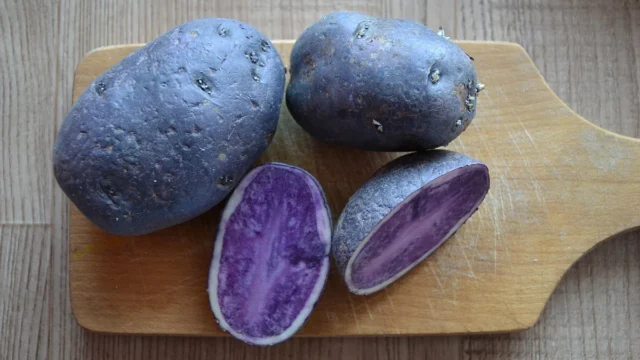
Kufri Jamunia: ICAR-CPRI’s purple potato to fight hidden hunger
A PIB backgrounder of 18 October 2026 puts the spotlight on Kufri Jamunia, a purple-fleshed potato bred by ICAR’s Central Potato Research Institute and released in 2024. It has nearly twice the Vitamin C of a common potato and several times more zinc and iron, along with antioxidants called anthocyanins. The idea is clever: instead of asking people to change what they eat, make the food they already eat more nutritious. That is biofortification.
18 Oct 2026
NPPA caps trade margins on 137 anti-cancer drugs: prices to fall up to 70% from 9 November
On 17 October 2026 the National Pharmaceutical Pricing Authority (NPPA) capped trade margins on 137 non-scheduled anti-cancer drugs at 30%, using its special public-interest power under Paragraph 19 of the Drugs (Prices Control) Order, 2013. The Government expects the retail price of these medicines to fall by up to 70%, and the new prices apply from 9 November 2026. The list includes costly immunotherapy drugs such as pembrolizumab and durvalumab.
18 Oct 2026