
Socio-Religious Reform Movements in 19th-Century India: Organisations, Reformers and UPSC PYQs
UPSC has already asked about this. Read the story with these questions in mind.
Why reform movements arose
Western education, the printing press, Christian missionary criticism and a new urban middle class pushed Indians to re-examine their own traditions. Reformers usually argued from two sources at once: reason and humanism, and a return to what they saw as the original, purer texts. Their work fed directly into the national movement by building public opinion, associations and the press.
Major organisations and reformers
| Organisation | Year · place | Founder / leader | Key ideas |
|---|---|---|---|
| Brahmo Sabha / Samaj | 1828 · Calcutta | Raja Rammohan Roy; later Debendranath Tagore, Keshab Chandra Sen | Monotheism, against idolatry and priestly mediation; campaign against sati (abolished 1829) |
| Young Bengal | 1820s–30s · Calcutta | Henry Vivian Derozio | Radical rationalism at Hindu College |
| Prarthana Samaj | 1867 · Bombay | Atmaram Pandurang; M.G. Ranade | Theism, inter-caste dining, widow remarriage, women’s education |
| Satyashodhak Samaj | 1873 · Pune | Jyotiba Phule | Anti-caste, rights of lower castes and women; Gulamgiri |
| Arya Samaj | 1875 · Bombay | Swami Dayanand Saraswati | “Back to the Vedas”, against idolatry and caste by birth; Satyarth Prakash; shuddhi |
| Theosophical Society | 1875 · New York (Adyar from 1882) | Blavatsky, Olcott; later Annie Besant | Revival of ancient religions, universal brotherhood |
| Aligarh Movement | 1875 · Aligarh (MAO College) | Sir Sayyid Ahmad Khan | Modern education for Muslims |
| Ramakrishna Mission | 1897 · Belur | Swami Vivekananda | Vedanta, social service |
| SNDP Yogam | 1903 · Kerala | Sree Narayana Guru | “One caste, one religion, one God” |
Reform for women
Major milestones: abolition of sati (1829, Lord William Bentinck, campaign led by Rammohan Roy); the Hindu Widows’ Remarriage Act, 1856 (Ishwar Chandra Vidyasagar’s campaign); girls’ schools such as the Hindu Female School in Calcutta (1849, later Bethune School), with Vidyasagar as secretary; Savitribai and Jyotiba Phule’s girls’ school in Pune (1848); and Pandita Ramabai’s Sharada Sadan.
Assessment: strengths and limits
Strengths: they built modern associations, used print and public debate, improved women’s and lower-caste status in law and practice, and gave Indians confidence in their own heritage. Limits: they were mostly urban, upper-caste and middle-class; some revivalist strands sharpened communal identities. Use this balanced frame in Mains.
Socio-religious Reform Movements: UPSC angle
For UPSC CSE
Prelims: founder–organisation–year matching, chronology, ideas of each body. Mains GS-I: role of reform movements in nation-building; women and caste reform; reform vs revival.
Socio-religious Reform Movements UPSC PYQs (Prelims)
Questions UPSC has actually asked, from the official papers. Pick an option to check yourself.
Which of the following statements is/are correct regarding Brahmo Samaj?
– 1. It opposed idolatry.
– 2. It denied the need for a priestly class for interpreting the religious texts.
– 3. It popularized the doctrine that the Vedas are infallible.
Select the correct answer using the codes given below :
The Brahmo Samaj opposed idolatry and priestly mediation (1 and 2). Vedic infallibility was the Arya Samaj’s position, not the Brahmo Samaj’s. Answer as per the official UPSC key · Battle IAS PYQ bankAnswer (b) & why
Consider the following statements about Raja Ram Mohan Roy :
– I. He possessed great love and respect for the traditional philosophical systems of the East.
– II. He desired his countrymen to accept the rational and scientific approach and the principle of human dignity and social equality of all men and women.
Which of the statements given above is/are correct?
Both are correct: Rammohan respected Eastern philosophy and also championed reason, human dignity and equality. Answer as per the official UPSC key · Battle IAS PYQ bankAnswer (c) & why
Which among the following events happened earliest ?
Neel Darpan (1860) is earliest. Satyendranath Tagore entered the ICS in 1863/64, the Arya Samaj was founded in 1875 and Anandamath published in 1882. Answer as per the official UPSC key · Battle IAS PYQ bankAnswer (b) & why
Who among the following was associated as Secretary with Hindu Female School which later came to be known as Bethune Female School?
Ishwar Chandra Vidyasagar served as secretary of the Hindu Female School (later Bethune School). Answer as per the official UPSC key · Battle IAS PYQ bankAnswer (c) & why
Mains PYQs on this topic
Questions from the official UPSC Mains papers (2023-2026 in the Battle IAS Mains bank), newest first. Each links to a model answer.
- UPSC Mains 2025 · GS Paper I · Q11 · 15 marks
Mahatma Jotirao Phule’s writings and efforts of social reforms touched issues of almost all subaltern classes. Discuss.
Quick quiz
Who founded the Satyashodhak Samaj?
1873, Pune.Answer (b)
“Satyarth Prakash” was written by
Founder of the Arya Samaj.Answer (c)
The Hindu Widows’ Remarriage Act was passed in
Vidyasagar’s campaign.Answer (b)
FAQs
What were the major socio-religious reform movements in India?
Brahmo Samaj, Prarthana Samaj, Arya Samaj, Satyashodhak Samaj, Theosophical Society, Ramakrishna Mission, Aligarh Movement and SNDP, among others.
Who is called the father of the Indian Renaissance?
Raja Rammohan Roy, founder of the Brahmo Sabha (1828).
What was the slogan of the Arya Samaj?
“Back to the Vedas”.
Which reformer campaigned for widow remarriage?
Ishwar Chandra Vidyasagar; the Hindu Widows’ Remarriage Act was passed in 1856.
What were the limitations of the reform movements?
Their base was largely urban, upper-caste and middle-class, and some revivalist strands deepened communal identities.
Spotted an error? Tell us. We correct within 48 hours.
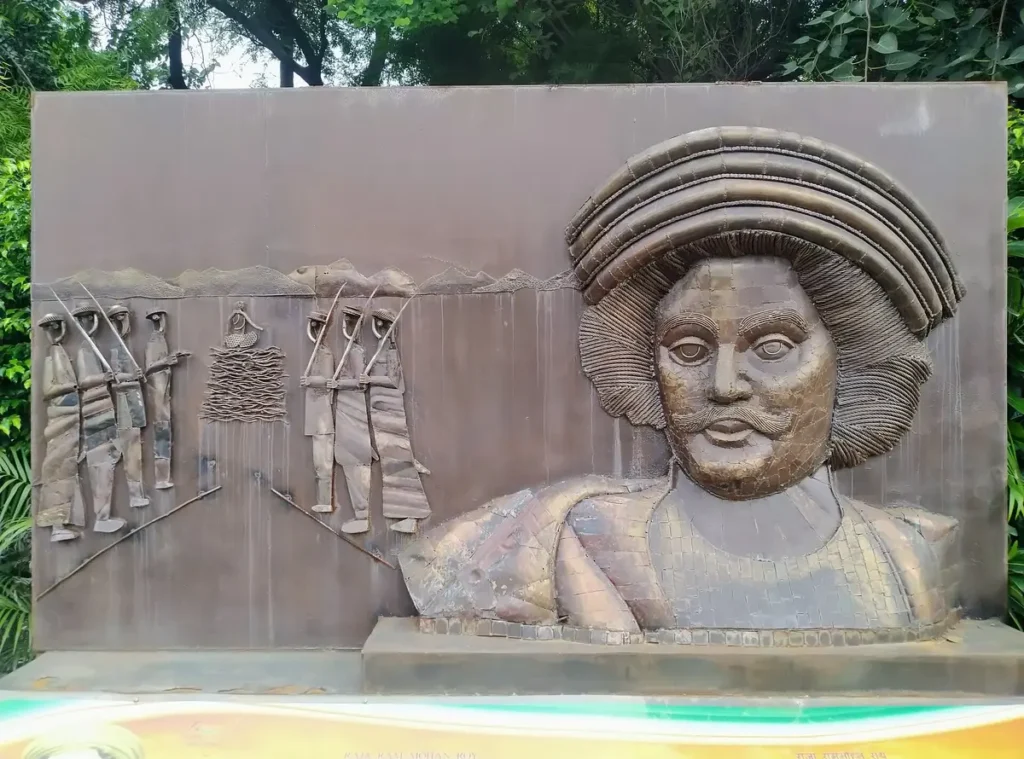
Image: Pur 0 0, Wikimedia Commons, CC BY-SA 4.0
How to use this in Mains
If asked: UPSC Mains 2025, GS-I: Mahatma Jotirao Phule’s writings and efforts of social reforms touched issues of almost all subaltern classes. Discuss.
Quote: “The 19th-century socio-religious reform movements tried to remove social evils such as sati, child marriage, caste discrimination and the ban on widow remarriage, and to reinterpret religion through reason.”
Use it: Use to frame the reform agenda before Phule.
In the news
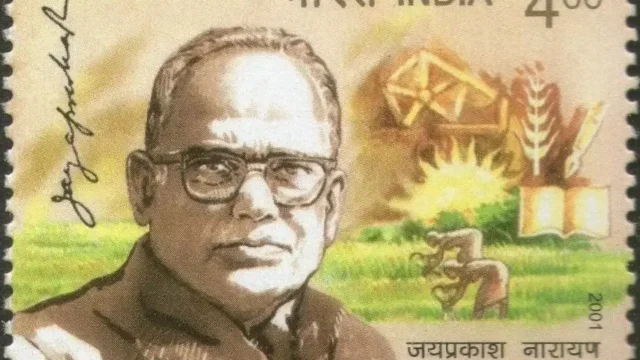
Birth anniversaries: Jayaprakash Narayan and Nanaji Deshmukh
11 October is the birth anniversary of Loknayak Jayaprakash Narayan and Nanaji Deshmukh, both Bharat Ratna awardees. The Prime Minister recalled JP's voice during the Emergency and his concern for good governance, and Nanaji's work in rural development and community participation. Treat this as a personality note for Prelims.
11 Oct 2026
ASI and Denmark museum to search for 1619 Danish shipwreck Oresund off Karaikal
The Archaeological Survey of India's Underwater Archaeology Wing and the National Museum of Denmark (Njord Centre, Copenhagen) signed an MoU to locate and document the Danish ship Oresund, wrecked off Karaikal, Puducherry, in 1619 CE. It is described as the first Danish ship known to have reached India.
15 Jun 2026
Veer Bal Diwas and the Rashtriya Bal Puraskar
The PM announced the day on 9 January 2022 and the first Veer Bal Diwas was held on 26 December 2022 [PMO].
26 Dec 2025
Stamp on Emperor Perumbidugu Mutharaiyar II
Questions on lesser-known regional dynasties are common in Prelims. Stamps and anniversaries often bring them into the news.
14 Dec 2025