
e-Governance in India: Meaning, Models, Digital India, Digital Public Infrastructure and Challenges (UPSC Notes + PYQs)
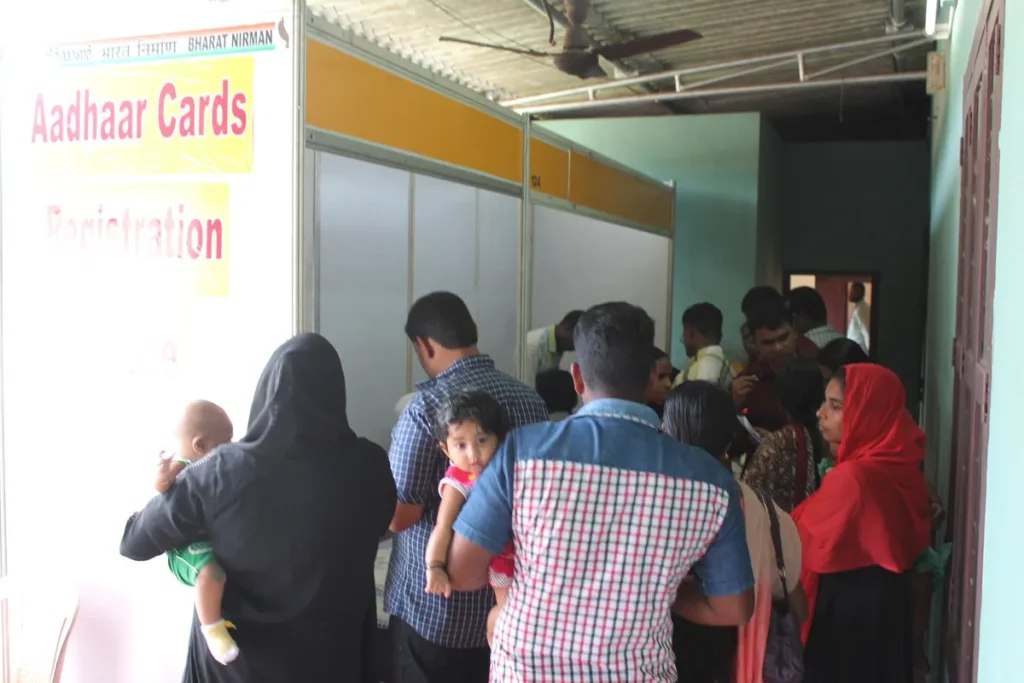
UPSC has already asked about this. Read the story with these questions in mind.
- Prelims 2018Which of the following is/are the aim/aims of ‘Digital India’ Plan of the Government of India ?Solve it below ↓
- Mains 2023 · GS2e-governance, as a critical tool of governance, has ushered in effectiveness, transparency and accountability in governments. What inadequacies hamper the enhancement of these features…See model answer →
See all 5 PYQs
- Prelims 2016Regarding ‘DigiLocker’, sometimes seen in the news, which of the following statements is/are correct?Solve it below ↓
- Prelims 2022Consider the following: Aarogya Setu …Solve it below ↓
- Mains 2024 · GS2e-governance is not just about the routine application of digital technology in service delivery process. It is as much about multifarious interactions for ensuring…See model answer →
Background: from computerisation to citizen services
E-governance is the use of information and communication technology to deliver government services, exchange information and integrate systems between government and citizens, businesses and other governments. India began with computerisation of departments in the 1970s and the National Informatics Centre (1976), which built networks for district administration. The real push came in the 1990s and 2000s with State projects such as Bhoomi for land records in Karnataka, e-Seva in Andhra Pradesh, and Gyandoot in Madhya Pradesh. The Information Technology Act, 2000 gave legal recognition to electronic records and digital signatures. The National e-Governance Plan of 2006 scaled up these efforts, and Digital India (2015) aimed to make India a digitally empowered society and knowledge economy.
Models of interaction
| Model | Meaning | Example |
|---|---|---|
| G2C | Government to citizen | UMANG app, DigiLocker, land records |
| G2B | Government to business | GST Network, MCA-21, GeM procurement |
| G2G | Within government | e-Office, PFMS |
| G2E | Government to employee | iGOT Karmayogi, SPARROW appraisal |
- G2CCertificates, DBT, grievances
- G2BGST, company filings, e-procurement
- G2GData sharing between departments
- G2EPayroll, training, performance
From NeGP to Digital India
The NeGP (2006) created 27 Mission Mode Projects and Common Service Centres. Digital India (2015) rests on three visions: digital infrastructure as a utility, governance and services on demand, and digital empowerment of citizens. The Second ARC’s 11th Report called e-governance a means to “SMART” government: simple, moral, accountable, responsive and transparent.
Digital Public Infrastructure
Open, interoperable public platforms on which others can build: Aadhaar (identity), UPI (payments), DigiLocker (documents), Account Aggregator (data sharing with consent), ONDC (commerce), ABDM (health). India pushed DPI during its G20 presidency (2023).
- 1Map the citizen journey
- 2Simplify the process before digitising
- 3Build on shared digital public infrastructure
- 4Offer assisted and offline access
- 5Track outcomes and grievances
Successes
Direct Benefit Transfer savings, faster passports (Passport Seva), Bhoomi land records in Karnataka, e-Courts, CoWIN’s vaccine certificates, and the e-Shram registry of unorganised workers.
E-government vs e-governance
| Point | E-government | E-governance |
|---|---|---|
| Focus | Putting existing services online | Changing how the state interacts with people |
| Direction | One-way delivery | Two-way interaction and feedback |
| Outcome sought | Efficiency | Transparency, accountability, participation |
| Example | Downloading a form | MyGov consultations, grievance tracking on CPGRAMS |
Challenges
- Digital divide by gender, region and age.
- Exclusion when biometrics fail.
- Cyber security and data breaches.
- Privacy: the Digital Personal Data Protection Act, 2023 and its 2025 Rules.
- Poor connectivity and digital literacy (PMGDISHA).
- Back-end processes not re-engineered, so old delays move online.
Technology bias vs user-centred design
A common criticism is that e-governance projects are built around back-end systems and databases rather than around the people who use them. Applications often assume a smartphone, reliable internet, English or Hindi literacy and a working Aadhaar biometric, which many elderly, rural, disabled and poor citizens lack. When biometric authentication fails at a ration shop, the person may be denied food grain even though they are entitled. Processes are digitised without being simplified, so the citizen still faces the same steps, only online. User-centred design reverses this: it starts with the citizen’s journey, tests services with real users, offers assisted access through Common Service Centres, provides offline fallbacks and grievance redress, and measures success by outcomes such as time saved and errors avoided, not by the number of transactions recorded.
The legal and institutional frame
| Law or body | Role |
|---|---|
| IT Act, 2000 | Electronic records, digital signatures, cyber offences |
| Aadhaar Act, 2016 | Identity for targeted delivery of subsidies |
| Digital Personal Data Protection Act, 2023 | Consent, rights of data principals, Data Protection Board |
| Right to Information Act, 2005 | Proactive disclosure (Section 4) |
| MeitY and NIC | Policy and technical backbone |
| CERT-In | National agency for cyber incident response |
| Common Service Centres | Assisted digital access in villages |
Lessons from successful projects
Projects that worked share common features. Bhoomi made land records available at kiosks, which cut bribes and delays because the record no longer depended on a village accountant. Passport Seva re-engineered the whole process with a private partner and fixed service standards. The Public Financial Management System and DBT reduced leakages in subsidy payments. CoWIN managed booking and certificates for the vaccination drive at a national scale. What they show is that technology works when it comes with process re-engineering, clear accountability, training of staff and a fallback for those who cannot use it. Failures, by contrast, often came from weak connectivity, poor data quality, lack of interoperability between departments, and little attention to the citizen’s experience.
Mains answer tips
Use the 2nd Administrative Reforms Commission’s 11th report, ‘Promoting e-Governance: The SMART Way Forward’, to frame governance as Simple, Moral, Accountable, Responsive and Transparent. Cover models of interaction (G2C, G2B, G2G, G2E), a table of achievements, and challenges: the digital divide, privacy, cyber security, interoperability and exclusion errors. End with user-centred design and digital literacy as the way forward.
E-governance: UPSC angle
For UPSC CSE
Prelims: DPI components, schemes, which body runs what. Mains GS-II: e-governance and accountability; digital divide; data protection.
E-governance UPSC PYQs (Prelims)
Questions UPSC has actually asked, from the official papers. Pick an option to check yourself.
Which of the following is/are the aim/aims of ‘Digital India’ Plan of the Government of India ?
– 1. Formation of India’s own Internet companies like China did.
– 2. Establish a policy framework to encourage overseas multinational corporations that collect Big Data to build their large data centres within our national geographical boundaries.
– 3. Connect many of our villages to the Internet and bring Wi-Fi to many of our schools, public places and major tourist centres.
Select the correct answer using the code given below :
Digital India (2015) has three aims: digital infrastructure for every citizen (BharatNet village broadband, public Wi-Fi), governance and services on demand, and digital empowerment. Creating Chinese-style national internet champions and forcing data localisation were not among its stated aims. Answer as per the official UPSC key · Battle IAS PYQ bankAnswer (b) & why
Regarding ‘DigiLocker’, sometimes seen in the news, which of the following statements is/are correct?
– 1. It is a digital locker system offered by the Government under Digital India Programme.
– 2. It allows you to access your e-documents irrespective of your physical location.
Select the correct answer using the code given below.
DigiLocker (2015, MeitY) is a cloud document wallet under Digital India. Issued documents such as driving licences, marksheets and Aadhaar can be pulled from issuers and opened anywhere. Under the IT Rules, they are legally valid like the originals. Answer as per the official UPSC key · Battle IAS PYQ bankAnswer (c) & why
Consider the following :
– 1. Aarogya Setu
– 2. CoWIN
– 3. DigiLocker
– 4. DIKSHA
Which of the above are built on top of open-source digital platforms ?
All four are part of India’s digital public infrastructure, built on open-source code and open standards. Aarogya Setu’s code was opened in 2020. CoWIN became the open-source DIVOC/CoWIN stack offered to other countries. DigiLocker and DIKSHA (built on Sunbird) are also open-platform builds. Answer as per the official UPSC key · Battle IAS PYQ bankAnswer (d) & why
Mains PYQs on this topic
Questions from the official UPSC Mains papers (2023-2026 in the Battle IAS Mains bank), newest first. Each links to a model answer.
- UPSC Mains 2025 · GS Paper II · Q7 · 10 marks
e-governance projects have a built-in bias towards technology and back-end integration than user-centric designs. Examine.
- UPSC Mains 2024 · GS Paper II · Q18 · 15 marks
e-governance is not just about the routine application of digital technology in service delivery process. It is as much about multifarious interactions for ensuring transparency and accountability. In this context evaluate the role of the ‘Interactive Service Model’ of e-governance.
- UPSC Mains 2023 · GS Paper II · Q8 · 10 marks
e-governance, as a critical tool of governance, has ushered in effectiveness, transparency and accountability in governments. What inadequacies hamper the enhancement of these features ?
Quick quiz
GeM (Government e-Marketplace) is an example of
Public procurement from businesses.Answer (b)
Which of these is NOT a component of India’s DPI?
SWIFT is an international messaging network.Answer (d)
Digital India was launched in
July 2015.Answer (c)
FAQs
What is the difference between e-government and e-governance?
E-government is putting services online; e-governance is the broader use of technology to improve how government works with citizens.
What is Digital Public Infrastructure?
Shared digital platforms like Aadhaar, UPI and DigiLocker that public and private services can build on.
What are Common Service Centres?
Village-level access points for digital government services.
Which law protects personal data?
The Digital Personal Data Protection Act, 2023.
What is a Mission Mode Project?
A project under the National e-Governance Plan with clear objectives, scope, timelines and service levels, run by a ministry or State.
What does SMART governance stand for?
Simple, Moral, Accountable, Responsive and Transparent, as used by the 2nd Administrative Reforms Commission.
What is the digital divide?
The gap between those who have access to devices, internet and digital skills and those who do not, often along lines of income, gender, age and region.
Spotted an error? Tell us. We correct within 48 hours.
Image: Ministry of Information and Broadcasting, Wikimedia Commons, GODL-India
How to use this in Mains
If asked: UPSC Mains 2025, GS-II: e-governance projects have a built-in bias towards technology and back-end integration than user-centric designs. Examine.
Quote: “Digital divide by gender, region and age.”
Use it: Use to show user-side gaps in e-governance.
In the news

CCPA acts against online sale of explosives: 3,940 sellers delisted from seven platforms
The Central Consumer Protection Authority (CCPA) said on 19 October 2026 that 3,940 sellers of regulated explosives such as ammonium nitrate, picric acid and PETN have been delisted from seven online platforms after its action. It has fined Dial4Trade and ExportersIndia ₹10 lakh per order, and other cases are under hearing or investigation.
19 Oct 2026
India to host 61st CIML meeting on legal metrology in New Delhi, 26–28 October
India will host the 61st meeting of the International Committee of Legal Metrology (CIML) for the first time, in New Delhi from 26 to 28 October 2026. The Department of Consumer Affairs is organising it with the International Organization of Legal Metrology (OIML), and more than 100 delegates are expected, PIB said on 19 October.
19 Oct 2026
NMC withdraws MSMER-2023: medical colleges lose the fixed penalty rulebook, annual disclosure stays
The National Medical Commission (NMC) has de-notified the Maintenance of Standards of Medical Education Regulations, 2023 (MSMER-2023) by a notification dated 14 October 2026, published in the Gazette on 16 October. Its fixed penalties, including seat cuts and fines of up to ₹5 lakh for false records, go with it. The Annual Disclosure Report stays.
19 Oct 2026
Supreme Court: no prior approval under Section 17A needed to probe a bribe demand
In a judgment of 16 October 2026, a Supreme Court Bench of Justices S.V.N. Bhatti and N.V. Anjaria held that investigating a bribe demand by a public servant does not need prior approval under Section 17A of the Prevention of Corruption Act. Asking for a bribe, the court said, is not part of discharging official duties.
19 Oct 2026