
MoD signs ₹4,106 crore contracts for GSAT-7C satellite and Varunastra torpedoes
Next story · 15 OctGoyal launches National Strategic Trade Command Centre: one dashboard for DGFT schemes and SCOMET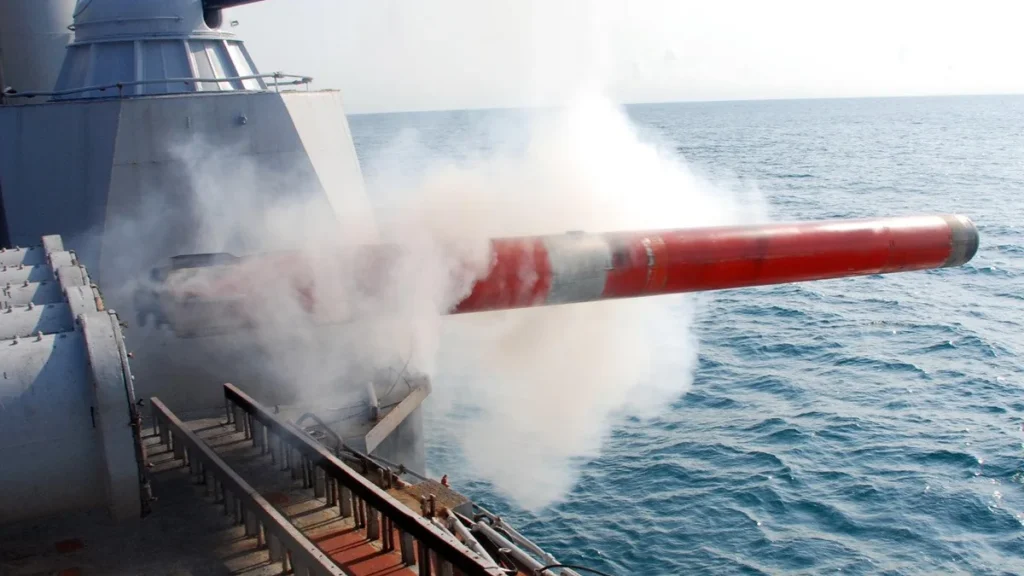
The Ministry of Defence signed two contracts worth about ₹4,106 crore on 15 October 2026. The first, worth ₹2,563 crore, is with NewSpace India Limited (NSIL) for GSAT-7C, a dedicated communication satellite for the Indian Air Force. The second, worth ₹1,543 crore, is with Bharat Dynamics Limited (BDL) for Varunastra heavyweight anti-submarine torpedoes for the Navy. Both are indigenous.
- Total value
- ₹4,106 crore
- GSAT-7C (NSIL)
- ₹2,563 crore
- Varunastra (BDL)
- ₹1,543 crore
- Torpedo designer
- NSTL, Visakhapatnam
GSAT-7C and Varunastra: what happened?
Picture a fighter pilot, an AWACS aircraft and a ground station that all need to talk securely while hundreds of kilometres apart. A dedicated satellite makes that possible. Below the sea, a submarine is only a threat if you can find it and strike it. These two contracts cover both jobs, and both are built in India.
- 15 Oct 2026: contracts signed in New Delhi in the presence of Additional Secretary and DG (Acquisition) A. Anbarasu (PIB).
- GSAT-7C is indigenously designed, developed and made. It will give IAF assets secure, resilient and seamless communication.
- Varunastra is a ship-launched anti-submarine torpedo developed by DRDO’s Naval Science and Technological Laboratory (NSTL).
- It can engage enemy submarines at long ranges and has advanced manoeuvring capability.
What is the GSAT-7 family?
- GSAT-7 (‘Rukmini’), launched in 2013, was India’s first dedicated military communication satellite, built for the Navy.
- GSAT-7A, launched in December 2018, serves the Air Force.
- GSAT-7C was cleared by the Defence Acquisition Council in 2021 to strengthen the IAF’s network-centric operations.
- NSIL, set up in 2019 under the Department of Space, is ISRO’s commercial arm and now signs such contracts with users.
What does each contract deliver?
| Point | GSAT-7C | Varunastra |
|---|---|---|
| User | Indian Air Force | Indian Navy |
| Supplier | NSIL, Bengaluru | BDL, Hyderabad |
| Value | ₹2,563 crore | ₹1,543 crore |
| Role | Secure satellite communication | Anti-submarine warfare from ships |
Which policies and laws apply?
- Union List Entry 1: defence of India; Article 246 gives Parliament exclusive power over it.
- Defence Acquisition Procedure (DAP) 2020: gives first preference to indigenously designed and developed equipment.
- Positive Indigenisation Lists: items the services must buy from Indian industry.
- Indian Space Policy, 2023: defines the roles of ISRO, NSIL and IN-SPACe.
What are the challenges?
- One satellite is a single point of failure if it is jammed or attacked.
- India’s fleet of military satellites is still small compared with China’s.
- Torpedo orders must be delivered on time; production capacity at public sector units can lag.
- Underwater warfare also needs sonars, helicopters and submarines, not torpedoes alone.
What should be done next?
- Build a constellation and ground backups so that communication does not depend on one satellite.
- Speed up the Space-Based Surveillance programme and the Defence Space Agency’s plans.
- Bring private suppliers into torpedo sub-systems to add capacity.
- Use Varunastra’s success to explore exports to friendly navies.
What can Prelims ask?
- Varunastra: heavyweight, ship-launched anti-submarine torpedo; designed by NSTL (DRDO), Visakhapatnam; made by BDL.
- GSAT-7 (2013): Navy. GSAT-7A (2018): Air Force. GSAT-7C: Air Force (contract 2026).
- NSIL: CPSE under the Department of Space, set up in 2019.
- Defence Space Agency: tri-service agency set up in 2019.
How to write about defence indigenisation in Mains
Practice question (10 marks, 150 words): Indigenisation of defence technology is central to strategic autonomy. Examine with recent examples. (GS-III)
- Intro: ₹4,106 crore contracts for GSAT-7C and Varunastra, 15 Oct 2026.
- Why: secure communication, anti-submarine warfare, fewer import risks.
- Enablers: DAP 2020, indigenisation lists, NSIL, DRDO labs.
- Gaps: production capacity, satellite numbers, timelines.
- Conclusion: steady orders plus R&D build real capability.
Image: Varunastra torpedo being fired from an Indian Navy ship. Indian Navy, Wikimedia Commons (EdictGov-India)
How to use this in Mains
If asked: How does indigenous defence production strengthen strategic autonomy? (GS-III)
Quote: “Both contracts mark a significant step towards advancing the development of domestic defence manufacturing capabilities while promoting self-reliance in critical technologies.”
Use it: Quote it, then give both contracts as examples.
If asked: Why are dedicated military satellites important for modern warfare? (GS-III)
Quote: “This indigenously designed, developed & manufactured satellite will enhance the secure, resilient & seamless communication capabilities for the assets of the Indian Air Force.”
Use it: Use it to explain network-centric warfare, then add the need for redundancy.
Exam angle
Prelims: GSAT-7 series, Varunastra, NSIL, BDL. · Mains GS-III: defence indigenisation and space security.
Practice MCQs
Original practice questions (not PYQs).
Varunastra, recently in the news, is
Answer (a) & explanation
Varunastra is an indigenous ship-launched heavyweight torpedo developed by NSTL, Visakhapatnam.
Consider the following statements:
1. GSAT-7 was India’s first dedicated military communication satellite, built for the Navy.
2. NewSpace India Limited is a CPSE under the Ministry of Defence.
Which of the statements given above is/are correct?
Answer (a) & explanation
NSIL is under the Department of Space, not the Ministry of Defence.
The Naval Science and Technological Laboratory (NSTL) of DRDO is located at
Answer (b) & explanation
NSTL is at Visakhapatnam.
Questions students ask about this
What is GSAT-7C?
A dedicated, indigenously built communication satellite for the Indian Air Force.
Who will build Varunastra torpedoes?
Bharat Dynamics Limited, Hyderabad.
What is the total value of the contracts?
About ₹4,106 crore.
Who designed Varunastra?
DRDO’s Naval Science and Technological Laboratory, Visakhapatnam.
Keep studying
Go deeper
Official source: PIB, 15 Oct 2026: MoD inks Rs 4,106 crore contracts for GSAT-7C communication satellite and Varunastra Heavy Weight Torpedoes
facts from cited sources only; faculty review pending