
CAQM orders PTZ cameras at all polluting industries in NCR by 30 November 2026
Next story · 16 OctPM-SETU: NSC clears ₹1,194.92 crore for five ITI clusters in J&K, Maharashtra, Odisha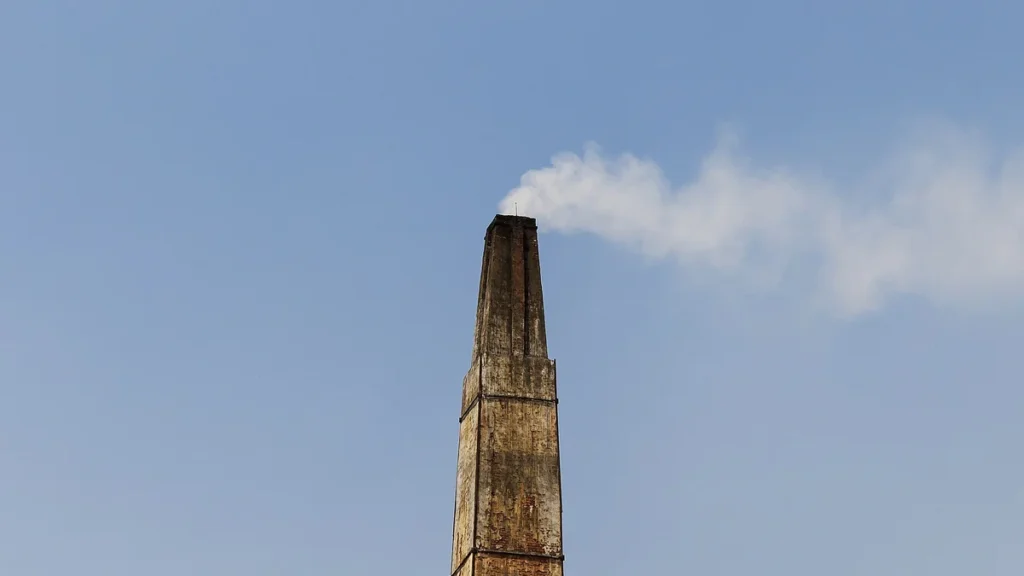
The Commission for Air Quality Management in NCR and Adjoining Areas (CAQM) has extended its order on Pan-Tilt-Zoom (PTZ) cameras to every category of industry covered by its Statutory Direction No. 98, it said on 16 October 2026. Cameras must watch fuel-feeding points, stacks and emission-monitoring ports, and must stream live to CPCB and State pollution boards. The deadline is 30 November 2026.
- Deadline
- 30 November 2026
- Live feed to
- CPCB, SPCBs, DPCC
- Supersedes
- Order of 5 Oct 2026
- States
- Haryana, UP, Rajasthan, Delhi
CAQM’s PTZ camera order: what happened?
Inspectors cannot stand next to every boiler all winter. A camera that can pan, tilt and zoom can. If a factory quietly switches to a dirty fuel at night, the regulator should be able to see it from a screen in Delhi. That is the idea behind this order.
- Covers the 17 categories of highly polluting industries identified by CPCB, and Red category (medium and large) air-polluting units (CAQM, 16 Oct 2026).
- Also covers food, food-processing and textile units with boilers or thermic fluid heaters, and metal units with furnaces.
- Feeds must stream in real time through RTSP to CPCB and SPCB or DPCC servers, with power backup.
- Any long breakdown must be reported along with the corrective action taken.
Why industrial monitoring matters in NCR winters
- In winter, calm winds and low temperatures trap pollutants close to the ground over the Indo-Gangetic plain.
- Industries using coal, biomass or other unapproved fuels add PM2.5 and sulphur dioxide.
- OCEMS (online continuous emission monitoring systems) measure stack emissions, and cameras add visual proof.
- CAQM replaced the Environment Pollution (Prevention and Control) Authority (EPCA) for NCR.
Where must the cameras be installed?
| Location | Purpose |
|---|---|
| Fuel-feeding points of boilers, furnaces, kilns | See what fuel is being burnt |
| Gas meters and gauges | Confirm use of gaseous fuel |
| Stacks and OCEMS ports | Watch visible emissions and sampling points |
| Fume extraction areas | Check that pollution controls are running |
Which laws apply?
- Commission for Air Quality Management in NCR and Adjoining Areas Act, 2021: Section 12 empowers CAQM to issue binding directions.
- Air (Prevention and Control of Pollution) Act, 1981: SPCBs regulate emissions and give consent to operate.
- Graded Response Action Plan (GRAP): staged curbs as the AQI worsens.
- Article 21: the Supreme Court has read the right to a clean environment into the right to life (M.C. Mehta cases).
What are the challenges?
- Small units may find cameras, connectivity and backup power costly.
- Cameras can be blocked, moved or switched off unless feeds are checked.
- Pollution boards need staff to watch thousands of feeds.
- A camera shows fuel and smoke; it does not measure pollutant levels.
What should be done next?
- Use AI to flag smoke or coal use automatically.
- Link camera feeds with OCEMS data and act quickly on mismatches.
- Help MSMEs shift to PNG and other approved fuels with cheap credit.
- Publish a public compliance dashboard by district.
What can Prelims ask?
- CAQM: statutory body under the CAQM Act, 2021; jurisdiction covers NCR and adjoining areas.
- PTZ: Pan-Tilt-Zoom camera. OCEMS: Online Continuous Emission Monitoring System.
- CPCB: statutory body under the Water Act, 1974, also given functions under the Air Act, 1981.
- Red category: the most polluting industries under CPCB’s classification.
How to write about air pollution governance in Mains
Practice question (10 marks, 150 words): Technology can strengthen enforcement of air quality norms. Discuss with reference to recent steps in NCR. (GS-III)
- Intro: CAQM PTZ camera order, deadline 30 Nov 2026.
- Tools: PTZ, OCEMS, live feeds, GRAP.
- Law: CAQM Act 2021, Air Act 1981.
- Limits: cost, tampering, staff, MSMEs.
- Conclusion: technology plus capacity plus cleaner fuels.
Image: Brick kiln chimney in Bharatpur district, Rajasthan (NCR). A.Savin, Wikimedia Commons, Free Art Licence
How to use this in Mains
If asked: How can enforcement of pollution norms be made more effective? (GS-III)
Quote: “This will expand the scope of technology-enabled monitoring of fuel usage, industrial emissions and compliance with prescribed pollution-control measures.”
Use it: Quote it, then add the limits of cameras.
If asked: Discuss the role of CAQM in tackling air pollution in NCR. (GS-III)
Quote: “The respective State Governments of Haryana, Uttar Pradesh and Rajasthan and the GNCTD, along with CPCB and the concerned SPCBs/DPCC, shall ensure effective implementation of the Order.”
Use it: Use it to show that CAQM coordinates across States.
Exam angle
Prelims: CAQM, OCEMS, CPCB categories. · Mains GS-III: air pollution governance.
Practice MCQs
Original practice questions (not PYQs).
The Commission for Air Quality Management in NCR and Adjoining Areas was constituted under
Answer (c) & explanation
CAQM is a statutory body under the Commission for Air Quality Management in NCR and Adjoining Areas Act, 2021.
In pollution monitoring, OCEMS stands for
Answer (a) & explanation
OCEMS measures stack emissions continuously and reports them online.
Under CAQM’s October 2026 order, PTZ camera feeds must be sent to
Answer (b) & explanation
Feeds must stream in real time to CPCB and the respective SPCB/DPCC servers.
Questions students ask about this
What has CAQM ordered?
PTZ cameras at fuel points, stacks and emission-monitoring ports of all industries under Direction No. 98 in NCR.
What is the deadline?
30 November 2026.
Who receives the feeds?
CPCB and the respective State Pollution Control Boards or DPCC.
Which industries are covered?
The 17 highly polluting categories, Red category air-polluting units, food and textile units with boilers, and metal units with furnaces.
Keep studying
Go deeper
Official source: PIB, 16 Oct 2026: CAQM expands PTZ Camera-based Remote Monitoring to all Industries covered under Direction No. 98 in NCR
facts from cited sources only; faculty review pending