
Fish seed released in Gomti to revive river life
A river is healthy when its own fish can breed and grow in it. Uttar Pradesh has released young Indian carp into the Gomti in Lucknow to rebuild their numbers, a method called river ranching. Read it to revise the Gomti river, the Indian major carps and how fish support both river health and fishing families.
- Method
- River ranching
- Where
- Gomti, near Laxman Park, Lucknow
- Fish
- Rohu, catla, mrigal
- Number
- 50,000 to one lakh, reports differ
Gomti river ranching: what happened?
Fishers on the Gomti say their nets come up lighter than before. Putting young native fish back into the river is a simple way to help both the river and the people who live off it.
- Deputy Chief Minister Brajesh Pathak released young fish (fingerlings) into the Gomti near Laxman Park, Lucknow.
- Reports say 50,000 to one lakh fingerlings were released; the numbers differ.
- The fish are Indian major carps such as rohu, catla and mrigal.
- The aim is to protect native fish and support fishing families.
- Earlier, one lakh fingerlings were released into the Gomti at Jaunpur on 16 October.
What is river ranching, and what is the Gomti?
River ranching means releasing young fish, raised in hatcheries, into rivers to rebuild falling numbers of native species. It is supported under the Pradhan Mantri Matsya Sampada Yojana, the Centre’s main fisheries scheme.
Native fish fall because of pollution, sand mining, overfishing, dams and exotic (foreign) fish that compete with them.
The Gomti rises near Pilibhit in Uttar Pradesh and flows past Lucknow, Sultanpur and Jaunpur. It joins the Ganga near Ghazipur. It is fed by rain and groundwater, not by glaciers.
Indian major carps are rohu (Labeo rohita), catla and mrigal. Fish like the common carp, silver carp and grass carp are exotic carps brought from abroad.
Native or exotic: which carps are which?
| Group | Examples | Note |
|---|---|---|
| Indian major carps | Rohu, catla, mrigal | Native to Indian rivers |
| Exotic carps | Common carp, silver carp, grass carp | Brought from abroad |
| Why it matters | Native fish keep the river’s food chain in balance | Exotic fish can push them out |
Which laws and Articles apply?
- Fisheries is a State subject (Entry 21, State List).
- Pradhan Mantri Matsya Sampada Yojana (2020): Centre’s flagship scheme for fisheries, including river ranching.
- Water (Prevention and Control of Pollution) Act, 1974: controls river pollution.
- Article 48A: the State shall protect the environment and wildlife (Directive Principle).
Why does Gomti river ranching matter?
| Angle | What to note |
|---|---|
| River health | Native fish keep the river’s food chain working. |
| Livelihoods | More fish means more income for fishing families. |
| Biodiversity | Helps native species against exotic fish. |
| Uttar Pradesh geography | Gomti facts are asked often in State exams. |
What are the problems with Gomti river ranching?
- Sewage and factory waste still pollute the Gomti in many stretches.
- Young fish may die if the water has too little oxygen.
- Without tracking, it is hard to know how many fish survive.
- Overfishing with fine nets can catch young fish before they grow.
What should be done next on Gomti river ranching?
- Clean the Gomti by treating all sewage before it enters the river.
- Track survival and growth of released fish with scientific studies.
- Ban fishing in breeding season and stop very fine nets.
- Involve fishing communities as river guardians.
What can Prelims ask on Gomti river ranching?
Prelims probability: Expect a question on the Gomti: rises near Pilibhit, joins the Ganga near Ghazipur; Indian major carps are rohu, catla and mrigal.
- Gomti: rises near Pilibhit; joins the Ganga near Ghazipur; rain- and groundwater-fed.
- Indian major carps: rohu, catla and mrigal.
- Exotic carps: common carp, silver carp, grass carp.
- River ranching: releasing hatchery-raised young fish into rivers.
- Pradhan Mantri Matsya Sampada Yojana (2020) supports river ranching.
How to write about Gomti river ranching in Mains
Practice question (UP PCS Mains GS-VI, 8 marks, 125 words): River ranching can help restore native fish in Uttar Pradesh’s rivers, but it cannot work alone. Discuss with reference to the Gomti.
- Intro: fingerlings released in the Gomti at Lucknow and Jaunpur.
- What river ranching is and why native fish are falling.
- Benefits: river health, livelihoods, biodiversity.
- Limits: pollution, survival, overfishing.
- Conclusion: clean water plus community care.
Ready lines for your answer
- A river's own fish are the best sign of its health.
- Fish seed helps only if the water is clean.
Quotable data point50,000 to one lakh fingerlings released in Lucknow; one lakh released at Jaunpur on 16 October.
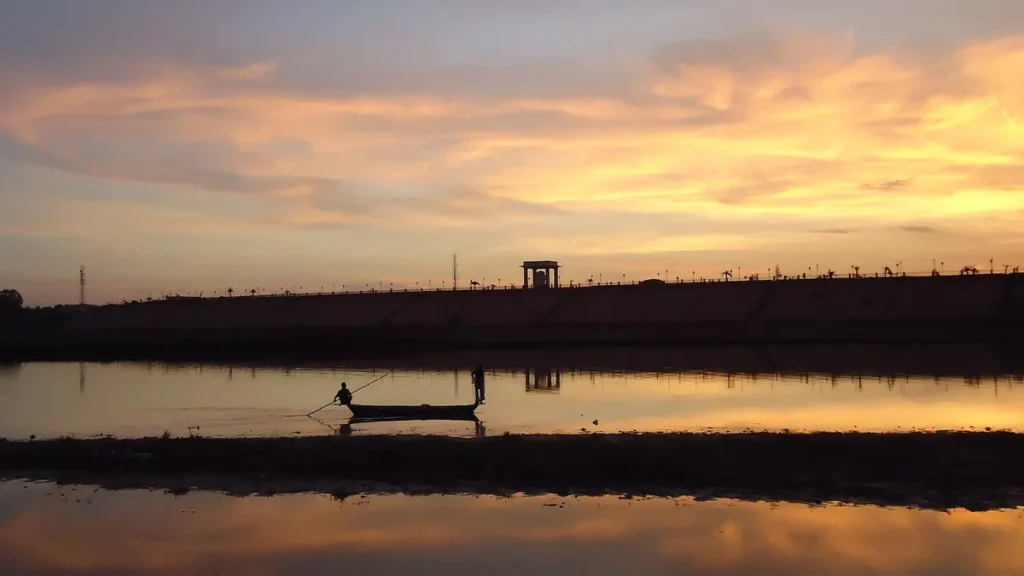
Photo: Alokksrs, CC BY-SA 4.0, via Wikimedia Commons
Exam angle
Prelims: Indian major carps, river ranching, PMMSY. · Mains GS-III: inland fisheries, river health.
Practice MCQs
Original practice questions (not PYQs).
Rohu, catla and mrigal, released in the Gomti in Lucknow, are known as Indian major carps. Which of the following is NOT an Indian major carp?
Answer (d) & explanation
Grass carp is an exotic fish from China. Rohu, catla and mrigal are the Indian major carps.
Which of the following cities is NOT located on the Gomti river?
Answer (d) & explanation
The Gomti flows past Lucknow, Sultanpur and Jaunpur. Prayagraj is at the meeting of the Ganga and Yamuna.
The Gomti river joins which river?
Answer (c) & explanation
The Gomti joins the Ganga near Ghazipur in eastern Uttar Pradesh.
Questions students ask about this
What is river ranching?
Releasing young fish raised in hatcheries into rivers to rebuild the numbers of native species.
Which fish were released in the Gomti?
Indian major carps such as rohu, catla and mrigal.
Where does the Gomti rise and end?
It rises near Pilibhit in Uttar Pradesh and joins the Ganga near Ghazipur.
Is the grass carp an Indian major carp?
No. The grass carp is an exotic carp. Indian major carps are rohu, catla and mrigal.