
Four States settle old Narmada dam dues
Four States share the cost and benefits of the Sardar Sarovar dam on the Narmada, and for decades they argued over who owes how much. Now they have agreed a one-time settlement of all old dues, to be paid this financial year. Read it to revise the Narmada river, the Narmada tribunal award and how India settles inter-State water issues.
- States
- Gujarat, Maharashtra, Madhya Pradesh, Rajasthan
- Meeting
- 27 October, 15th Review Committee
- Chair
- Jal Shakti Minister C.R. Patil
- Payment
- Within 2026-27
The Narmada dues deal: what happened?
Building a giant dam is hard; sharing its bill among four States can be harder. A long money quarrel over Sardar Sarovar has finally been settled at one table.
- The 15th meeting of the Review Committee for the Narmada Control Authority was held on 27 October.
- It was chaired by Jal Shakti Minister C.R. Patil and attended by the Chief Ministers of Gujarat, Maharashtra, Madhya Pradesh and Rajasthan.
- The committee adopted the Memorandum of Agreement of 7 July 2026 and the opinion of the Attorney General for India.
- All pending dues under the Narmada tribunal award projects are to be paid in 2026-27 as a one-time settlement.
What is the Narmada river system and the tribunal award?
The Narmada rises at Amarkantak in Madhya Pradesh and flows west through a rift valley between the Vindhya and Satpura ranges. It enters the Arabian Sea in the Gulf of Khambhat near Bharuch, Gujarat. It is the largest west-flowing river of peninsular India.
A dispute over its water was referred to the Narmada Water Disputes Tribunal in 1969. Its award of 1979 shared the water among the four States and set rules for sharing costs and power from Sardar Sarovar.
The Narmada Control Authority was set up in 1980 to carry out the award. Its Review Committee, chaired by the Union Jal Shakti Minister, can review its decisions.
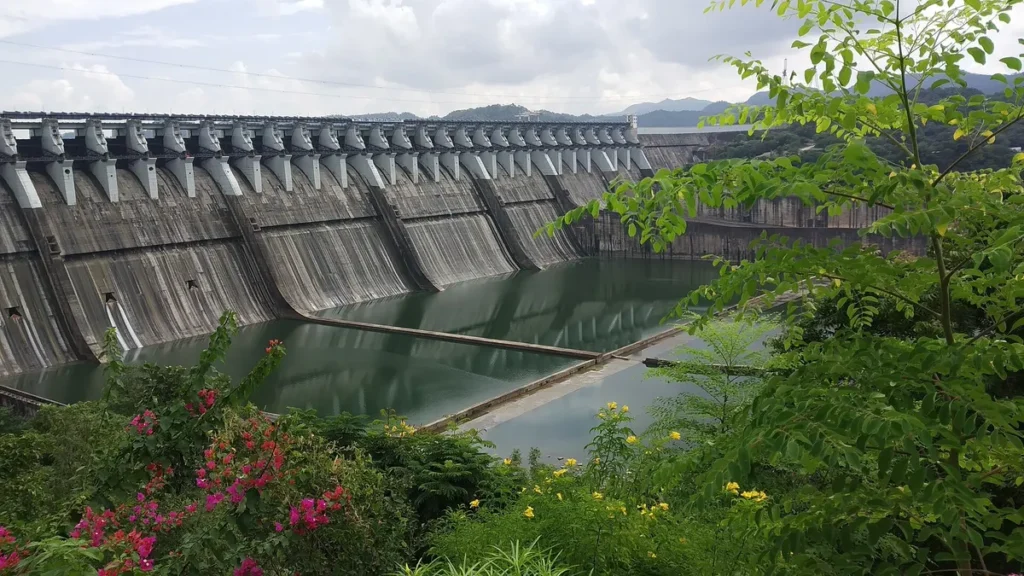
The Sardar Sarovar dam is near Kevadia in Gujarat. It was dedicated to the nation in 2017. Its power is shared mainly by Madhya Pradesh, Maharashtra and Gujarat, and its water also reaches Rajasthan.
Who gets the Narmada’s water under the 1979 award?
| State | Share of usable water | Note |
|---|---|---|
| Madhya Pradesh | 18.25 million acre feet | Largest share; most of the basin |
| Gujarat | 9 million acre feet | Sardar Sarovar is here |
| Rajasthan and Maharashtra | 0.5 and 0.25 million acre feet | Smaller shares |
Which laws and Articles apply?
- Article 262: Parliament may make laws on inter-State river disputes and may bar courts from hearing them.
- Inter-State River Water Disputes Act, 1956: lets the Centre set up tribunals.
- Entry 17, State List: water is a State subject; Entry 56, Union List: regulation of inter-State rivers.
- Narmada Control Authority (1980): carries out the Narmada tribunal award.
Why does the Narmada dues deal matter?
| Angle | What to note |
|---|---|
| Cooperative federalism | States settled a money dispute by talks, not courts. |
| Water governance | Shows how tribunal awards are carried out. |
| Development | Clears the way for canal and power work. |
| Geography | Narmada is a classic rift-valley, west-flowing river. |
What are the problems with the Narmada dues deal?
- Old disputes over dues delayed projects for years.
- Displaced families still raise rehabilitation concerns.
- Tribunal awards are often slow to be carried out.
- Climate change may change the river’s flow from the shares fixed in 1979.
What should be done next on the Narmada dues deal?
- Pay all dues on time as agreed.
- Finish canal networks so water reaches farms and villages.
- Complete rehabilitation of displaced families.
- Review water shares using new flow data when the award is reviewed.
What can Prelims ask on the Narmada dues deal?
Prelims probability: Expect a question on the Narmada: rises at Amarkantak, flows west in a rift valley; Sardar Sarovar is shared by four States.
- Narmada rises at Amarkantak (Madhya Pradesh); flows west in a rift valley between Vindhya and Satpura.
- It falls into the Gulf of Khambhat near Bharuch.
- Narmada Water Disputes Tribunal: set up 1969; award 1979.
- Narmada Control Authority: set up 1980; Sardar Sarovar is shared by four States.
- Article 262 and the Inter-State River Water Disputes Act, 1956.
How to write about the Narmada dues deal in Mains
Practice question (15 marks, 250 words): The settlement of Sardar Sarovar dues shows that cooperative federalism can work in inter-State water matters. Discuss the mechanisms for resolving inter-State water disputes in India.
- Intro: 27 October settlement among four States.
- Mechanisms: Article 262, 1956 Act, tribunals, control authorities.
- Narmada case: tribunal award, NCA, Review Committee.
- Problems: delays, non-compliance, data gaps.
- Conclusion: dialogue plus strong bodies give lasting solutions.
Ready lines for your answer
- Rivers cross State lines; so must cooperation.
- Talks, not courts, settled the Narmada dues.
Quotable data pointThe 1979 award gave Madhya Pradesh 18.25, Gujarat 9, Rajasthan 0.5 and Maharashtra 0.25 million acre feet of Narmada water.
Photo: Supreet patel, CC BY-SA 4.0, via Wikimedia Commons
Exam angle
Prelims: Narmada geography, 1979 award, NCA, Article 262. · Mains GS-II: inter-State water disputes, cooperative federalism.
Practice MCQs
Original practice questions (not PYQs).
Dhuandhar Falls, near Jabalpur, is on which river?
Answer (a) & explanation
Dhuandhar Falls is on the Narmada, which rises at Amarkantak and flows west through a rift valley.
Which Article of the Constitution allows Parliament to bar courts from hearing inter-State river water disputes?
Answer (c) & explanation
Article 262 covers inter-State river water disputes. Article 263 is about the Inter-State Council and Article 280 the Finance Commission.
Which of the following rivers flows westward through a rift valley?
Answer (c) & explanation
The Narmada flows west through a rift valley between the Vindhya and Satpura ranges. The others flow east into the Bay of Bengal.
Questions students ask about this
Which States share the Sardar Sarovar project?
Gujarat, Maharashtra, Madhya Pradesh and Rajasthan.
What was decided on 27 October?
A one-time settlement of all pending dues under the Narmada tribunal award projects, to be paid in 2026-27.
Where does the Narmada rise?
At Amarkantak in Madhya Pradesh. It flows west through a rift valley to the Gulf of Khambhat.
Which Article deals with inter-State river disputes?
Article 262.