
Purple potato offers more nutrients, but questions remain
Many Indians eat enough to fill their stomachs but still lack vitamins and minerals. This is called ‘hidden hunger’. Scientists have bred a purple potato, Kufri Jamunia, with more vitamin C, iron, zinc and colourful antioxidants than ordinary potatoes. Read it to revise biofortification, and to see why cost, yield and taste decide whether such crops really help.
- Variety
- Kufri Jamunia (purple potato)
- Made by
- Central Potato Research Institute
- Notified
- November 2024
- Vitamin C
- About 42.75 mg per 100 g
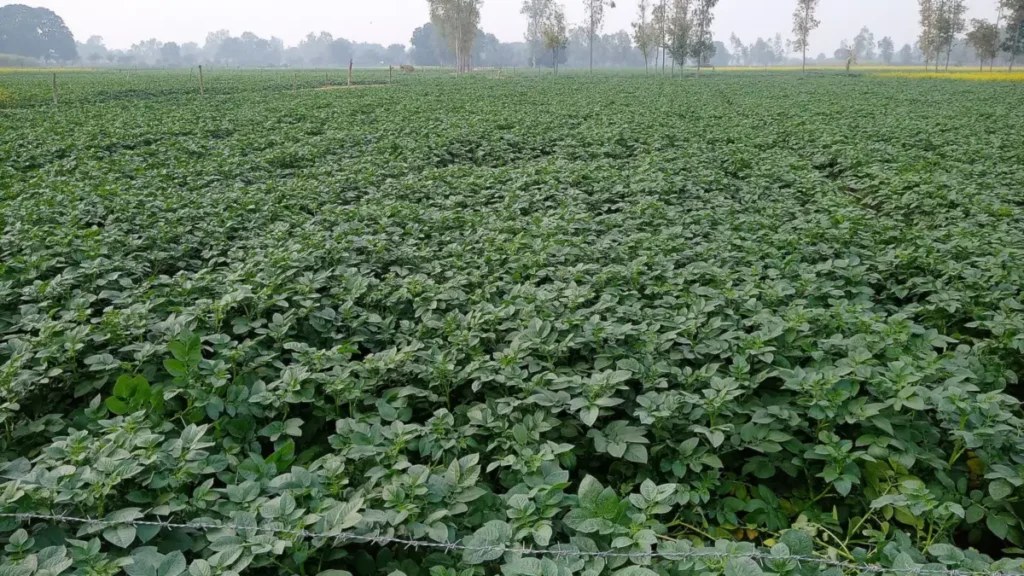
The purple potato: what happened?
The potato is on almost every Indian plate, rich or poor. If an everyday food like this can carry more nutrients, it could quietly help millions. That is the promise, and also the test, of Kufri Jamunia.
- Scientists at the Central Potato Research Institute (CPRI) have developed a purple potato called Kufri Jamunia.
- It was made in 2015 by crossing two potato lines, MS/8-1148 and CP4242. It was cleared in mid-2024 and notified in November 2024.
- 100 g has about 42.75 mg of vitamin C, against 23.15 mg in a regular potato, and about 42.05 mg of anthocyanins.
- In a taste test, 95% of 64 people rated it ‘good to excellent’. It has a mealy (soft, floury) texture.
- Experts say cost, yield, disease resistance and taste will decide whether it really reaches poor families.
What are hidden hunger and biofortification?
Hidden hunger means a lack of micronutrients such as iron, zinc, vitamin A and vitamin C, even when a person gets enough calories. It causes anaemia, weak immunity and poor growth in children.
Biofortification means breeding crops so that the nutrients are inside the plant itself. Fortification, by contrast, adds nutrients during processing, like iron added to fortified rice or iodine added to salt.
Anthocyanins are natural pigments that give purple, red and blue colours to foods like jamun and black rice. They act as antioxidants, which protect cells from damage.
The CPRI, in Shimla, works under the Indian Council of Agricultural Research (ICAR). Its varieties carry the name ‘Kufri’, after a place near Shimla.
How does Kufri Jamunia compare?
| Nutrient (per 100 g) | Regular potato | Kufri Jamunia |
|---|---|---|
| Vitamin C | 23.15 mg | About 42.75 mg |
| Anthocyanins | Very little | About 42.05 mg |
| Colour | White or yellow flesh | Purple |
Which laws and Articles apply?
- Article 47: the State shall raise the level of nutrition and improve public health (a Directive Principle).
- National Food Security Act, 2013: legal right to subsidised grain for about two-thirds of the population.
- Protection of Plant Varieties and Farmers’ Rights Act, 2001: protects new plant varieties and farmers’ rights.
- Seeds Act, 1966: new varieties are notified before their seeds are sold.
Why does the purple potato matter?
| Angle | What to note |
|---|---|
| Nutrition | An everyday food can carry more micronutrients. |
| Science | Shows conventional breeding, not genetic modification. |
| Farm income | A special variety could earn better prices. |
| Policy | Biofortified crops can join school meals and ration schemes. |
What are the problems with the purple potato?
- Yield may be lower than popular varieties, so farmers may not grow it.
- Late blight and other diseases can hit new varieties hard.
- Some nutrients may be lost in boiling or frying.
- Buyers may not trust or like a purple potato at first.
What should be done next on the purple potato?
- Test yield and disease resistance in many States before wide release.
- Give farmers good seed and fair prices for biofortified crops.
- Use such crops in school meals and nutrition schemes.
- Teach people why colour can mean more nutrients.
What can Prelims ask on the purple potato?
Prelims probability: Expect a question on biofortification: Kufri Jamunia is a purple potato from the Central Potato Research Institute, rich in anthocyanins and vitamin C.
- Kufri Jamunia: purple potato from the Central Potato Research Institute, Shimla (under ICAR).
- Rich in anthocyanins (antioxidant pigments) and vitamin C.
- Biofortification adds nutrients by breeding; fortification adds them during processing.
- Hidden hunger: lack of micronutrients despite enough calories.
- Late blight of potato is caused by Phytophthora infestans.
How to write about the purple potato in Mains
Practice question (15 marks, 250 words): Biofortification can be a low-cost way to fight hidden hunger in India. Discuss with suitable examples, and mention the challenges.
- Intro: hidden hunger; meaning of biofortification.
- Example: Kufri Jamunia’s vitamin C and anthocyanins; other biofortified crops.
- Benefits: reaches the poor through everyday food.
- Challenges: yield, disease, cooking losses, acceptance.
- Conclusion: link science with farmers, markets and welfare schemes.
Ready lines for your answer
- Hidden hunger needs better food, not just more food.
- A crop helps only when farmers grow it and families eat it.
Quotable data point100 g of Kufri Jamunia has about 42.75 mg of vitamin C, against 23.15 mg in a regular potato.
Photo: Trikutdas, CC BY-SA 4.0, via Wikimedia Commons
Exam angle
Prelims: Kufri Jamunia, CPRI, anthocyanins, biofortification vs fortification. · Mains GS-III: food and nutrition security, farm science.
Practice MCQs
Original practice questions (not PYQs).
Late blight, the potato disease behind the Irish Potato Famine of the 1840s, is caused by:
Answer (c) & explanation
Late blight is caused by the water mould Phytophthora infestans. Kufri Jamunia is 'susceptible' to it.
Which of the following is an example of biofortification rather than fortification?
Answer (c) & explanation
Biofortification builds nutrients into the crop through breeding. The other options add nutrients during processing.
Questions students ask about this
What is Kufri Jamunia?
A purple potato variety developed by the Central Potato Research Institute, with more vitamin C and anthocyanins than regular potatoes.
What is hidden hunger?
A lack of vitamins and minerals in the diet, even when a person gets enough calories.
How is biofortification different from fortification?
Biofortification breeds nutrients into the crop; fortification adds nutrients during processing, such as iodine in salt.
Is Kufri Jamunia a genetically modified crop?
No. It was made by crossing two potato lines, which is conventional breeding.