
Indian firms sign world’s largest green hydrogen deals
Green hydrogen is a clean fuel made by splitting water with electricity from the sun or wind. Indian firms have now signed deals to sell over 5.5 lakh tonnes of it a year, which the Government says are the world’s largest. Most of it will go abroad as green ammonia and methanol. Read it to revise the National Green Hydrogen Mission and the colours of hydrogen.
- Deals
- 23, for about 5.5 lakh tonnes a year
- This year
- 18 deals, over 4 lakh tonnes
- For export
- Over 70%
- Investment
- About ₹90,000 crore
Green hydrogen deals: what happened?
A fuel that leaves behind only water when it burns sounds perfect. The hard part is making it cheaply and finding buyers. India now says it has found the buyers.
- The Ministry of New and Renewable Energy said on 29 October that Indian firms have signed 23 offtake (supply) deals for about 5.5 lakh tonnes of green hydrogen a year since the mission began in 2023.
- In 2026 alone, 18 new deals were signed for over 4 lakh tonnes.
- Over 70% will go abroad, mainly to Japan, South Korea and Germany.
- Most of it will be shipped as green ammonia and green methanol, which are easier to carry than hydrogen gas.
- About ₹90,000 crore of investment will be needed.
What is green hydrogen, and what is the mission?
Hydrogen is named by how it is made. Grey hydrogen comes from natural gas and releases carbon dioxide. Blue hydrogen is the same, but the carbon is captured. Green hydrogen is made by electrolysis, splitting water using renewable power, so it has almost no emissions.
The National Green Hydrogen Mission was approved in January 2023 with an outlay of ₹19,744 crore. Its target is to produce about 5 million tonnes (50 lakh tonnes) of green hydrogen a year by 2030.
Its main part, SIGHT (Strategic Interventions for Green Hydrogen Transition), gives incentives for making electrolysers and producing green hydrogen.
India’s Green Hydrogen Standard of 2023 says hydrogen is ‘green’ if it emits no more than 2 kg of carbon dioxide for each kg of hydrogen.
What are the colours of hydrogen?
| Type | Made from | Emissions |
|---|---|---|
| Grey | Natural gas | High |
| Blue | Natural gas, carbon captured | Lower |
| Green | Water, using renewable power | Near zero |
Which laws and Articles apply?
- National Green Hydrogen Mission (2023): ₹19,744 crore; 5 million tonnes a year by 2030.
- SIGHT programme: incentives for electrolysers and green hydrogen production.
- Green Hydrogen Standard for India (2023): up to 2 kg CO2 per kg of hydrogen.
- India’s updated climate targets (NDC) under the Paris Agreement and the net zero goal for 2070.
Why does green hydrogen deals matter?
| Angle | What to note |
|---|---|
| Energy security | Less need to import oil, gas and fertiliser inputs. |
| Climate | Cuts emissions in steel, fertiliser, refining and shipping. |
| Exports | India could become a green fuel supplier to the world. |
| Industry | Builds a new electrolyser and green ammonia industry. |
What are the problems with green hydrogen deals?
- Green hydrogen still costs much more than grey hydrogen.
- It needs huge amounts of renewable power and fresh water.
- Storing and moving hydrogen is difficult and costly.
- If most is exported, Indian industry may gain less from it.
What should be done next on green hydrogen deals?
- Cut costs by making electrolysers in India at scale.
- Build green hydrogen hubs near ports and solar or wind parks.
- Create demand at home in fertiliser, refining and steel.
- Use treated waste water or desalinated water to save fresh water.
What can Prelims ask on green hydrogen deals?
Prelims probability: Expect a question on the National Green Hydrogen Mission: 5 million tonnes by 2030; green hydrogen comes from electrolysis using renewable power.
- National Green Hydrogen Mission: approved January 2023; ₹19,744 crore; 5 million tonnes a year by 2030.
- Green hydrogen is made by electrolysis of water using renewable power.
- SIGHT: Strategic Interventions for Green Hydrogen Transition.
- Green ammonia is made using green hydrogen.
- India’s offtake deals: about 5.5 lakh tonnes a year; over 70% for export.
How to write about green hydrogen deals in Mains
Practice question (15 marks, 250 words): Green hydrogen can help India meet both its energy security and climate goals. Discuss the opportunities and challenges, in the light of recent offtake deals.
- Intro: 23 deals, about 5.5 lakh tonnes a year.
- What green hydrogen is; National Green Hydrogen Mission.
- Opportunities: exports, energy security, clean industry.
- Challenges: cost, water, storage, home demand.
- Conclusion: scale and domestic use are the keys.
Ready lines for your answer
- Green hydrogen turns sunlight and water into clean fuel.
- Buyers are found; now costs must fall.
Quotable data point23 offtake deals for about 5.5 lakh tonnes a year; over 70% for export; about ₹90,000 crore investment.
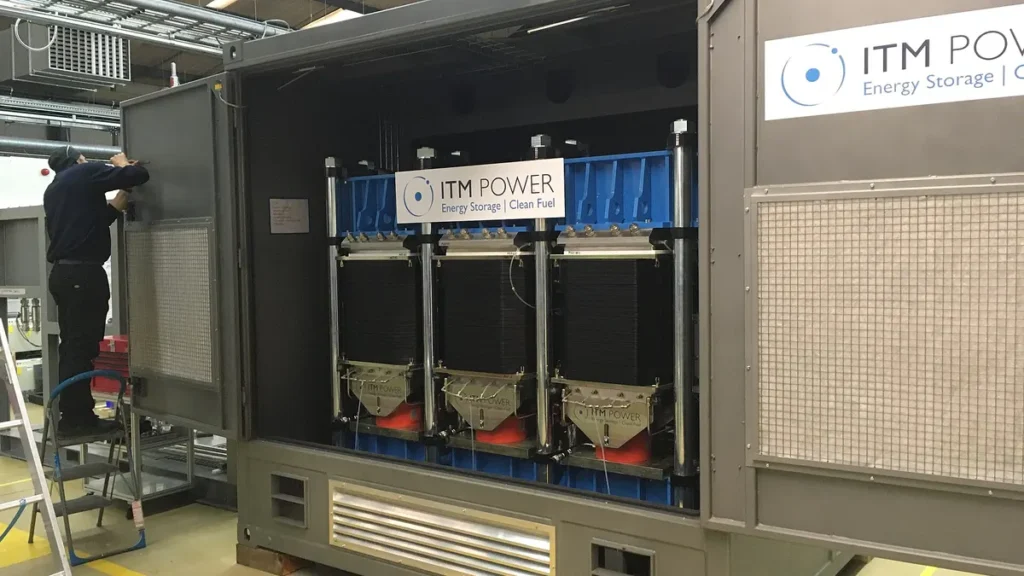
Photo: Bubble60, CC BY-SA 4.0, via Wikimedia Commons
Exam angle
Prelims: mission target and outlay, SIGHT, colours of hydrogen, green ammonia. · Mains GS-III: energy security, climate change, industrial policy.
Practice MCQs
Original practice questions (not PYQs).
The National Green Hydrogen Mission aims to produce about how much green hydrogen a year by 2030?
Answer (d) & explanation
The target is 5 million tonnes a year by 2030. Deals signed so far, about 5.5 lakh tonnes a year, are about 11% of it.
Consider the following statements:
1. Green ammonia is made using green hydrogen.
2. Over 70% of India's contracted green hydrogen is meant for domestic use.
3. Most of the export deals are with China.
How many of the above statements are correct?
Answer (a) & explanation
Only statement 1 is correct. Over 70% is for export, mainly to Japan, South Korea and Germany.
Hydrogen produced from natural gas, with the carbon dioxide released into the air, is generally called:
Answer (c) & explanation
Grey hydrogen comes from natural gas without carbon capture. Blue hydrogen captures the carbon; green hydrogen uses renewable power to split water.
Questions students ask about this
What is green hydrogen?
Hydrogen made by splitting water with electricity from renewable sources such as solar or wind, so it has almost no carbon emissions.
How much green hydrogen have Indian firms agreed to supply?
About 5.5 lakh tonnes a year under 23 deals, which the Government says are the world's largest such commitments.
What is the target of the National Green Hydrogen Mission?
About 5 million tonnes of green hydrogen a year by 2030.
Where will most of it go?
Over 70% is for export, mainly to Japan, South Korea and Germany, largely as green ammonia and methanol.