
New handbook lets AI learn without data leaving its owner
AI models learn from huge amounts of data, but hospitals, banks and labs are afraid to share it because of privacy and business secrets. The Ministry of Electronics and IT has released a handbook on a safer way: the AI model goes to the data, so the data never leaves its owner. Read it to revise DEPA, the Account Aggregator system and data protection.
- Handbook
- DEPA for AI Training
- Released by
- MeitY Secretary S. Krishnan, Bengaluru
- Support
- iSPIRT Foundation
- Idea
- Model goes to the data
DEPA for AI training: what happened?
A hospital may have lakhs of X-rays that could train an AI to spot disease, but it cannot simply hand them over. DEPA tries to let the AI learn while the hospital keeps control.
- The Ministry of Electronics and Information Technology released the Handbook on Data Empowerment and Protection Architecture (DEPA) for AI Training at a roundtable in Bengaluru.
- It was released by Electronics and IT Secretary S. Krishnan, with support from the iSPIRT Foundation.
- The problem it tackles: worries over privacy, confidentiality, intellectual property and control stop data sharing.
- The fix: a techno-legal framework for purpose-bound data sharing, where institutions keep control of their data.
- Under it, the AI model is sent to the data, so the data never leaves its owner.
What is DEPA?
DEPA is an Indian design for sharing data only with the person’s or institution’s consent, and only for a stated purpose.
It is the idea behind the Account Aggregator system, regulated by the Reserve Bank of India, which lets people share their financial data between banks and lenders with consent.
DEPA Training extends this to AI. Instead of collecting all data in one place, the model is trained inside a secure environment where the data sits, and only the trained model comes out.
The Digital Personal Data Protection Act, 2023 requires consent and purpose limits for using personal data, which makes such safe designs more important.
Which laws and Articles apply?
- Article 21: right to privacy (K.S. Puttaswamy, 2017).
- Digital Personal Data Protection Act, 2023: consent and purpose limits.
- Information Technology Act, 2000.
- IndiaAI Mission (2024): building AI capacity, including datasets.
Why does DEPA for AI training matter?
| Angle | What to note |
|---|---|
| Privacy | Data stays with its owner. |
| Innovation | More data becomes usable for AI. |
| Trust | Purpose limits build confidence to share. |
| Digital public infrastructure | Builds on India Stack ideas like Account Aggregator. |
What are the problems with DEPA for AI training?
- Secure computing environments are costly and technical.
- Smaller institutions may lack the skills to use DEPA.
- Trained models can sometimes leak information about the data.
- Rules for who is liable if something goes wrong are not clear.
What should be done next on DEPA for AI training?
- Offer shared secure computing for small institutions.
- Test DEPA in health and agriculture first.
- Set audit standards for privacy in AI models.
- Align DEPA with the rules under the DPDP Act.
What can Prelims ask on DEPA for AI training?
Prelims probability: Expect a question on DEPA: a consent-based data-sharing design behind the Account Aggregator system; under DEPA Training the AI model goes to the data.
- DEPA: Data Empowerment and Protection Architecture; consent-based data sharing.
- Account Aggregator: built on DEPA; regulated by RBI.
- DEPA Training: the AI model goes to the data.
- Digital Personal Data Protection Act, 2023.
- Right to privacy: Puttaswamy judgment, 2017.
How to write about DEPA for AI training in Mains
Practice question (15 marks, 250 words): How can India use data to build AI while protecting privacy? Discuss with reference to DEPA for AI Training.
- Intro: MeitY handbook; model goes to data.
- Why data sharing is hard: privacy, IP, control.
- DEPA, Account Aggregator, DPDP Act.
- Challenges: cost, skills, leakage.
- Conclusion: privacy-first AI as digital public infrastructure.
Ready lines for your answer
- Bring the model to the data, not the data to the model.
- Consent and purpose limits build trust in AI.
Quotable data pointThe handbook was released with support from the iSPIRT Foundation.
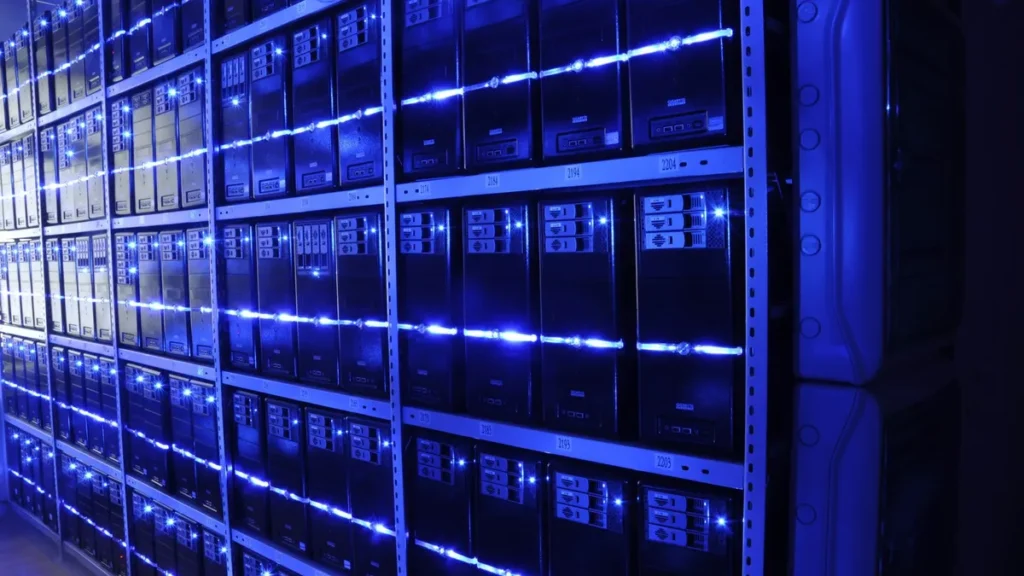
Photo: BalticServers.com, CC BY-SA 3.0, via Wikimedia Commons
Exam angle
Prelims: DEPA, Account Aggregator, DPDP Act. · Mains GS-III: AI, data protection and digital public infrastructure.
Practice MCQs
Original practice questions (not PYQs).
Which of the following is described by the phrase 'the model travels to the data, rather than the data travelling to the model'?
Answer (d) & explanation
The Principal Scientific Adviser used the phrase for DEPA (Data Empowerment and Protection Architecture) for AI Training, launched by the Ministry of Electronics and IT.
The 'General Data Protection Regulation', in force since 25 May 2018, was adopted by:
Answer (a) & explanation
The General Data Protection Regulation is the European Union's data protection law. India's law is the Digital Personal Data Protection Act, 2023.
Questions students ask about this
What does DEPA stand for?
Data Empowerment and Protection Architecture.
What is the main idea of DEPA for AI Training?
The AI model goes to the data, so the data never leaves its owner.
Which system already uses DEPA?
The Account Aggregator system for financial data.
Who released the handbook?
Electronics and IT Secretary S. Krishnan, at a roundtable in Bengaluru.