
Centre may call special session for delimitation Bill
The Centre is thinking of calling a special session of Parliament to pass the Delimitation Bill, 2026, which it links to bringing the Women’s Reservation Act, 2023 into force. The plan could raise the Lok Sabha from 543 to as many as 850 seats, based on the 2011 Census, opening one-third of seats for women. As a Constitution amendment, it needs a two-thirds majority, and a similar Bill failed in April. Read it to revise delimitation, Article 82, the 106th Amendment and how Parliament is summoned.
- Proposed Lok Sabha size
- Up to 850 seats, from 543
- Population base
- 2011 Census
- Link
- Women’s Reservation Act, 2023 (one-third seats)
- Majority needed
- Two-thirds of members present and voting
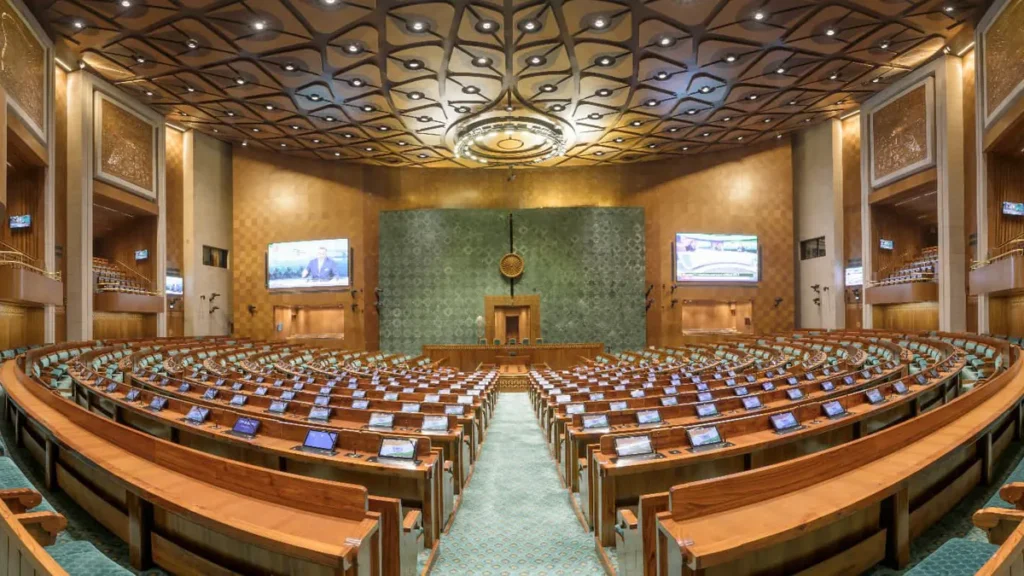
Delimitation Bill: what happened?
Imagine redrawing the boundaries of every school house so each has a fair number of students. Delimitation does that for voters — and it decides how many MPs each State gets.
- The Centre is considering a special session of Parliament to pass the Delimitation Bill, 2026.
- The government links it to putting the Women’s Reservation Act, 2023 into effect, which gives one-third of seats in the Lok Sabha and State Assemblies to women.
- The plan is to raise the Lok Sabha from 543 to as many as 850 seats, using the 2011 Census.
- A Constitution Amendment Bill needs two-thirds of members present and voting. The government needs about 361 votes in the Lok Sabha and says it has 15 to 16 more than that. A similar Bill failed in April.
- The Monsoon Session has not been prorogued (formally closed) for a record 91 days, so Parliament can be called at short notice. Southern States fear losing their share; the Centre has spoken of raising every State’s seats by 50%.
What is delimitation?
Delimitation means fixing the number of seats and drawing the boundaries of constituencies based on population. Article 82 says seats in the Lok Sabha are readjusted after every Census; Article 170 does the same for State Assemblies.
India has had four Delimitation Commissions — in 1952, 1963, 1973 and 2002. The 42nd Amendment (1976) froze the number of seats per State on the 1971 Census, and the 84th Amendment (2001) extended the freeze until the first Census after 2026. The freeze was meant to reward States that controlled population.
The 106th Amendment (2023) added Article 334A: women’s reservation begins only after the delimitation following the first Census after the Act. So delimitation and women’s quota are tied together.
Then and now
| Item | Figure |
|---|---|
| Present Lok Sabha | 543 elected seats |
| Proposed Lok Sabha | Up to 850 seats |
| Women’s share once in force | One-third of seats |
| Delimitation Commissions so far | Four (1952, 1963, 1973, 2002) |
| Monsoon Session not prorogued | Record 91 days |
Which Articles apply?
- Article 81: size of the Lok Sabha; Article 82: readjustment after each Census.
- Article 170: seats in State Assemblies; Article 327: Parliament’s power to make election laws.
- Article 334A (106th Amendment, 2023): women’s reservation after delimitation, for 15 years.
- Article 368: amendment needs a majority of total membership and two-thirds of members present and voting; Article 85: President summons and prorogues the Houses.
Why does the delimitation Bill matter?
| Angle | What to note |
|---|---|
| Polity | Links Parliament’s size, delimitation and amendment procedure. |
| Federalism | Southern States fear losing seats for controlling population. |
| Gender justice | Decides when one-third of seats for women actually begins. |
| Prelims | Article 82, four commissions, 106th Amendment, special majority. |
What are the problems with the delimitation Bill?
- Seats based only on population can cut the weight of States that controlled population.
- A much bigger House may make debate and seating harder.
- Using the 2011 Census means old population data for new seats.
- Women’s reservation keeps getting delayed while it is tied to delimitation.
What should be done next on the delimitation Bill?
- Build agreement with States, especially in the south, before voting.
- Consider a formula that balances population with fairness to States.
- Use the newest reliable population data available.
- Give a clear timeline so women’s reservation is not postponed again.
What can Prelims ask on the delimitation Bill?
Prelims probability: High. Delimitation and women’s reservation were both asked in 2024, and Parliament procedure is asked often. Fresh: a possible special session and an 850-seat House. Testable facts: Article 82, four commissions so far, 106th Amendment, two-thirds of members present and voting.
- Article 82: seats readjusted after each Census.
- Four Delimitation Commissions: 1952, 1963, 1973, 2002.
- 84th Amendment froze seats until the first Census after 2026.
- 106th Amendment (2023): one-third seats for women; Article 334A.
- Prorogation: formal closing of a session by the President (Article 85).
How to write about the delimitation Bill in Mains
Practice question (15 marks, 250 words): Delimitation is necessary for equal representation but threatens federal balance. Discuss in the context of the proposed Delimitation Bill, 2026 and women’s reservation.
- Intro: plan to raise the Lok Sabha to up to 850 seats; special session talk.
- Constitutional basis: Articles 82, 170, 334A; freezes of 1976 and 2001.
- Equal value of vote versus fairness to population-controlling States.
- Link with women’s reservation and the special majority needed.
- Way forward: consensus, balanced formula, clear timeline.
Ready lines for your answer
- One person, one vote, one value — but also one Union of equal partners.
- Women’s reservation delayed is representation denied.
Quotable data pointLok Sabha could rise from 543 to up to 850 seats on the 2011 Census; four Delimitation Commissions since 1952.
Photo: Ministry of Parliamentary Affairs, GODL-India, via Wikimedia Commons
Exam angle
Prelims: Article 82, four Delimitation Commissions, 106th Amendment, special majority. · Mains GS-II: delimitation, federalism and women’s representation.
Practice MCQs
Original practice questions (not PYQs).
How many Delimitation Commissions have been set up in India so far?
Answer (d) & explanation
Four Delimitation Commissions have been set up, in 1952, 1963, 1973 and 2002.
Consider the following statements:
1. A Constitution Amendment Bill can be passed in a joint sitting of both Houses if they disagree.
2. The Nari Shakti Vandan Adhiniyam reserves one-third of seats for women in the Lok Sabha and State Legislative Assemblies.
3. A session of Parliament is prorogued by the President.
How many of the above statements are correct?
Answer (b) & explanation
Statements 2 and 3 are correct. There is no joint sitting for a Constitution Amendment Bill; each House must pass it separately by a special majority.
Questions students ask about this
What does delimitation mean?
Fixing how many seats each State gets and redrawing constituency boundaries based on population, so each MP represents roughly the same number of people.
Why are southern States worried?
Their population grew more slowly. If seats follow population alone, their share of seats in the Lok Sabha could fall compared with faster-growing States.
How is delimitation linked to women’s reservation?
The 106th Amendment says one-third of seats for women will begin only after delimitation based on the first Census after the Act. No delimitation, no women’s quota.
Is a 'special session' mentioned in the Constitution?
No. The President summons Parliament under Article 85. A 'special session' is simply an extra sitting called outside the usual Budget, Monsoon and Winter sessions.
What majority does this Bill need?
Being a Constitution amendment, it needs a majority of the total membership of each House and two-thirds of members present and voting (Article 368).
What is prorogation?
The formal end of a session by the President. Until a session is prorogued, the House can be called back quickly without a fresh summons.