
Karnataka says some petrol had more than 20% ethanol
Karnataka says petrol at some pumps had far more ethanol than the 20% limit. On 6 November its minister said tests on 63 samples from seven districts showed higher levels in several, and that a few samples had over 30%. The three public oil companies — Indian Oil, Bharat Petroleum and Hindustan Petroleum — reject this. They say Karnataka tested without their people present and did not share full reports. They point to a joint check with the Centre for High Technology in which all 893 samples from 27 States and Union Territories, including 56 from Karnataka, were within 19% to 21%. The petroleum ministry backed the companies. Kerala has now ordered its own tests at pumps in four districts. India reached 20% blending in 2025, five years ahead of target. Read it to revise ethanol blending, the biofuel policy and the 88% crude import share.
- What Karnataka says
- Tests on 63 samples from seven districts; several above the 20% limit, a few over 30%
- What the oil companies say
- All 893 joint samples, including 56 from Karnataka, were within 19% to 21%; Karnataka’s average was 19.3%
- Who has backed them
- The petroleum ministry; Kerala has ordered its own tests in four districts
- National context
- India reached 20% blending in 2025, five years ahead of target; the government says any mileage drop is at most 3% to 5%
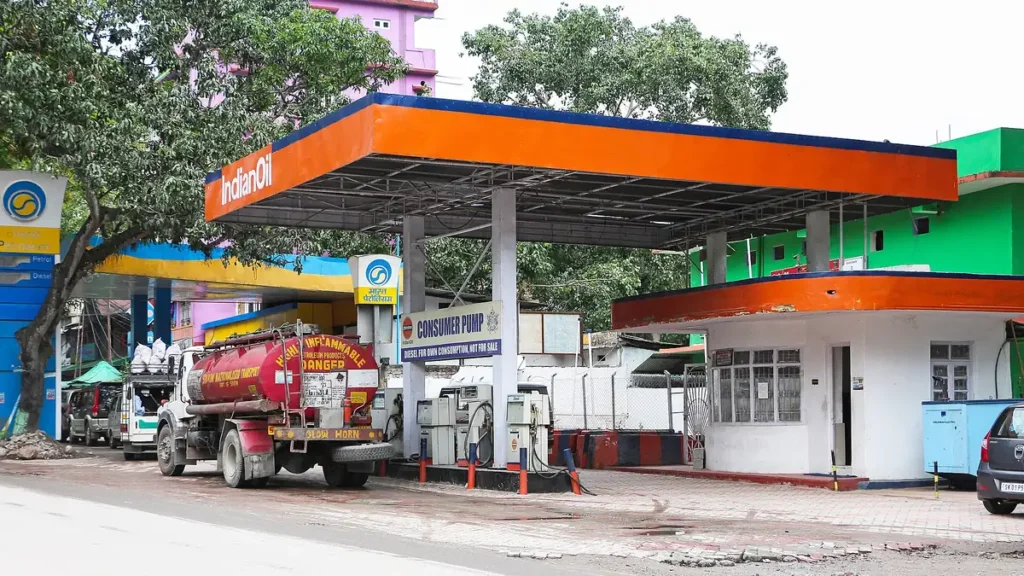
What is the row over ethanol in petrol?
India has already hit 20% ethanol blending in petrol. Karnataka now says some pumps went well beyond that limit. The public oil companies say their joint tests show they did not.
- Karnataka says petrol at some pumps had far more ethanol than the 20% limit. On 6 November its minister said tests on 63 samples from seven districts showed higher levels in several. A few samples had over 30%.
- The three public oil companies, Indian Oil, Bharat Petroleum and Hindustan Petroleum, reject this. They say Karnataka tested without their people present and did not share full reports.
- They point to a joint check with the Centre for High Technology. All 893 samples from 27 States and Union Territories, including 56 from Karnataka, were within 19% to 21%. Karnataka’s samples averaged 19.3%.
- The petroleum ministry backed the companies. Kerala has now ordered its own tests at pumps in four districts. India reached 20% blending in 2025, five years ahead of target. Many drivers of older vehicles complain of lower mileage; the government says the drop is at most 3% to 5%.
What is ethanol blending, and why did India advance the 20% target?
Ethanol blending means mixing ethanol, an alcohol made mainly from sugarcane and grains, into petrol. The aim is to cut the oil import bill, support sugarcane and grain farmers, and lower tailpipe emissions.
The National Policy on Biofuels, first issued in 2018 and later amended, set out a path to higher blending. India reached the 20% (E20) mark in 2025, five years earlier than the earlier 2030 target.
India still imports a very large share of the crude oil it uses — about 88%. Blending ethanol into petrol is one way to shave that dependence, but only if the blend at the pump is what the standard says it is.
The Centre for High Technology is a technical body under the petroleum ministry. The oil companies say a joint sampling exercise with this body is the proper way to test blend quality, and that a State acting alone, without their staff present, is not.
The two sets of tests, and the national blend
| Item | What to note |
|---|---|
| Karnataka’s tests | 63 samples from seven districts; several above 20%, a few over 30% |
| Joint tests cited by oil companies | 893 samples from 27 States and Union Territories, including 56 from Karnataka |
| Joint-test range | All samples within 19% to 21%; Karnataka average 19.3% |
| National target | 20% blending reached in 2025, five years early |
| Mileage claim | Government says any drop is at most 3% to 5% |
Which policies and institutions apply?
- National Policy on Biofuels, 2018 (as amended): the policy frame for ethanol blending in petrol, including the move to a 20% blend.
- The Ministry of Petroleum and Natural Gas sets blending programmes and has backed the public oil companies in this row.
- The Centre for High Technology, under the petroleum ministry, was the technical partner in the 893-sample joint check.
- Quality at the pump is also a Centre–State matter: a State can test samples, but the oil companies and the Union ministry dispute a test done without their staff and without full reports being shared.
Why does the ethanol blending row matter?
| Angle | What to note |
|---|---|
| Energy security | Ethanol blending is meant to cut an 88% crude-import dependence; the row is about whether the blend at the pump is the one the policy promised. |
| Centre–State relations | A State government and the public oil companies, backed by the Union petroleum ministry, are reading the same pumps differently. |
| Prelims | 20% blending in 2025, the 19% to 21% joint-sample band, the 3% to 5% mileage claim, and the Centre for High Technology. |
| Everyday impact | Drivers of older vehicles complain of lower mileage; the official reply is a 3% to 5% drop at most. |
What are the problems with the ethanol blending row?
- Two official stories now sit side by side: Karnataka’s 63 samples, some over 30%, and the companies’ 893-sample joint check in the 19% to 21% band.
- If a State tests without oil-company staff and does not share full reports, the public cannot easily judge which result to trust.
- A few samples above 30%, if confirmed, would be well beyond the 20% standard and would raise a genuine quality and warranty concern for vehicles.
- Complaints about mileage on older vehicles have not been closed by a 3% to 5% official estimate; many drivers still feel a larger drop.
What should be done next on the ethanol blending row?
- A joint, published testing protocol — with State officials and oil-company staff both present, and full reports shared — would be the cleanest way to settle the Karnataka claim.
- Kerala’s decision to test pumps in four districts should follow a method that both the State and the companies can later defend.
- The government should keep explaining, with vehicle-wise data, why it says the mileage drop is at most 3% to 5%.
- Ethanol blending will remain a pillar of energy policy only if motorists trust that the 20% on the policy paper is the 20% in the tank.
What can Prelims ask on the ethanol blending row?
Prelims probability: Medium. Biofuel raw materials and ethanol producers were asked in 2020 and 2025. A State-versus-Centre fuel row is fresh and widely reported. Testable facts: 20% blending reached in 2025, 88% crude import share, the 3% to 5% mileage claim.
- India reached 20% ethanol blending in petrol in 2025, five years ahead of the earlier target.
- Karnataka cited 63 samples from seven districts, with several above 20% and a few over 30%.
- Oil companies cited 893 joint samples from 27 States and Union Territories, all within 19% to 21%; Karnataka’s 56 samples averaged 19.3%.
- The Centre for High Technology, under the petroleum ministry, was the partner in the joint check.
- India imports about 88% of its crude oil; the government says any mileage drop from E20 is at most 3% to 5%.
How to write about the ethanol blending row in Mains
Practice question (15 marks, 250 words): Karnataka has alleged that petrol at some pumps contained more than the 20% ethanol limit. Discuss ethanol blending in India and the issues this dispute raises for energy policy and Centre–State coordination.
- Open with the two claims: Karnataka’s 63 samples, some over 30%, versus 893 joint samples in the 19% to 21% range.
- Explain ethanol blending, the National Policy on Biofuels, and the 20% mark reached in 2025, five years early.
- Link the policy to crude-import dependence of about 88%, and to the official 3% to 5% mileage estimate.
- Note the role of the petroleum ministry and the Centre for High Technology, and Kerala’s decision to test its own pumps.
- Close with the need for a joint, published testing method if blending is to keep public trust.
Ready lines for your answer
- A 20% blend on paper is only as good as the test at the pump.
- Two official sampling stories cannot both be left standing if motorists are to trust E20.
Quotable data pointKarnataka: 63 samples from seven districts, some over 30%. Oil companies: 893 joint samples from 27 States and Union Territories, all 19–21%, Karnataka average 19.3%. India hit 20% blending in 2025; official mileage drop at most 3–5%.
Photo: Bernard Gagnon, CC BY-SA 4.0, via Wikimedia Commons
Exam angle
Prelims: 20% blending in 2025, 893 joint samples in the 19% to 21% range, the 3% to 5% mileage claim, and the 88% crude import share. · Mains GS-III: biofuels, energy security and Centre–State disputes over fuel quality.
Practice MCQs
Original practice questions (not PYQs).
Petrol sold as 20% ethanol blend contains
Answer (a) & explanation
A 20% blend is 80 parts petrol and 20 parts ethanol. The 90:10 mix is the older 10% blend.
Consider the following statements:
1. India reached 20% ethanol blending in petrol in 2025, five years ahead of the original target.
2. India imports more than 88% of its crude oil needs.
3. In the joint check by the oil companies and the Centre for High Technology, Karnataka's samples averaged more than 25% ethanol.
How many of the above statements are correct?
Answer (b) & explanation
Statements 1 and 2 are correct. Karnataka's samples in the joint check averaged 19.3%, within the 19% to 21% range.
Questions students ask about this
What does Karnataka say its tests found?
On 6 November it said 63 samples from seven districts showed levels above the 20% ethanol limit in several cases, and that a few samples had over 30%.
What do the oil companies say?
A joint check with the Centre for High Technology found all 893 samples from 27 States and Union Territories, including 56 from Karnataka, within 19% to 21%. Karnataka’s average was 19.3%.
When did India reach 20% ethanol blending?
In 2025, five years ahead of the earlier target.
What does the government say about mileage?
It says any drop in mileage from the 20% blend is at most 3% to 5%.
Has any other State stepped in?
Kerala has ordered its own tests at pumps in four districts.