
Monetary Policy in India: Objectives, Monetary Policy Committee, Tools (Repo, CRR, SLR, OMO) and Transmission (UPSC Notes + PYQs)
UPSC has already asked about this. Read the story with these questions in mind.
- Prelims 2013In the context of Indian economy, ‘Open Market Operations’ refers toSolve it below ↓
- Mains 2024 · GS3What are the causes of persistent high food inflation in India? Comment on the effectiveness of the monetary policy of the RBI to control…See model answer →
See all 4 PYQs
Background: what monetary policy does
Monetary policy is the use of interest rates and the supply of money and credit by the central bank to achieve price stability while supporting growth. In India the Reserve Bank of India, set up in 1935 and nationalised in 1949, conducts it under the RBI Act, 1934. For decades its goals were broad: price stability, growth and financial stability, with heavy use of tools such as the CRR and SLR, credit controls and directed lending. After liberalisation, policy shifted towards market-based instruments and interest rates. The Urjit Patel Committee (2014) recommended a clear anchor in consumer price inflation, and the 2016 amendment to the RBI Act created the Monetary Policy Committee and statutory inflation targeting. Today the main instrument is the policy repo rate, adjusted to steer short-term market rates and, through them, the whole economy.
Legal framework
The RBI Act was amended in 2016 (Section 45ZB) to create the MPC and statutory inflation targeting. The government sets the target every five years in consultation with the RBI; it was retained at 4% ± 2% for 2021-26 and again, by a notification of 25 March 2026, for April 2026 to March 2031. If inflation stays outside the band for three straight quarters, the RBI must explain to the government.
- RBI GovernorChairperson; casting vote
- Deputy GovernorIn charge of monetary policy
- RBI officerNominated by the Central Board
- Three externalAppointed by the Centre for four years
The Monetary Policy Committee
Six members: the RBI Governor (chair, casting vote), a Deputy Governor, one RBI officer, and three external members appointed by the government for four years. It meets at least four times a year (in practice six). Minutes are published.
Tools
| Tool | What it is |
|---|---|
| Repo rate | Rate at which RBI lends to banks against government securities: the policy rate |
| Standing Deposit Facility (SDF) | Floor of the corridor since 2022; RBI absorbs liquidity without collateral |
| Marginal Standing Facility (MSF) | Ceiling; emergency overnight borrowing by banks |
| CRR | Share of deposits banks must keep with the RBI as cash |
| SLR | Share of deposits banks must hold in liquid assets like government securities |
| OMO | Buying or selling government securities to inject or absorb liquidity |
| Bank rate | Long-term lending rate; now aligned with MSF, used for penalties |
- 1MPC raises repo rate
- 2Banks raise lending and deposit rates
- 3Borrowing and spending slow
- 4Demand pressure on prices eases
- 5Inflation moves towards 4%
Sterilisation
When the RBI buys dollars to stop the rupee from rising, it releases rupees. To prevent that from fuelling inflation, it sells government securities (OMO) to absorb those rupees. This is sterilisation.
Quantitative and qualitative tools
| Tool | Type | How it works |
|---|---|---|
| Repo rate | Quantitative | Rate at which banks borrow from the RBI against government securities |
| Standing Deposit Facility | Quantitative | Banks park surplus funds with the RBI without collateral; floor of the corridor |
| Marginal Standing Facility | Quantitative | Emergency overnight borrowing; ceiling of the corridor |
| CRR and SLR | Quantitative | Share of deposits held as cash with RBI or as liquid assets |
| Open market operations | Quantitative | Buying or selling government securities to change liquidity |
| Moral suasion, margin requirements | Qualitative | Directing credit to or away from specific sectors |
Transmission problems
Banks may not pass on rate cuts quickly because of high small-savings rates, bad loans and cost of funds. External benchmark linking of floating-rate loans (since October 2019) improved transmission to borrowers.
The transmission chain
When the MPC changes the repo rate, the effect passes through several channels. The interest rate channel: banks change their lending and deposit rates, which alters borrowing for homes, cars and business investment. The credit channel: the availability of loans changes as banks reassess risk. The exchange rate channel: higher rates can attract foreign capital and strengthen the rupee, lowering import prices. The asset price channel: lower rates raise prices of bonds, shares and property, making households feel richer. The expectations channel: a credible central bank shapes what people expect inflation to be. In India transmission has been slow because of fixed-rate deposits, small savings rates set by the government, high bad loans in some periods and administered lending rates, which is why the RBI made external benchmarks like the repo rate compulsory for new floating-rate retail and MSME loans from October 2019.
Monetary vs fiscal policy
| Point | Monetary policy | Fiscal policy |
|---|---|---|
| Authority | RBI and MPC | Government and Parliament |
| Tools | Interest rates, liquidity, reserve ratios | Taxes, spending, borrowing |
| Speed of decision | Quick, every two months | Mostly annual through the Budget |
| Effect lag | Several quarters | Can be faster for direct spending |
| Main aim | Price stability | Growth, redistribution, public goods |
The two must work together. Large fiscal deficits can push up interest rates and inflation, making the RBI’s job harder; this is why fiscal rules under the FRBM Act complement inflation targeting.
Monetary policy and food inflation
A large share of India’s inflation basket is food, often driven by supply shocks such as poor rains or heat waves. Critics argue the RBI should look through these shocks because raising rates cannot grow more vegetables. The counter-argument is that persistent food inflation shapes expectations and wages, so a credible central bank must respond if shocks persist. The flexible framework allows exactly this balance: the band of 2 to 6% gives room to ignore one-time shocks, while the 4% target anchors the medium term. Supply-side action by the government, from buffer stocks to cold chains, remains essential. Use this argument in GS-III questions linking food inflation with monetary policy effectiveness.
Prelims traps
Remember that a cut in CRR releases liquidity but does not change the repo rate. The SDF replaced the fixed-rate reverse repo as the floor of the liquidity corridor in 2022. The RBI Governor has a casting vote in the MPC only in case of a tie. Open market sales of securities absorb liquidity, while purchases inject it.
Monetary Policy: UPSC angle
For UPSC CSE
Prelims: tools and their direction of effect, MPC composition, sterilisation. Mains GS-III: inflation targeting record; growth-inflation trade-off.
Monetary Policy UPSC PYQs (Prelims)
Questions UPSC has actually asked, from the official papers. Pick an option to check yourself.
In the context of Indian economy, ‘Open Market Operations’ refers to
Open Market Operations are the RBI’s buying and selling of government securities in the market. Buying adds money to the system; selling takes money out. Answer as per the official UPSC key · Battle IAS PYQ bankAnswer (c) & why
Which one of the following activities of the Reserve Bank of India is considered to be part of 'sterilization'?
When the RBI buys dollars to stop the rupee rising, it releases rupees into the system. To soak up that extra money it sells government securities in open market operations. Neutralising the effect of forex operations on money supply in this way is called sterilization. The other options are routine RBI functions. Answer as per the official UPSC key · Battle IAS PYQ bankAnswer (a) & why
When the Reserve Bank of India reduces the Statutory Liquidity Ratio by 50 basis points, which of the following is likely to happen?
SLR is the share of deposits banks must keep in safe liquid assets like government securities. A cut frees funds for lending, which raises liquidity and may lead banks to cut lending rates. A 0.5-point cut cannot “drastically” raise GDP, and it increases liquidity rather than reducing it. Answer as per the official UPSC key · Battle IAS PYQ bankAnswer (c) & why
Mains PYQs on this topic
Questions from the official UPSC Mains papers (2023-2026 in the Battle IAS Mains bank), newest first. Each links to a model answer.
- UPSC Mains 2024 · GS Paper III · Q2 · 10 marks
What are the causes of persistent high food inflation in India? Comment on the effectiveness of the monetary policy of the RBI to control this type of inflation.
Quick quiz
Who has the casting vote in the MPC?
The Governor chairs the MPC.Answer (b)
Which acts as the floor of the liquidity adjustment corridor?
Since April 2022.Answer (c)
To reduce money supply, the RBI would
Selling securities absorbs liquidity.Answer (c)
FAQs
How many members does the MPC have?
Six: three from the RBI and three external members.
What is the difference between CRR and SLR?
CRR is cash kept with the RBI; SLR is liquid assets kept by banks themselves.
What is the repo rate?
The rate at which the RBI lends short-term funds to banks against securities.
What is the inflation target?
4% CPI inflation with a band of 2% either side.
What is the liquidity adjustment facility?
The RBI’s framework for managing day-to-day liquidity, using repo and reverse repo operations along with the SDF and MSF, which form a corridor around the policy rate.
What is a dovish or hawkish stance?
A dovish stance favours lower rates to support growth; a hawkish one favours higher rates to fight inflation.
What happens if the RBI misses the target?
It must send a report to the Centre explaining the reasons, the remedial action proposed and the time needed to bring inflation back.
Spotted an error? Tell us. We correct within 48 hours.
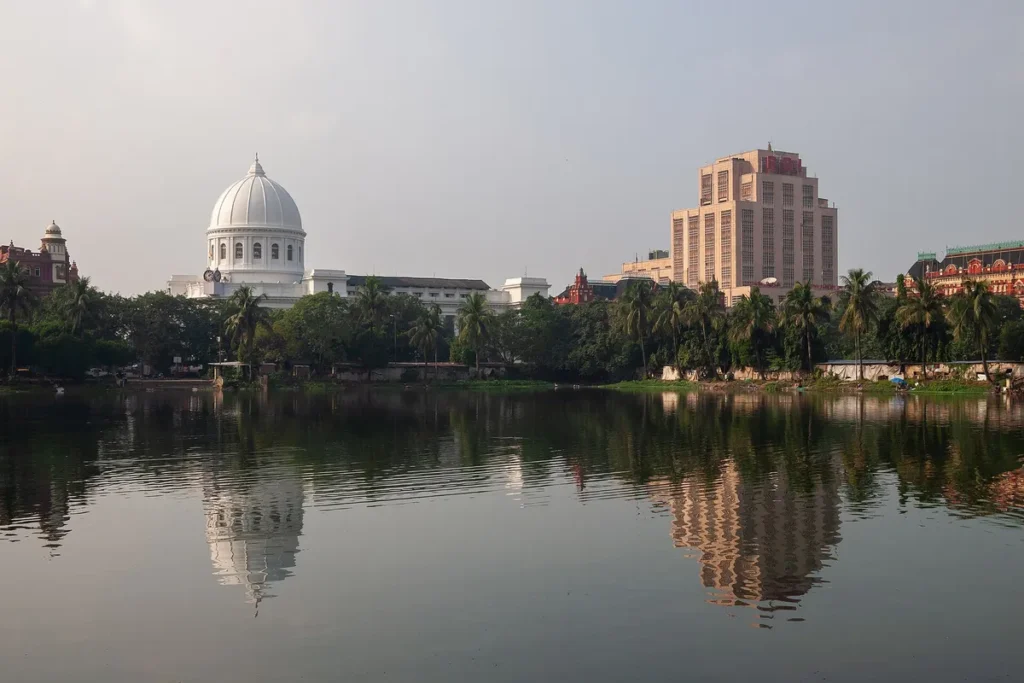
Image: Vyacheslav Argenberg, Wikimedia Commons, CC BY 4.0
How to use this in Mains
If asked: UPSC Mains 2024, GS-III: What are the causes of persistent high food inflation in India? Comment on the effectiveness of the monetary policy of the RBI to control this type of inflation.
Quote: “Banks may not pass on rate cuts quickly because of high small-savings rates, bad loans and cost of funds.”
Use it: Use when you assess the RBI's tools against food inflation.
In the news
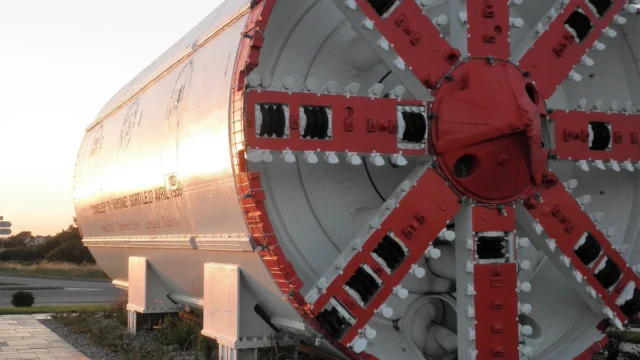
China to impose export controls on tunnel boring machines from 18 November: what it means for India
On 19 October 2026 China’s Commerce Ministry announced export controls on tunnel boring machines (TBMs) and related items from 18 November, calling them clearly dual-use. India imports TBMs for metro, rail and border tunnels and has faced customs delays on Chinese machines since 2024. China also announced controls on some drones.
19 Oct 2026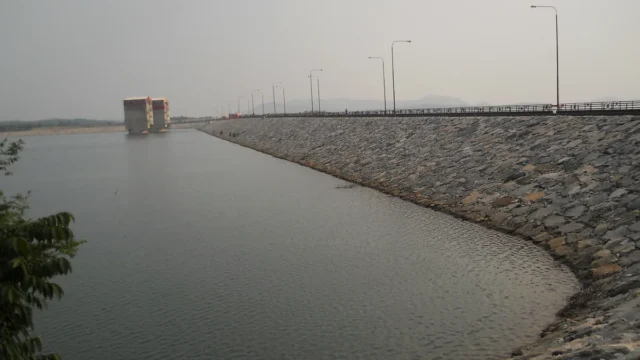
Pumped storage hydropower: India’s roadmap for 100 GW of ‘water batteries’ by 2035-36
A PIB backgrounder of 19 October 2026 explains how pumped storage projects (PSPs) will store solar and wind power for India’s grid. India runs 7.43 GW of pumped storage today, is building 15.87 GW more and has an assessed potential of 345.38 GW. A roadmap aims to add about 100 GW between 2025-26 and 2035-36.
19 Oct 2026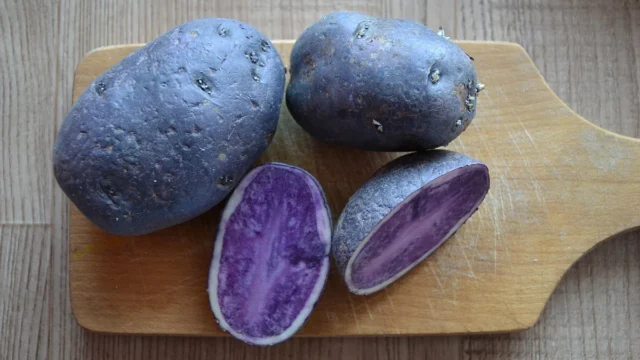
Kufri Jamunia: ICAR-CPRI’s purple potato to fight hidden hunger
A PIB backgrounder of 18 October 2026 puts the spotlight on Kufri Jamunia, a purple-fleshed potato bred by ICAR’s Central Potato Research Institute and released in 2024. It has nearly twice the Vitamin C of a common potato and several times more zinc and iron, along with antioxidants called anthocyanins. The idea is clever: instead of asking people to change what they eat, make the food they already eat more nutritious. That is biofortification.
18 Oct 2026
Oil companies bar sugar-based ethanol for 2026-27; maize incentive cut to ₹2.79 a litre
The oil marketing companies have kept sugar out of India’s ethanol programme for the coming year. The tender issued on 16 October 2026 seeks about 11 billion litres of ethanol for the 2026-27 supply year, but asks for none made from sugarcane juice, sugar syrup or B-heavy molasses, because the Government wants sugar diversion for ethanol cut to zero. Grain must now carry the load, and even the maize incentive has been cut. Read this as a live example of the food-versus-fuel trade-off.
18 Oct 2026