
UPSC Mains 2018 GS Paper 2 Q14: model answer
How is the Finance Commission of India constituted? What do you know about the terms of reference of the recently constituted Finance Commission? Discuss.
What the question wants
Explain how the Finance Commission is set up and discuss the terms of reference of the then new (15th) Commission, updated to the 16th.
How to structure it
How is ... What do you know ... Discuss: three blocks, keep the 15th FC central because the question names it, then bring in the 16th.
- Constitution
- Mandate
- 15th FC ToR
- Controversies
- Today
How to think it through
'Recently constituted' in 2018 meant the 15th FC (N.K. Singh). Its ToR caused a North–South fight over the 2011 population. Answer that, then show what the 16th did with the same fight.
Model answer
Every five years, under Article 280, India decides how to split tax money between the Union and the States. Few constitutional bodies move more money with less noise.
How it is constituted
- Appointed by the President: a chairperson and four members.
- The Finance Commission (Miscellaneous Provisions) Act, 1951 sets qualifications: the chair must have public-affairs experience; members come from the judiciary, finance, administration and economics.
- Its report and an action-taken memorandum are laid in Parliament (Article 281).
Its core mandate
Vertical sharing of the divisible pool, horizontal sharing among States, grants-in-aid under Article 275, and measures to support panchayats and municipalities.
The 15th FC (2017): terms of reference
- Use Census 2011 population instead of 1971.
- Look at the impact of the 14th FC's 42% devolution on the Union's finances.
- Consider performance incentives: population control, GST expansion, Digital India, ease of doing business, sanitation.
- Examine whether revenue deficit grants should continue.
- Later added: defence and internal security funding.
The controversy
Southern States said the 2011 base punished them for controlling population. The 15th FC softened this with a demographic performance criterion (12.5%) and set the share at 41% after J&K became a UT.
The 16th FC today
The 16th FC (Arvind Panagariya) reported in November 2025 for 2026–31. It kept 41%, measured demographic performance by population growth from 1971 to 2011, added a new contribution to GDP criterion (10%), and dropped revenue deficit grants. Local bodies get about ₹7.9 lakh crore.
Way forward
Keep cesses and surcharges, now a large part of Union revenue, within a limit, so the 41% means what it says. Cesses and surcharges have taken a large slice of gross tax revenue in recent years, money the States never see.
Draw: A pie of the divisible pool (41/59), and a second pie of horizontal criteria: income distance 42.5, population 17.5, area 10, forest 10, demography 10, GDP contribution 10.
Keywords, cases and data to drop in
Article 280, 281, 275, FC Act 1951, 15th FC N.K. Singh, Census 2011, demographic performance, 41%, 16th FC Panagariya, contribution to GDP, cesses and surcharges.
Where most answers lose marks
- Mixing up the 15th FC's ToR with its final recommendations. Say what it was asked first, then what it decided.
Related Mains PYQs
- Is the right to vote a fundamental right? Discuss the position of the Election Commission of India while undertaking the revision of… UPSC 2026 · GS-II
- Do constitutional bodies like the National Commission for Scheduled Castes (NCSC) and the National Commission for Scheduled Tribes (NCST) possess adequate enforcement… UPSC 2026 · GS-II
- “The Attorney General of India plays a crucial role in guiding the legal framework of the Union Government and ensuring sound governance… UPSC 2025 · GS-II
- “The duty of the Comptroller and Auditor General is not merely to ensure the legality of expenditure but also its propriety.” Comment. UPSC 2024 · GS-II
Fresh examples from current affairs
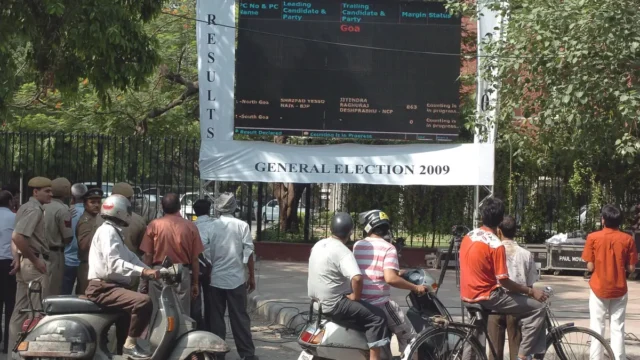
Election Commissioners’ letters to the Cabinet Secretary: what the RTI reply reveals about the ECI
An RTI reply reported on 22 October 2026 shows that Election Commissioners S.S. Sandhu and Vivek Joshi wrote to Cabinet Secretary T.V. Somanathan on 29 July, complaining that Senior Deputy Election Commissioner Maneesh Garg changed the work of officers without consulting the Commission. The Cabinet Secretariat chose only to acknowledge the letters, saying that acting on them could be seen as interference in a constitutional body. The episode shows why the Commission needs clear internal rules for a multi-member body.
UPSC angle: Prelims: Article 324, 2023 Act, Seshan (1995), Article 243K. · Mains GS-II: independence and functioning of constitutional bodies.
23 Oct 2026
Conversion does not carry over a quota: Supreme Court on Tamil Nadu’s BC Muslim certificates
On 15 October 2026, in The Secretary to Government v. Sameer Ahamed N., the Supreme Court upheld the Madras High Court’s quashing of a 2024 Tamil Nadu order. That order let converts to Islam from Backward, Most Backward, Denotified and Scheduled Caste communities get Backward Class Muslim certificates and use the 3.5% BC Muslim quota. The Court said conversion to Islam does not by itself make a person a member of any of the seven notified BC Muslim communities.
UPSC angle: Prelims: Articles 15(4), 16(4), 341, 342A; SC Order 1950. · Mains GS-II: conversion and reservation debate.
21 Oct 2026
ECI eases SIR verification: BLOs to collect documents at home, hearings online only in exceptional cases
On 26 September 2026 the Election Commission eased verification in the ongoing Special Intensive Revision (SIR) of electoral rolls. For electors served notice as unmapped or for logical discrepancies, BLOs will now collect documents at home and upload them on ECINet. Hearings will be held only in exceptional cases, preferably online.
UPSC angle: Prelims: BLO, ERO, DEO roles; Registration of Electors Rules 1960. · Mains: Balancing roll purity with inclusion of the poor and migrants.
26 Sep 2026
ECI: all decisions, including SIR, are unanimous decisions of the full Commission
On 23 September 2026 the Election Commission of India said all its decisions over the past year, including the Special Intensive Revision (SIR) of rolls, were unanimous decisions of the full Commission. It said written notes and differing views by members are a normal part of deliberation before a final decision.
UPSC angle: Prelims: Art. 324; 2023 Act. · Mains: Independence of the ECI after the 2023 Act.
23 Sep 2026Learn the concept
Question text as printed in the official UPSC Civil Services (Main) question paper. The model answer is original Battle IAS work; use it to learn structure, not to memorise.
Want every PYQ in one place? See the Battle IAS PYQ Book.