
UPSC Mains 2019 GS Paper 2 Q16: model answer
In the context of the neo-liberal paradigm of development planning, multi-level planning is expected to make operations cost-effective and remove many implementation blockages. Discuss.
What the question wants
Discuss whether multi-level planning, under a market-led development model, cuts costs and removes implementation blockages.
How to structure it
Discuss a quoted claim: explain the two terms, test the claim, end with conditions for success.
- The two ideas
- How multi-level planning helps
- Where it falls short
- Indian evidence
- Conditions
How to think it through
'Neo-liberal paradigm' sounds heavy. In plain words: the State plans less, markets do more, and what planning remains must be lean. Multi-level planning says: let each level plan what it knows best. Ask yourself whether India's district plans actually work that way.
Model answer
After 1991 India moved from a State that built steel plants to a State that sets rules and lets markets build. Planning did not die; it moved closer to the ground. The 73rd and 74th Amendments arrived in 1992, a year after liberalisation, and that timing is no accident.
The two ideas
- Neo-liberal planning: a smaller State role in production, more in regulation and targeted welfare; efficiency and cost-recovery count.
- Multi-level planning: national, State, district, block and village plans nested together, with each level choosing what suits its area.
How it is meant to cut cost and blockages
- Local knowledge picks the right project and site, avoiding wasted assets.
- People who plan a project watch it; leakages fall.
- Funds can be pooled across schemes at the district level.
- Faster decisions, as files do not travel to the capital.
The Indian machinery
Article 243ZD requires a District Planning Committee; 243ZE a Metropolitan Planning Committee. Gram Panchayat Development Plans (since 2015), the People's Plan Campaign every October, and the Aspirational Districts Programme (2018) with real-time ranking are its present forms.
Where it falls short
- Many DPCs exist on paper, chaired by ministers, with little staff.
- Centrally sponsored schemes come with fixed designs, so local plans become wish lists.
- Market logic can push user charges that hurt the poor.
- Weak data at block level.
Evidence
Kerala's People's Plan and the Aspirational Districts (several of which climbed sharply on health and nutrition indices) show it can work when funds and data flow together.
Conditions for success
Untied funds, DPCs with technical staff, convergence on a single district plan, and open data dashboards.
The claim holds in principle; India's results depend on whether money follows the plan. Where it does, the district becomes the real unit of development.
Draw: A pyramid of nested plans (nation → State → district → block → village), with arrows of funds down and data up.
Keywords, cases and data to drop in
1991 reforms, Article 243ZD DPC, 243ZE MPC, GPDP, People's Plan Campaign, Aspirational Districts 2018, convergence, untied funds, Kerala 1996.
Where most answers lose marks
- Writing only about Five-Year Plans. The question is about levels of planning, not national plans.
Related Mains PYQs
- Analyse the advantages and limitations of the generalist structure of the Indian Civil Services in contemporary governance. UPSC 2026 · GS-II
- To what extent do pressure groups, social movements and corporate lobbies deepen pluralistic democracy in India by representing excluded interests? Analyse whether… UPSC 2026 · GS-II
- “Transparency and accountability in governance are not about controlling corruption but about creating the trust of stakeholders in the policy process by… UPSC 2026 · GS-II
- Can the constitutional mandate of rights-based welfare be effectively realised in the context of non-integrated governance and minimal public investment? Examine. UPSC 2026 · GS-II
Fresh examples from current affairs

Census 2027: can private teachers be made enumerators? The Census Rules amendment and Article 23
Census 2027 needs over 30 lakh enumerators, the people who go door to door counting everyone. This month the Centre amended the Census Rules, 1990 to name teachers of private schools and staff of banks and companies as possible enumerators. But two High Courts had already stopped governments from forcing private-school teachers into Census duty. For you, it raises a classic exam question: can a rule make private citizens do public work, and what do the Census Act and Article 23 allow?
UPSC angle: Prelims: Entry 69 Union List, Census Act 1948, Article 23, Committee on Subordinate Legislation. · Mains GS-II: delegated legislation; federal administration of the Census.
25 Oct 2026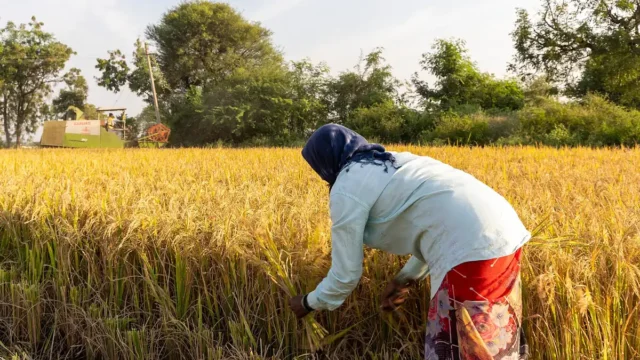
11 crore Farmer IDs created five months early under the Digital Agriculture Mission and Agri Stack
The Centre is building a digital register of farmers, so that each farmer has one verified identity for all schemes. Under the Digital Agriculture Mission, 11 crore Farmer IDs were created by the night of 23 October, five months before the March 2027 deadline. With this ID, farmers need not submit the same papers again and again for loans, crop insurance or relief. For you, this links Agri Stack, the Kisan Credit Card, PMFBY and land-record reform.
UPSC angle: Prelims: Digital Agriculture Mission, Agri Stack, KCC, PMFBY, DILRMP. · Mains GS-III: technology in agriculture; DBT.
25 Oct 2026
Vehicle data sold for ₹5: Centre orders CERT-In audit of VAHAN, SARATHI and e-Challan portals
The Ministry of Road Transport and Highways has asked CERT-In, India’s cyber-security agency, for a forensic audit of its VAHAN, SARATHI, e-Challan and pollution-certificate portals. A security firm found that owners’ names, addresses and phone numbers were being sold through apps and a Telegram channel for as little as ₹5. On the same day, The Hindu reported a separate leak of film certification records. For you, this connects cyber security, the right to privacy and the Digital Personal Data Protection Act, 2023.
UPSC angle: Prelims: CERT-In, Section 70B IT Act, VAHAN/SARATHI, Puttaswamy, DPDP Act 2023, GDPR. · Mains GS-III: cyber security and data protection.
25 Oct 2026
Panel to review pharma marketing code: UCPMP 2024 and why a voluntary code is not enough
The Department of Pharmaceuticals has set up a committee under Dr. M. Srinivas, Member, NITI Aayog, to review how drug companies market medicines and to suggest ways to curb unethical practices, PIB said on 23 October 2026. Former Union Health Secretary Preeti Sudan and Dr. Naresh Trehan of Medanta are members, and the report is due within two months of its first meeting. The core issue: the Uniform Code for Pharmaceutical Marketing Practices is still voluntary.
UPSC angle: Prelims: UCPMP, Department of Pharmaceuticals, NITI Aayog. · Mains GS-II: health governance, regulation and ethics.
24 Oct 2026Learn the concept
Question text as printed in the official UPSC Civil Services (Main) question paper. The model answer is original Battle IAS work; use it to learn structure, not to memorise.
Want every PYQ in one place? See the Battle IAS PYQ Book.