
UPSC Mains 2019 GS Paper 3 Q9: model answer
The banning of ‘Jamaat-e-Islami’ in Jammu and Kashmir brought into focus the role of over-ground workers (OGWs) in assisting terrorist organizations. Examine the role played by OGWs in assisting terrorist organizations in insurgency affected areas. Discuss measures to neutralize influence of OGWs.
What the question wants
Examine how over-ground workers (OGWs) help terrorist groups in insurgency areas and suggest how to neutralise them, with the ban on Jamaat-e-Islami J&K as context.
How to structure it
Who, role, counter.
- Who OGWs are
- What they do
- Measures
How to think it through
Jamaat-e-Islami J&K banned Feb 2019 under UAPA, extended 2024 for five years. OGWs: sympathisers who aren't armed: shelter, food, intelligence, couriers, recruitment, stone pelting mobilisation, funds, propaganda; 'hybrid terrorists'. Measures: intelligence, UAPA prosecution, PSA, financial tracking, dismissals of government employees under Article 311(2)(c), counter-narrative, jobs, family outreach.
Model answer
For every gunman in the forests of Kashmir, there are several helpers who never carry a gun. These over-ground workers (OGWs) feed, shelter and guide the militant. When the Centre banned Jamaat-e-Islami, J&K, under the UAPA in February 2019, and extended the ban in 2024, the spotlight fell on this support network.
What OGWs do
- Logistics: food, shelter, transport and safe houses.
- Intelligence: they track the movement of security forces.
- Couriers of messages, cash and weapons.
- Recruitment of young boys through social circles and mosques.
- Funds through hawala and charity fronts.
- Mobilising crowds to obstruct encounters.
- Some become 'hybrid' terrorists who strike once and slip back into normal life.
Neutralising them
- Human intelligence and technical surveillance to map networks.
- Legal action under the UAPA and the J&K Public Safety Act, with fair procedure.
- Financial tracking and seizure of properties used for terror.
- Action on employees who aid terror, under Article 311(2)(c).
- Counselling, jobs and sports for youth on the fringe.
Cut the supply line, and the gunman in the forest becomes a hungry, blind and lonely man.
Draw: A spider web: the militant at the centre and OGW strands for food, shelter, intelligence, money and recruits.
Keywords, cases and data to drop in
OGWs, Jamaat-e-Islami J&K ban (Feb 2019, extended 2024), UAPA, PSA, hybrid terrorists, hawala, Article 311(2)(c), HUMINT, counter-radicalisation.
Where most answers lose marks
- Forgetting the ban on Jamaat as context, or proposing only arrests without social measures.
Related Mains PYQs
- Discuss how national security can be balanced with concerns of human rights. UPSC 2026 · GS-IV
- Rajapuram is a border district. Jhara and Biru, its two major communities are in continual conflict with each other. The social fabric… UPSC 2026 · GS-IV
- Keeping the national security in mind, examine the ethical dilemmas related to controversies over environmental clearance of development projects in ecologically sensitive… UPSC 2025 · GS-IV
- Raman is a senior IPS officer and has recently been posted as D.G. of a state. Among the various issues and problems/challenges… UPSC 2024 · GS-IV
Fresh examples from current affairs
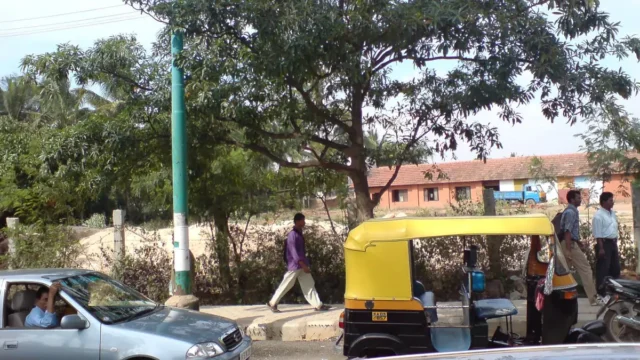
Vehicle data sold for ₹5: Centre orders CERT-In audit of VAHAN, SARATHI and e-Challan portals
The Ministry of Road Transport and Highways has asked CERT-In, India’s cyber-security agency, for a forensic audit of its VAHAN, SARATHI, e-Challan and pollution-certificate portals. A security firm found that owners’ names, addresses and phone numbers were being sold through apps and a Telegram channel for as little as ₹5. On the same day, The Hindu reported a separate leak of film certification records. For you, this connects cyber security, the right to privacy and the Digital Personal Data Protection Act, 2023.
UPSC angle: Prelims: CERT-In, Section 70B IT Act, VAHAN/SARATHI, Puttaswamy, DPDP Act 2023, GDPR. · Mains GS-III: cyber security and data protection.
25 Oct 2026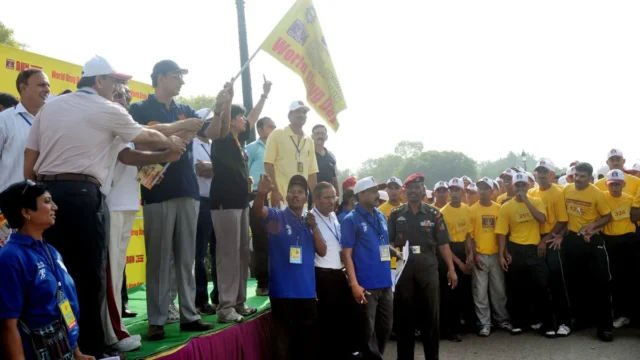
Nasha Mukt Bharat Abhiyaan reaches 35 crore people: demand reduction and the 2029 drug-free goal
The Ministry of Social Justice and Empowerment said on 22 October 2026 that the Nasha Mukt Bharat Abhiyaan has reached over 35 crore people, including 13.94 crore youth and 10.86 crore women, and more than 32 lakh educational institutions. Launched on 15 August 2020 in 272 vulnerable districts, it now runs across the country. It is the demand side of a twin strategy, while police and the NCB attack supply, with the Home Minister’s target of uprooting the drug trade by 31 December 2029.
UPSC angle: Prelims: NMBA, NAPDDR, Article 47, NDPS Act, helpline 14446. · Mains GS-II/III: drug abuse, demand and supply reduction.
23 Oct 2026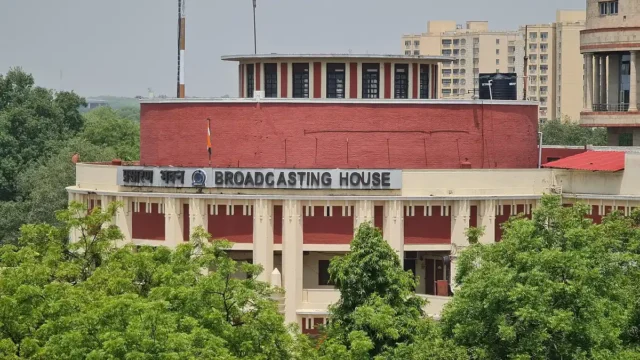
Prasar Bharati at 29: why India’s public broadcaster still lacks the autonomy its law promised
A lead article in The Hindu on 23 October 2026 argues that Prasar Bharati, set up to be a free public broadcaster, still works like a government department. The Prasar Bharati Act of 1990 came into force only in 1997, and its key safeguards, a parliamentary committee (Section 13) and a Broadcasting Council for complaints (Sections 14–15), were never set up, while Section 23 still lets the Centre give binding directions. For you, this is a neat case study of a law that promises autonomy but never builds the institutions that make it real.
UPSC angle: Prelims: Prasar Bharati Act 1990, Sections 13–15 and 23, Cricket Association of Bengal (1995). · Mains GS-II: autonomy of statutory bodies; media and democracy.
23 Oct 2026
Face-off with China continues in Arunachal: ITBP chief confirms stand-off at Asaphila
ITBP Director General Shatrujeet Kapur said on 22 October 2026 that face-offs with Chinese troops are continuing at several places along the Arunachal Pradesh border. It is the first official confirmation of the scale of tension since July, when Chinese troops pitched tents 6–7 km inside India’s perception of the Line of Actual Control near Asaphila in Upper Subansiri. Three rounds of high-level talks have not ended it, so the ITBP is betting on drones and underground shelters.
UPSC angle: Prelims: McMahon Line, WMCC, SR talks, ITBP, Upper Subansiri. · Mains GS-III: border management; GS-II: India–China.
23 Oct 2026Learn the concept
Question text as printed in the official UPSC Civil Services (Main) question paper. The model answer is original Battle IAS work; use it to learn structure, not to memorise.
Want every PYQ in one place? See the Battle IAS PYQ Book.