
UPSC Mains 2021 GS Paper 1 Q1: model answer
Evaluate the nature of the Bhakti literature and its contribution to Indian culture.
What the question wants
Evaluate the nature of Bhakti literature and its contribution to Indian culture.
How to structure it
Evaluate: describe its nature, then weigh its contributions and limits.
- Nature
- Contribution to language and literature
- Contribution to society and religion
- Assessment
How to think it through
From 6th-century Tamil Nadu to 17th-century Maharashtra, Bhakti literature walked the length of India, usually barefoot and singing. Its nature: devotional, in the people's language, often by non-elite poets and women. Its gift: regional literatures and a shared ethic of love. Balance it: caste rarely bent in practice.
Model answer
Bhakti literature, from the Tamil Alvars and Nay- anars (6th–9th century) to Kabir, Tulsidas, Mirabai and Tukaram, is among India's richest literary traditions.
Nature
- Personal, devotional, placing love of God above ritual.
- Composed in regional languages and meant to be sung.
- Many poets were women or from humble castes: Andal, Akka Mahadevi, Ravidas, Mirabai.
- Saguna (Tulsidas, Surdas) and nirguna (Kabir, Guru Nanak) streams.
Contribution to culture
- Regional literatures: Tamil Tevaram and Divya Prabandham, Kannada vachanas, Marathi abhangas, Awadhi Ramcharitmanas.
- Music and performance: bhajan, kirtan, abhang.
- A message of equality and a critique of ritualism; bridges between faiths.
- The Adi Granth includes verses of Kabir, Ravidas and other saints.
Limits
- Caste hierarchy largely persisted; some movements hardened into sects.
- Tukaram's abhangs are still sung by lakhs on the annual Pandharpur wari, a living proof of Bhakti's reach.
Bhakti literature democratised religion and language and gave India a shared ethical vocabulary. Its cultural contribution is profound, even if its social reform was partial.
Draw: Map of India marking saints by region and language.
Keywords, cases and data to drop in
Alvars, Nayanars, vachanas, abhangas, Ramcharitmanas, Adi Granth, saguna/nirguna.
Where most answers lose marks
- Writing only about North Indian saints. Bhakti began in the south.
Related Mains PYQs
- Vijayanagara architecture exemplifies the amalgamation of past traditions with contemporary practices. Elucidate with examples. UPSC 2026 · GS-I
- Discuss the salient features of the Harappan architecture. UPSC 2025 · GS-I
- ‘The sculptors filled the Chandella artform with resilient vigor and breadth of life.’ Elucidate. UPSC 2025 · GS-I
- Estimate the contribution of Pallavas of Kanchi for the development of art and literature of South India. UPSC 2024 · GS-I
Fresh examples from current affairs
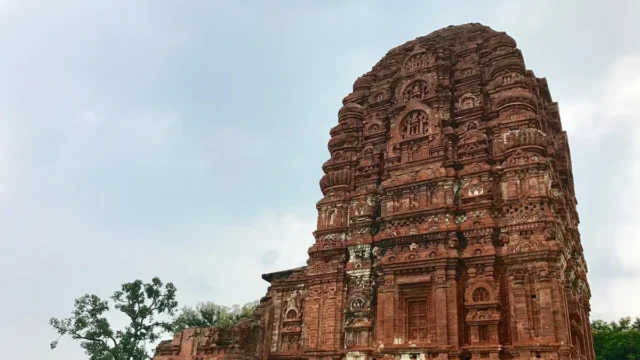
Sirpur in Chhattisgarh enters UNESCO’s Tentative List of World Heritage sites
Sirpur, an archaeological site in Chhattisgarh’s Mahasamund district with Hindu, Buddhist and Jain remains from the 5th to the 12th century CE, has been added to UNESCO’s Tentative List. The ASI now has about a year to prepare a nomination dossier proving its Outstanding Universal Value. Sirpur was once the capital of Dakshina Kosala.
UPSC angle: Prelims: Sirpur location, Lakshmana Temple, dynasties, UNESCO process. · Mains GS-I: heritage conservation and composite culture.
20 Oct 2026
PM inaugurates five Ladakh projects: Nimmu–Padum–Darcha road, Leh terminal, Hanu hydro
On 15 October 2026 the Prime Minister inaugurated, by video conference, five projects worth about ₹3,350 crore in Ladakh: a new passenger terminal at Leh's Kushok Bakula Rimpochee Airport, the 298-km Nimmu–Padum–Darcha road built by BRO, the 9 MW Hanu small hydro project with a 66 kV line, India's first Petroglyph Conservation Park at Sindhu Ghat, and 40 water bodies under Project Him Sarovar.
UPSC angle: Prelims: Shinkun La, Zanskar, Nimmu–Padum–Darcha road, BRO, petroglyphs, Him Sarovar. · Mains GS-III: border infrastructure and security; GS-I: heritage conservation.
15 Oct 2026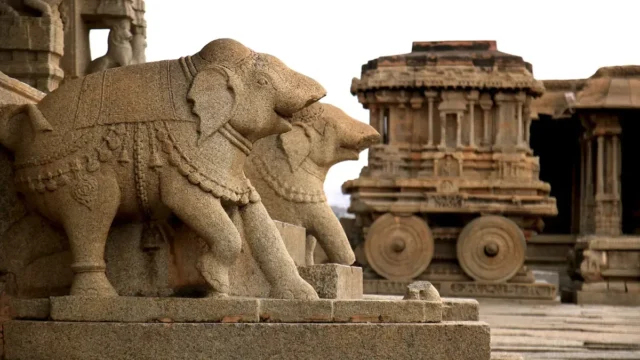
HAL, NCF and ASI sign MoA for Hampi, Taj Mahal and Bekal Fort
On 13 October 2026 HAL, the National Culture Fund and ASI signed an MoA for conservation and visitor works at Hampi, the Taj Mahal and Bekal Fort. HAL has approved about ₹23.60 crore in CSR support over three years; NCF facilitates the projects and ASI supervises them technically.
UPSC angle: Prelims: ASI, NCF, Hampi (UNESCO), Taj Mahal, Bekal Fort. · Mains GS-I: heritage conservation and corporate CSR.
14 Oct 2026
Centres of Excellence approved for five newer classical languages
On 3 October 2026 the Ministry of Education approved five Centres of Excellence for Classical Assamese, Bengali, Marathi, Pali and Prakrit, hosted by Tezpur University, Visva-Bharati, Deccan College Pune, Central University of Odisha and Central University of Gujarat. These five got classical status in October 2024, taking India's total to 11 classical languages.
UPSC angle: Prelims: match language with CoE institution; list of classical languages.
3 Oct 2026Learn the concept
Question text as printed in the official UPSC Civil Services (Main) question paper. The model answer is original Battle IAS work; use it to learn structure, not to memorise.
Want every PYQ in one place? See the Battle IAS PYQ Book.