
UPSC Mains 2021 GS Paper 1 Q12: model answer
Bring out the constructive programmes of Mahatma Gandhi during Non-Cooperation Movement and Civil Disobedience Movement.
What the question wants
Bring out the constructive programmes of Gandhi during Non-Cooperation and Civil Disobedience.
How to structure it
Bring out: identify and explain the programmes in both movements, with their purpose.
- What constructive work meant
- Programmes during Non-Cooperation
- Programmes during Civil Disobedience
- Significance
How to think it through
Gandhi's movements had two gears: struggle (protest, jail) and truce (constructive work). When the protest phase paused, constructive work kept the movement alive. Khadi, Hindu–Muslim unity, anti-untouchability, prohibition, national education: these were the 'gym' where the nation built strength between bouts.
Model answer
Gandhi spun yarn every day, even in jail, and asked Congress members to pay their dues in hand-spun yarn. For him constructive work was the positive side of satyagraha: building the nation while resisting the Raj.
During Non-Cooperation (1920–22)
- Khadi and charkha: the Tilak Swaraj Fund financed spinning; boycott of foreign cloth.
- National education: Gujarat Vidyapith, Kashi Vidyapith and Jamia Millia Islamia (1920).
- Hindu–Muslim unity through the Khilafat alliance.
- Removal of untouchability and prohibition of liquor.
- Panchayats for settling disputes instead of British courts.
During Civil Disobedience (1930–34)
- Salt production, a symbol of self-reliance.
- Picketing of liquor and foreign cloth shops by women.
- After 1932, the Harijan campaign: the Harijan Sevak Sangh, temple entry and the weekly Harijan.
- Village industries: the All India Village Industries Association (1934).
Significance
- Kept the movement alive between phases of struggle; built a mass base in villages; trained workers; gave nationalism social content.
Rural reconstruction
- Sevagram (1936) became a model of village work: sanitation, basic education (Nai Talim, 1937), cattle care and crafts.
- Constructive workers such as Vinoba Bhave later led the Bhoodan movement (1951).
Women and constructive work
- Women spun, picketed and taught, which gave them a role in public life.
Critiques
- Some, such as the revolutionaries and the socialists, saw the programmes as slow; yet they kept people engaged when mass struggle was suspended, as after Chauri Chaura (1922), and the trained workers led local struggles later in their districts.
To sum up
Gandhi's constructive programmes turned freedom into a daily practice. Many of them, from khadi to anti-untouchability, live on in independent India's policies.
Draw: Two columns: NCM vs CDM, with programmes under each.
Keywords, cases and data to drop in
Tilak Swaraj Fund, Jamia Millia 1920, Gujarat Vidyapith, Harijan Sevak Sangh 1932, AIVIA 1934, khadi.
Where most answers lose marks
- Describing the protest phases (boycott, Dandi) instead of constructive work.
Related Mains PYQs
- Why did the armies of the British East India Company - mostly comprising of Indian soldiers - win consistently against the more… UPSC 2022 · GS-I
- Why was there a sudden spurt in famines in colonial India since the mid-eighteenth century? Give reasons. UPSC 2022 · GS-I
- To what extent did the role of the Moderates prepare a base for the wider freedom movement? Comment. UPSC 2021 · GS-I
- Trace the rise and growth of socio-religious reform movements with special reference to Young Bengal and Brahmo Samaj. UPSC 2021 · GS-I
Fresh examples from current affairs
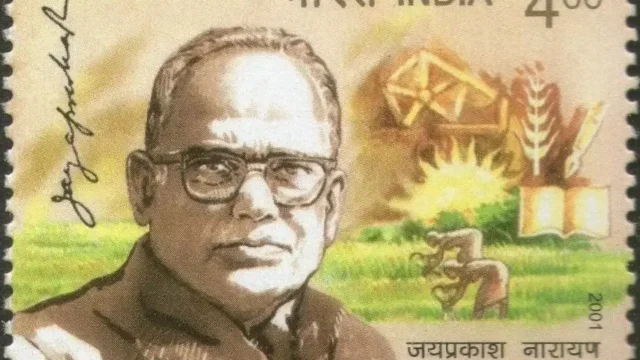
Birth anniversaries: Jayaprakash Narayan and Nanaji Deshmukh
11 October is the birth anniversary of Loknayak Jayaprakash Narayan and Nanaji Deshmukh, both Bharat Ratna awardees. The Prime Minister recalled JP's voice during the Emergency and his concern for good governance, and Nanaji's work in rural development and community participation. Treat this as a personality note for Prelims.
UPSC angle: Prelims: personalities, Bharat Ratna years. · Mains: limited; GS-IV examples of public service.
11 Oct 2026
ASI and Denmark museum to search for 1619 Danish shipwreck Oresund off Karaikal
The Archaeological Survey of India's Underwater Archaeology Wing and the National Museum of Denmark (Njord Centre, Copenhagen) signed an MoU to locate and document the Danish ship Oresund, wrecked off Karaikal, Puducherry, in 1619 CE. It is described as the first Danish ship known to have reached India.
UPSC angle: Prelims: Danish settlements in India.
15 Jun 2026
Veer Bal Diwas and the Rashtriya Bal Puraskar
The PM announced the day on 9 January 2022 and the first Veer Bal Diwas was held on 26 December 2022 [PMO].
UPSC angle: Prelims: Sikh history.
26 Dec 2025
Stamp on Emperor Perumbidugu Mutharaiyar II
Questions on lesser-known regional dynasties are common in Prelims. Stamps and anniversaries often bring them into the news.
UPSC angle: Prelims: early medieval Tamil dynasties.
14 Dec 2025Learn the concept
Question text as printed in the official UPSC Civil Services (Main) question paper. The model answer is original Battle IAS work; use it to learn structure, not to memorise.
Want every PYQ in one place? See the Battle IAS PYQ Book.