
UPSC Mains 2022 GS Paper 1 Q2: model answer
Why did the armies of the British East India Company - mostly comprising of Indian soldiers - win consistently against the more numerous and better equipped armies of the then Indian rulers? Give reasons.
What the question wants
Explain why the Company's mostly Indian armies kept defeating bigger, well-equipped Indian armies.
How to structure it
Give reasons: focus on organisation, finance, leadership and politics, not just guns.
- Military organisation
- Finance and loyalty
- Leadership and intelligence
- Indian political weaknesses
How to think it through
Here's the puzzle: same soldiers (Indians), often similar weapons, yet one side kept winning. So the answer cannot be 'better men'. It is the system: drill, regular pay, officers, money, and Indian rulers fighting each other. Think of the Company as a well-run firm against brilliant individuals with poor HR.
Model answer
From Plassey (1757) to the Anglo-Sikh wars (1840s), Company armies made up largely of Indian sepoys repeatedly defeated larger Indian forces.
Military organisation
- European-style drill and discipline, infantry firing in coordinated volleys, and effective artillery.
- A clear chain of command with professional officers.
Finance and loyalty
- Regular salaries paid from Bengal's revenue, while Indian armies often went unpaid and were loyal to individual commanders.
- Steady supply and logistics.
Leadership and intelligence
- Commanders such as Clive, Wellesley and Lake; good intelligence through local informants and bankers.
Indian political weaknesses
- Rival Indian powers rarely united; the Marathas, Mysore and Hyderabad fought each other.
- Betrayal and intrigue, as at Plassey (Mir Jafar).
- Many Indian armies were feudal levies with mixed loyalties and weak command.
- After Plassey, Bengal's revenues paid for the wars that followed in the Carnatic and Mysore.
Final word
The Company's victories came from organisation, money and Indian disunity more than from numbers. It was the structure, not the soldiers, that made the difference.
Keywords, cases and data to drop in
Plassey 1757, Buxar 1764, drill, subsidiary alliance, Mir Jafar, Anglo-Maratha wars.
Where most answers lose marks
- Saying 'superior weapons' alone. Indian armies often had good guns too.
Related Mains PYQs
- Why was there a sudden spurt in famines in colonial India since the mid-eighteenth century? Give reasons. UPSC 2022 · GS-I
- Bring out the constructive programmes of Mahatma Gandhi during Non-Cooperation Movement and Civil Disobedience Movement. UPSC 2021 · GS-I
- Trace the rise and growth of socio-religious reform movements with special reference to Young Bengal and Brahmo Samaj. UPSC 2021 · GS-I
- To what extent did the role of the Moderates prepare a base for the wider freedom movement? Comment. UPSC 2021 · GS-I
Fresh examples from current affairs
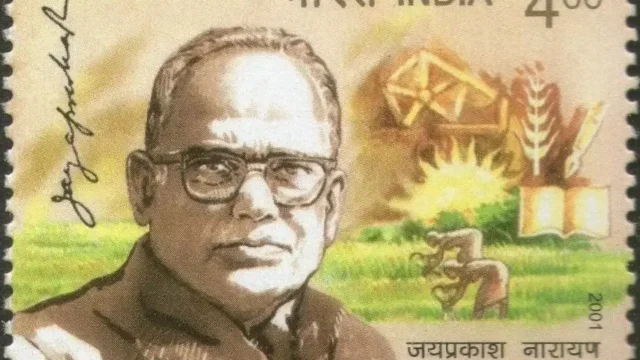
Birth anniversaries: Jayaprakash Narayan and Nanaji Deshmukh
11 October is the birth anniversary of Loknayak Jayaprakash Narayan and Nanaji Deshmukh, both Bharat Ratna awardees. The Prime Minister recalled JP's voice during the Emergency and his concern for good governance, and Nanaji's work in rural development and community participation. Treat this as a personality note for Prelims.
UPSC angle: Prelims: personalities, Bharat Ratna years. · Mains: limited; GS-IV examples of public service.
11 Oct 2026
ASI and Denmark museum to search for 1619 Danish shipwreck Oresund off Karaikal
The Archaeological Survey of India's Underwater Archaeology Wing and the National Museum of Denmark (Njord Centre, Copenhagen) signed an MoU to locate and document the Danish ship Oresund, wrecked off Karaikal, Puducherry, in 1619 CE. It is described as the first Danish ship known to have reached India.
UPSC angle: Prelims: Danish settlements in India.
15 Jun 2026
Veer Bal Diwas and the Rashtriya Bal Puraskar
The PM announced the day on 9 January 2022 and the first Veer Bal Diwas was held on 26 December 2022 [PMO].
UPSC angle: Prelims: Sikh history.
26 Dec 2025
Stamp on Emperor Perumbidugu Mutharaiyar II
Questions on lesser-known regional dynasties are common in Prelims. Stamps and anniversaries often bring them into the news.
UPSC angle: Prelims: early medieval Tamil dynasties.
14 Dec 2025Learn the concept
Question text as printed in the official UPSC Civil Services (Main) question paper. The model answer is original Battle IAS work; use it to learn structure, not to memorise.
Want every PYQ in one place? See the Battle IAS PYQ Book.