
UPSC Mains 2021 GS Paper 2 Q3: model answer
How have the recommendations of the 14th Finance Commission of India enabled the States to improve their fiscal position?
What the question wants
Explain how the 14th FC's recommendations helped States strengthen their fiscal position.
How to structure it
How have: list the main recommendations and attach the fiscal effect to each, then add a limit.
- Headline change
- Other measures
- Effect on States
- Limits
How to think it through
42% is the number everybody remembers. The marks come from showing what it did: more untied money, less dependence on CSS, more freedom to borrow wisely.
Model answer
The 14th Finance Commission (2015–20, chaired by Y.V. Reddy) made the biggest jump in States' share in the history of devolution: from 32% to 42% of the divisible pool.
Key recommendations
- 42% devolution, mostly untied.
- New horizontal criteria: forest cover (7.5%) added; 2011 population given weight with 1971.
- Revenue deficit grants to 11 States.
- State fiscal deficit limit of 3% of GSDP, with extra room of up to 0.5% for States with low debt and interest burden.
- Local body grants of about ₹2.87 lakh crore to gram panchayats and municipalities.
How States gained
- More untied money let States choose their own priorities.
- The end of Normal Central Assistance and fewer CSS meant less tied spending.
- Borrowing flexibility rewarded prudent States.
- Gram panchayats got direct money for basic services, and began GPDPs.
Limits
Central cesses grew outside the divisible pool, and CSS sharing shifted towards 60:40, so the real gain was smaller than 10 points. Still, it changed the habit: States began to see devolution as a right, not a favour, and the 15th and 16th FCs kept it near that level.
Draw: A bar chart: 13th FC 32%, 14th 42%, 15th 41%, 16th 41%.
Keywords, cases and data to drop in
14th FC Y.V. Reddy, 42%, untied transfers, forest criterion 7.5%, revenue deficit grants, 3% FD + 0.5% flexibility, GPDP, cesses.
Where most answers lose marks
- Writing the 15th FC's 41% as the 14th FC's figure.
Related Mains PYQs
- Is the right to vote a fundamental right? Discuss the position of the Election Commission of India while undertaking the revision of… UPSC 2026 · GS-II
- Do constitutional bodies like the National Commission for Scheduled Castes (NCSC) and the National Commission for Scheduled Tribes (NCST) possess adequate enforcement… UPSC 2026 · GS-II
- “The Attorney General of India plays a crucial role in guiding the legal framework of the Union Government and ensuring sound governance… UPSC 2025 · GS-II
- “The duty of the Comptroller and Auditor General is not merely to ensure the legality of expenditure but also its propriety.” Comment. UPSC 2024 · GS-II
Fresh examples from current affairs
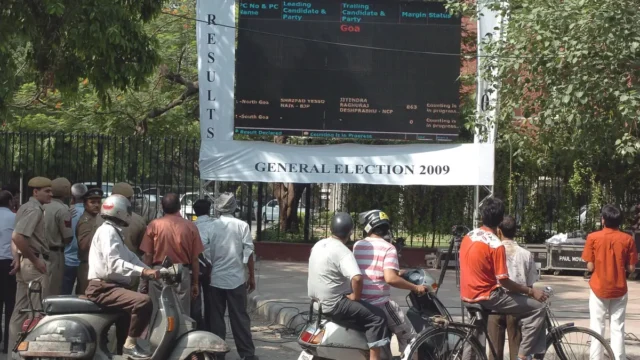
Election Commissioners’ letters to the Cabinet Secretary: what the RTI reply reveals about the ECI
An RTI reply reported on 22 October 2026 shows that Election Commissioners S.S. Sandhu and Vivek Joshi wrote to Cabinet Secretary T.V. Somanathan on 29 July, complaining that Senior Deputy Election Commissioner Maneesh Garg changed the work of officers without consulting the Commission. The Cabinet Secretariat chose only to acknowledge the letters, saying that acting on them could be seen as interference in a constitutional body. The episode shows why the Commission needs clear internal rules for a multi-member body.
UPSC angle: Prelims: Article 324, 2023 Act, Seshan (1995), Article 243K. · Mains GS-II: independence and functioning of constitutional bodies.
23 Oct 2026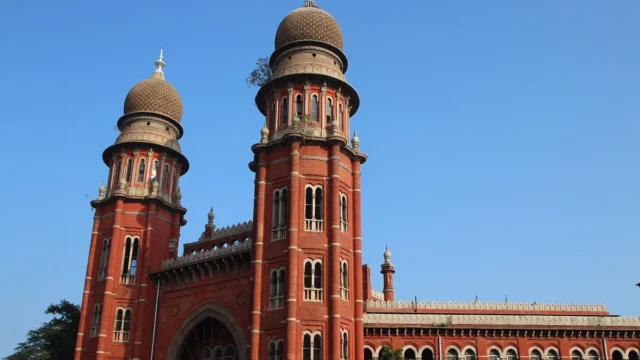
Conversion does not carry over a quota: Supreme Court on Tamil Nadu’s BC Muslim certificates
On 15 October 2026, in The Secretary to Government v. Sameer Ahamed N., the Supreme Court upheld the Madras High Court’s quashing of a 2024 Tamil Nadu order. That order let converts to Islam from Backward, Most Backward, Denotified and Scheduled Caste communities get Backward Class Muslim certificates and use the 3.5% BC Muslim quota. The Court said conversion to Islam does not by itself make a person a member of any of the seven notified BC Muslim communities.
UPSC angle: Prelims: Articles 15(4), 16(4), 341, 342A; SC Order 1950. · Mains GS-II: conversion and reservation debate.
21 Oct 2026
ECI eases SIR verification: BLOs to collect documents at home, hearings online only in exceptional cases
On 26 September 2026 the Election Commission eased verification in the ongoing Special Intensive Revision (SIR) of electoral rolls. For electors served notice as unmapped or for logical discrepancies, BLOs will now collect documents at home and upload them on ECINet. Hearings will be held only in exceptional cases, preferably online.
UPSC angle: Prelims: BLO, ERO, DEO roles; Registration of Electors Rules 1960. · Mains: Balancing roll purity with inclusion of the poor and migrants.
26 Sep 2026
ECI: all decisions, including SIR, are unanimous decisions of the full Commission
On 23 September 2026 the Election Commission of India said all its decisions over the past year, including the Special Intensive Revision (SIR) of rolls, were unanimous decisions of the full Commission. It said written notes and differing views by members are a normal part of deliberation before a final decision.
UPSC angle: Prelims: Art. 324; 2023 Act. · Mains: Independence of the ECI after the 2023 Act.
23 Sep 2026Learn the concept
Question text as printed in the official UPSC Civil Services (Main) question paper. The model answer is original Battle IAS work; use it to learn structure, not to memorise.
Want every PYQ in one place? See the Battle IAS PYQ Book.