
UPSC Mains 2021 GS Paper 2 Q5: model answer
"Pressure groups play a vital role in influencing public policy making in India." Explain how the business associations contribute to public policies.
What the question wants
Explain how business associations shape public policy in India.
How to structure it
Explain how: channels, examples, concerns.
- Channels
- Examples
- Concerns
- Conclusion
How to think it through
FICCI, CII, ASSOCHAM, NASSCOM. Name what they shaped: GST rates, the IT Act, labour codes, PLI schemes. Add the risk of capture.
Model answer
NASSCOM was formed in 1988, when Indian software was a tiny export. It lobbied for software technology parks, tax holidays and liberal telecom rules, and the IT sector grew into one of India's biggest service exporters.
How business associations contribute
- Pre-budget memoranda and meetings with the Finance Ministry.
- Expert inputs to committees drafting laws, such as the IBC and the data protection law.
- Seats on advisory bodies: GST consultations, trade negotiation teams.
- Research and data: industry surveys on demand, jobs and exports.
- Global advocacy: trade delegations and investment summits.
Examples
- GST rate rationalisation in 2025 followed long industry demands.
- Production Linked Incentive schemes designed with sector inputs.
- NASSCOM shaped the IT Act and data rules.
Concerns
- Large firms dominate; MSMEs and informal workers are under-represented.
- Risk of crony capitalism and regulatory capture.
- No lobbying disclosure law, unlike the US Lobbying Disclosure Act or the EU's transparency register.
Business associations bring expertise and ground-level data that ministries lack. A public register of lobbying meetings and open consultation on draft rules would make that influence legitimate rather than suspect.
Draw: A flow chart: business association, memorandum or committee input, draft policy, final rule.
Keywords, cases and data to drop in
FICCI 1927, CII, ASSOCHAM, NASSCOM 1988, pre-budget consultations, PLI, GST Council, regulatory capture, lobbying disclosure.
Where most answers lose marks
- Describing pressure groups in general, not business associations.
Related Mains PYQs
- Can the constitutional mandate of rights-based welfare be effectively realised in the context of non-integrated governance and minimal public investment? Examine. UPSC 2026 · GS-II
- What is meant by judicial legislation? In this context, discuss the verdicts of the apex court allowing “passive euthanasia” and a “living… UPSC 2026 · GS-II
- Efficiency is doing things right, while effectiveness is doing the right thing. How do you strike a balance between the two to… UPSC 2026 · GS-IV
- Analyse the advantages and limitations of the generalist structure of the Indian Civil Services in contemporary governance. UPSC 2026 · GS-II
Fresh examples from current affairs
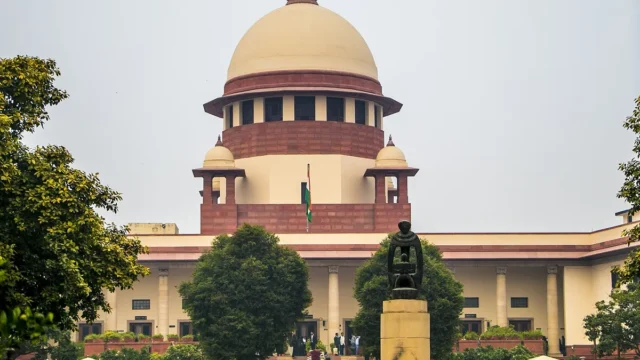
Justice Bhuyan’s remarks on voter deletions: how far can a sitting judge speak, and what is the right to vote?
On October 4, Supreme Court judge Ujjal Bhuyan said a process that strikes millions off the rolls would violate Articles 14 and 326. Former Chief Justice B.R. Gavai objected that a sitting judge should not comment on a pending matter. For you, this connects Article 326, the 1997 judicial code and the Bihar SIR ruling.
UPSC angle: Prelims: Articles 324-326, 61st Amendment, nature of the right to vote, Restatement of 1997. · Mains GS-II: judiciary, judicial accountability and electoral rolls.
26 Oct 2026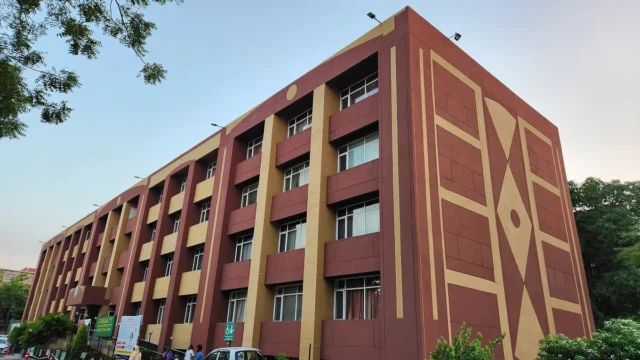
DPDP Act and hospitals: why clinical staff need training before the data law bites
The Digital Personal Data Protection Rules come fully into force in May 2027, and hospitals that mishandle patient data face penalties of up to ₹250 crore. Training doctors and nurses matters more than buying software. For you, this connects Article 21 privacy, the DPDP framework and Ayushman Bharat Digital Mission.
UPSC angle: Prelims: DPDP Act terms, Data Protection Board, Puttaswamy, ABDM. · Mains GS-II: health governance, privacy and digital public infrastructure.
26 Oct 2026
Census 2027: can private teachers be made enumerators? The Census Rules amendment and Article 23
Census 2027 needs over 30 lakh enumerators, the people who go door to door counting everyone. This month the Centre amended the Census Rules, 1990 to name teachers of private schools and staff of banks and companies as possible enumerators. But two High Courts had already stopped governments from forcing private-school teachers into Census duty. For you, it raises a classic exam question: can a rule make private citizens do public work, and what do the Census Act and Article 23 allow?
UPSC angle: Prelims: Entry 69 Union List, Census Act 1948, Article 23, Committee on Subordinate Legislation. · Mains GS-II: delegated legislation; federal administration of the Census.
25 Oct 2026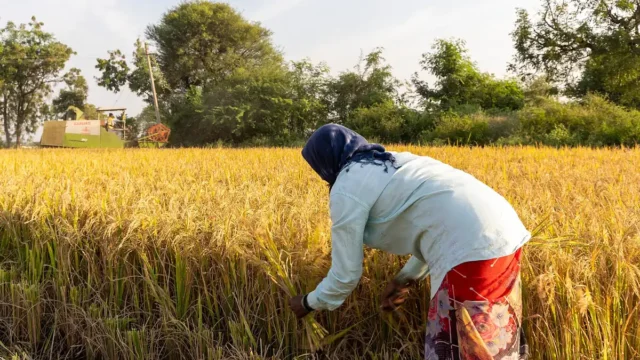
11 crore Farmer IDs created five months early under the Digital Agriculture Mission and Agri Stack
The Centre is building a digital register of farmers, so that each farmer has one verified identity for all schemes. Under the Digital Agriculture Mission, 11 crore Farmer IDs were created by the night of 23 October, five months before the March 2027 deadline. With this ID, farmers need not submit the same papers again and again for loans, crop insurance or relief. For you, this links Agri Stack, the Kisan Credit Card, PMFBY and land-record reform.
UPSC angle: Prelims: Digital Agriculture Mission, Agri Stack, KCC, PMFBY, DILRMP. · Mains GS-III: technology in agriculture; DBT.
25 Oct 2026Learn the concept
Question text as printed in the official UPSC Civil Services (Main) question paper. The model answer is original Battle IAS work; use it to learn structure, not to memorise.
Want every PYQ in one place? See the Battle IAS PYQ Book.