
UPSC Mains 2022 GS Paper 2 Q5: model answer
Discuss the role of the National Commission for Backward Classes in the wake of its transformation from a statutory body to a constitutional body.
What the question wants
Discuss the NCBC's role now that it has moved from statutory to constitutional status.
How to structure it
Discuss the role ... in the wake of: before and after.
- Statutory phase
- What the 102nd Amendment changed
- The 105th correction
- Role now
How to think it through
Before 2018 the NCBC only advised on adding or removing castes from the central list. After 338B it became a full commission with grievance and monitoring powers. The Maratha case and the 105th Amendment are essential.
Model answer
Set up in 1993 after Indra Sawhney (1992), the NCBC could only advise on inclusion in the central OBC list. The 102nd Amendment (2018) made it a constitutional body under Article 338B.
What changed
- Powers to investigate and monitor safeguards for backward classes, and inquire into complaints.
- Civil-court powers to summon and examine.
- Mandatory consultation by the Union and States on major policy matters.
- Annual reports to the President, laid before Parliament.
The Maratha twist
- In Jaishri Patil (2021), the Supreme Court read Article 342A to mean that only the President could notify SEBCs, ending State lists.
- The 105th Amendment (2021) restored States' power to keep their own lists.
Role now
- Hearing grievances on reservation in jobs and admissions.
- Advising on creamy layer limits and sub- categorisation (Rohini Commission report, 2023).
- Monitoring central institutions' compliance.
Concerns
Its findings remain recommendatory, and it has worked without fresh caste data since 1931; the census of 2026–27 will count all castes for the first time since then. Used well, that data could make the NCBC an evidence-based watchdog rather than a forum for list politics.
Draw: A timeline: 1993 statutory → 2018 constitutional → 2021 Maratha case → 2021 105th Amendment.
Keywords, cases and data to drop in
Article 338B, 342A, 102nd Amendment 2018, 105th Amendment 2021, Indra Sawhney 1992, Jaishri Patil 2021, Rohini Commission, creamy layer, sub-categorisation.
Where most answers lose marks
- Saying the NCBC now decides the central list alone. Parliament and the President notify it.
Related Mains PYQs
- Is the right to vote a fundamental right? Discuss the position of the Election Commission of India while undertaking the revision of… UPSC 2026 · GS-II
- Do constitutional bodies like the National Commission for Scheduled Castes (NCSC) and the National Commission for Scheduled Tribes (NCST) possess adequate enforcement… UPSC 2026 · GS-II
- “The Attorney General of India plays a crucial role in guiding the legal framework of the Union Government and ensuring sound governance… UPSC 2025 · GS-II
- “The duty of the Comptroller and Auditor General is not merely to ensure the legality of expenditure but also its propriety.” Comment. UPSC 2024 · GS-II
Fresh examples from current affairs
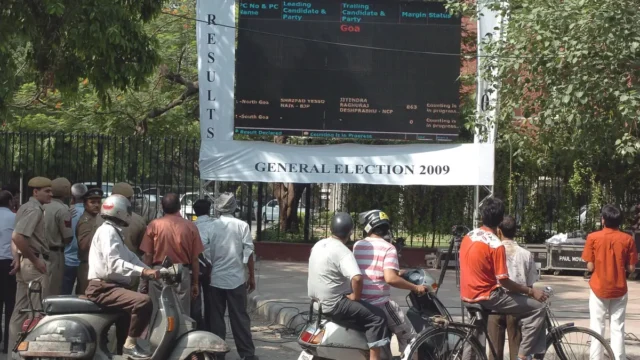
Election Commissioners’ letters to the Cabinet Secretary: what the RTI reply reveals about the ECI
An RTI reply reported on 22 October 2026 shows that Election Commissioners S.S. Sandhu and Vivek Joshi wrote to Cabinet Secretary T.V. Somanathan on 29 July, complaining that Senior Deputy Election Commissioner Maneesh Garg changed the work of officers without consulting the Commission. The Cabinet Secretariat chose only to acknowledge the letters, saying that acting on them could be seen as interference in a constitutional body. The episode shows why the Commission needs clear internal rules for a multi-member body.
UPSC angle: Prelims: Article 324, 2023 Act, Seshan (1995), Article 243K. · Mains GS-II: independence and functioning of constitutional bodies.
23 Oct 2026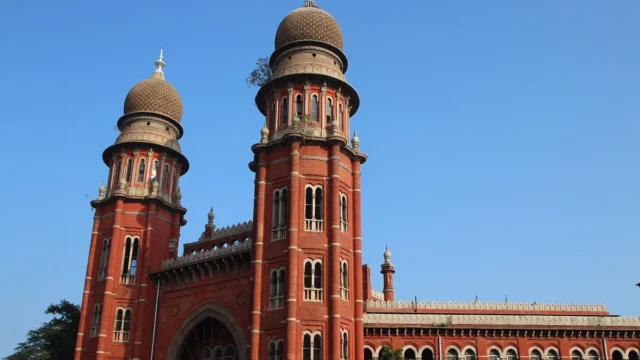
Conversion does not carry over a quota: Supreme Court on Tamil Nadu’s BC Muslim certificates
On 15 October 2026, in The Secretary to Government v. Sameer Ahamed N., the Supreme Court upheld the Madras High Court’s quashing of a 2024 Tamil Nadu order. That order let converts to Islam from Backward, Most Backward, Denotified and Scheduled Caste communities get Backward Class Muslim certificates and use the 3.5% BC Muslim quota. The Court said conversion to Islam does not by itself make a person a member of any of the seven notified BC Muslim communities.
UPSC angle: Prelims: Articles 15(4), 16(4), 341, 342A; SC Order 1950. · Mains GS-II: conversion and reservation debate.
21 Oct 2026
ECI eases SIR verification: BLOs to collect documents at home, hearings online only in exceptional cases
On 26 September 2026 the Election Commission eased verification in the ongoing Special Intensive Revision (SIR) of electoral rolls. For electors served notice as unmapped or for logical discrepancies, BLOs will now collect documents at home and upload them on ECINet. Hearings will be held only in exceptional cases, preferably online.
UPSC angle: Prelims: BLO, ERO, DEO roles; Registration of Electors Rules 1960. · Mains: Balancing roll purity with inclusion of the poor and migrants.
26 Sep 2026
ECI: all decisions, including SIR, are unanimous decisions of the full Commission
On 23 September 2026 the Election Commission of India said all its decisions over the past year, including the Special Intensive Revision (SIR) of rolls, were unanimous decisions of the full Commission. It said written notes and differing views by members are a normal part of deliberation before a final decision.
UPSC angle: Prelims: Art. 324; 2023 Act. · Mains: Independence of the ECI after the 2023 Act.
23 Sep 2026Learn the concept
Question text as printed in the official UPSC Civil Services (Main) question paper. The model answer is original Battle IAS work; use it to learn structure, not to memorise.
Want every PYQ in one place? See the Battle IAS PYQ Book.