
UPSC Mains 2023 GS2 Q20: model answer
‘Sea is an important Component of the Cosmos’ Discuss in the light of the above statement the role of the IMO (International Maritime Organisation) in protecting environment and enhancing maritime safety and security.
What the question wants
Importance of the sea and the IMO's work on environment, safety and security; India's role.
How to structure it
Intro: oceans cover about 71% of Earth; trade and climate. Body: (1) IMO: UN agency (1948 convention, 1958 in force), London HQ, 175 members; (2) Environment: MARPOL, Ballast Water Convention, 2020 sulphur cap, GHG strategy 2023 (net zero around 2050), Hong Kong Convention on ship recycling; (3) Safety: SOLAS, STCW, SAR Convention, COLREGs; (4) Security: ISPS Code, anti-piracy (Djibouti Code), (5) Limits; India's role: council member, Alang ship recycling, Sagarmala. Conclusion: global commons need global rules.
- 1(1) IMO: UN agency (1948 convention, 1958 in force), London HQ, 175 members
- 2(2) Environment: MARPOL, Ballast Water Convention, 2020 sulphur cap, GHG strategy 2023 (net zero around 2050), Hong Kong Convention on ship recycling
- 3(3) Safety: SOLAS, STCW, SAR Convention, COLREGs
- 4(4) Security: ISPS Code, anti-piracy (Djibouti Code), (5) Limits
- 5India's role: council member, Alang ship recycling, Sagarmala
Model answer
Oceans cover about 71% of the Earth, regulate climate and carry around 80% of world trade by volume. Protecting them is a shared global task.
| Area | Convention |
|---|---|
| Pollution | MARPOL; 0.5% sulphur cap (2020) |
| Invasive species | Ballast Water Convention |
| Safety | SOLAS, STCW, COLREGs |
| Security | ISPS Code |
| Ship recycling | Hong Kong Convention (2025) |
The IMO
The International Maritime Organization is a UN specialised agency based in London (convention adopted in 1948, in force from 1958) that sets global standards for shipping. India joined in 1959 and sits on its Council.
Protecting the environment
- MARPOL (1973/78): controls oil, chemical, sewage, garbage and air pollution from ships.
- Sulphur cap: since 2020 marine fuel sulphur limited to 0.5%.
- Ballast Water Management Convention (2017): stops spread of invasive species.
- 2023 GHG Strategy: net-zero emissions from shipping by or around 2050.
- Hong Kong Convention on safe ship recycling (in force 2025), relevant for Alang in Gujarat.
Enhancing safety
- SOLAS (1974), whose first version followed the Titanic disaster, sets construction and life-saving standards.
- STCW sets training standards for seafarers.
- COLREGs prevent collisions; the SAR Convention organises search and rescue.
Enhancing security
- ISPS Code (2004): security for ships and ports after 9/11.
- Djibouti Code of Conduct: regional cooperation against piracy off Somalia.
Limits
- No enforcement power of its own; relies on flag and port States.
- Slow progress on carbon pricing for shipping.
- Flags of convenience weaken compliance.
India's stake: a long coastline, large seafarer workforce, ship recycling at Alang and the Sagarmala programme make IMO norms vital.
Seas are global commons; the IMO provides the common rules needed to keep them clean, safe and secure.
Keywords, cases and data to drop in
IMO MARPOL SOLAS ISPS Code 2023 GHG Strategy Hong Kong Convention
Where most answers lose marks
- Writing only about environment.
- No named conventions.
Fresh examples from current affairs
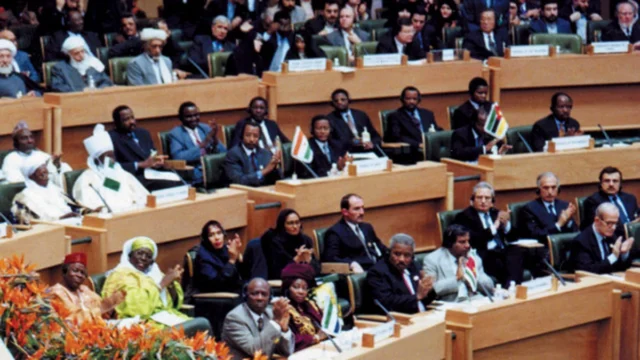
India rejects OIC’s Baghdad resolutions on Jammu and Kashmir as ‘malicious, biased and false’
On 19 October 2026 the Ministry of External Affairs rejected references to India in resolutions adopted at the Organisation of Islamic Cooperation (OIC) Council of Foreign Ministers in Baghdad on 17–18 October. It called them ‘malicious, biased and false’, said Pakistan orchestrated them, and said the OIC has no locus standi on India’s internal matters.
UPSC angle: Prelims: OIC facts, J&K Reorganisation Act, UN Charter Article 2(7). · Mains GS-II: India, OIC and Pakistan.
19 Oct 2026
India to host 61st CIML meeting on legal metrology in New Delhi, 26–28 October
India will host the 61st meeting of the International Committee of Legal Metrology (CIML) for the first time, in New Delhi from 26 to 28 October 2026. The Department of Consumer Affairs is organising it with the International Organization of Legal Metrology (OIML), and more than 100 delegates are expected, PIB said on 19 October.
UPSC angle: Prelims: OIML, CIML, Legal Metrology Act 2009, Union List Entry 50. · Mains GS-III: standards and trade.
19 Oct 2026
India rejects OHCHR remarks on Delhi events
On 11 October 2026 India rejected remarks by the UN Office of the High Commissioner for Human Rights on events in New Delhi the day before. MEA said peaceful assembly is a constitutional right exercised subject to public order, courts are open to all, and the remarks were interference in internal affairs.
UPSC angle: Prelims: Article 19(1)(b) and 19(3). · Mains GS-II: fundamental rights; India and international human-rights bodies.
11 Oct 2026
India at UN High-Level Meeting on pandemic preparedness: equity and pathogen access-benefit sharing
At the UN High-Level Meeting on Pandemic Prevention, Preparedness and Response in New York on 25 September 2026, India's Health Secretary said the WHO Pandemic Agreement will be credible only with a fair Pathogen Access and Benefit Sharing (PABS) system. India also asked that digital public infrastructure be treated as a global public good.
UPSC angle: Mains: Is the WHO Pandemic Agreement equitable for developing countries?
26 Sep 2026Learn the concept
Question text as printed in the official UPSC question paper: https://www.upsc.gov.in/sites/default/files/QP-CSM-23-GENERAL-STUDIES-PAPER-II-180923.pdf The model answer is original Battle IAS work; use it to learn structure, not to memorise.