
UPSC Mains 2024 GS4 Q10: model answer
Sneha is a Senior Manager working for a big reputed hospital chain in a mid-sized city. She has been made in-charge of the new super speciality center that the hospital is building with state-of-the art equipment and world class medical facilities. The building has been reconstructed and she is starting the process of procurement for various equipment and machines. As the head of the committee responsible for procurement, she has invited bids from all the interested reputed vendors dealing in medical equipment. She notices that her brother, who is a well-known supplier in this domain, has also sent his expression of interest. Since the hospital is privately owned, it is not mandatory for her to select only the lower bidder. Also, she is aware that her brother’s company has been facing some financial difficulties and a big supply order will help him recover. At the same time, allocating the contract to her brother might bring charges of favouritism against her and tarnish her image. The hospital management trusts her fully and would support any decision of hers.
(a) What should be Sneha’s course of action?
(b) How would she justify what she chooses to do?
(c) In this case, how is medical ethics compromised with vested personal interest?
What the question wants
Sneha's conflict of interest in procurement involving her brother.
How to structure it
Intro: conflict of interest even in a private hospital. Body: (a) course of action: disclose, recuse, fair process; (b) justification: integrity, trust, patient welfare; (c) how medical ethics is compromised when personal interest enters procurement. Conclusion.
- 1(a) course of action: disclose, recuse, fair process
- 2(b) justification: integrity, trust, patient welfare
- 3(c) how medical ethics is compromised when personal interest enters procurement
Model answer
Sneha leads procurement for a new super speciality centre and her brother, in financial trouble, has bid. Full trust from management makes her duty heavier, not lighter.
- 1Disclose relationship in writing
- 2Recuse from evaluation
- 3Independent panel, published criteria
- 4Record reasons for the award
- 5No contact with brother on the bid
(a) Course of action
- Disclose the relationship in writing to management at once.
- Recuse herself from evaluating bids where her brother's firm competes; let another senior member or an independent panel decide.
- Ensure clear, published criteria: quality, after-sales service, price, track record.
- If his firm wins on merit, record the reasons transparently; if not, accept it.
- Avoid discussing the bid with her brother.
(b) Justification
- Conflict of interest is about perception as much as fact; recusal protects her credibility.
- Trust from management must be honoured, not used.
- Fair competition gives patients the best equipment.
- Family duty can be met by personal support, not by the hospital's contract.
(c) How medical ethics is compromised
- Patients' safety depends on equipment quality; favouritism may bring inferior or costly machines.
- Higher costs are passed on to patients, hurting access.
- It breaks the principles of beneficence and justice, and erodes public trust in hospitals.
- It sets a culture where kickbacks and nepotism spread, as seen in scandals over overpriced stents and implants.
By stepping aside, Sneha keeps her integrity, the hospital's name and patients' interest intact.
Keywords, cases and data to drop in
conflict of interest recusal transparency beneficence nepotism
Where most answers lose marks
- Rejecting the brother without due process.
- Awarding the contract because management trusts her.
Fresh examples from current affairs

NMC withdraws MSMER-2023: medical colleges lose the fixed penalty rulebook, annual disclosure stays
The National Medical Commission (NMC) has de-notified the Maintenance of Standards of Medical Education Regulations, 2023 (MSMER-2023) by a notification dated 14 October 2026, published in the Gazette on 16 October. Its fixed penalties, including seat cuts and fines of up to ₹5 lakh for false records, go with it. The Annual Disclosure Report stays.
UPSC angle: Prelims: NMC Act 2019, autonomous boards, Concurrent List Entry 25. · Mains GS-II: regulation of medical education.
19 Oct 2026
NPPA caps trade margins on 137 anti-cancer drugs: prices to fall up to 70% from 9 November
On 17 October 2026 the National Pharmaceutical Pricing Authority (NPPA) capped trade margins on 137 non-scheduled anti-cancer drugs at 30%, using its special public-interest power under Paragraph 19 of the Drugs (Prices Control) Order, 2013. The Government expects the retail price of these medicines to fall by up to 70%, and the new prices apply from 9 November 2026. The list includes costly immunotherapy drugs such as pembrolizumab and durvalumab.
UPSC angle: Prelims: NPPA, DPCO 2013 Para 19, trade margin, scheduled vs non-scheduled drugs. · Mains GS-II: affordable medicines and health equity.
18 Oct 2026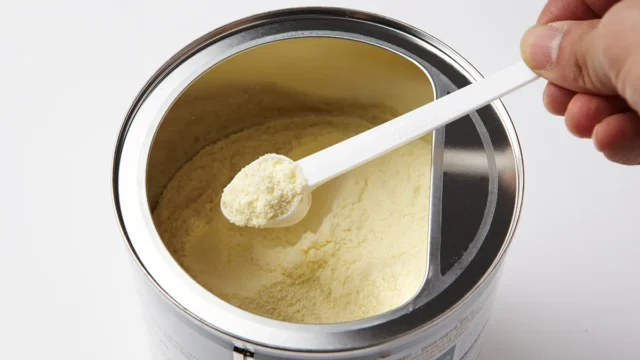
FSSAI draft: no added sucrose or fructose in foods for infants up to six months
On 17 October 2026 FSSAI explained a draft rule that would stop companies from adding sucrose (table sugar) or fructose (fruit sugar) to any product meant for babies up to six months old. The draft amends the Foods for Infant Nutrition Regulations, 2020, was published in the Gazette on 16 October, and is open for public comments for 60 days. The idea is simple: in the first six months a baby needs the right nutrients, not an early taste for sugar.
UPSC angle: Prelims: FSSAI, FSS Act 2006, infant nutrition regulations, IMS Act 1992. · Mains GS-II: child nutrition, preventive health and food regulation.
17 Oct 2026
FSSAI proposes residue limits for acetamiprid and imidacloprid in tea
On 17 October 2026 FSSAI explained draft limits for two insecticides in tea: 20 ppm for acetamiprid and 50 ppm for imidacloprid. The draft, published in the Gazette on 16 October, amends the rules on contaminants, toxins and residues. India’s proposed acetamiprid limit is lower than Japan’s 30 ppm and the USA’s 50 ppm.
UPSC angle: Prelims: MRL, neonicotinoids, Insecticides Act 1968, FSS Act 2006. · Mains GS-III: pesticide regulation and food safety.
17 Oct 2026Learn the concept
Question text as printed in the official UPSC question paper: https://www.upsc.gov.in/sites/default/files/QP_CSM_2024_GenStud_IV_03102024.pdf The model answer is original Battle IAS work; use it to learn structure, not to memorise.